






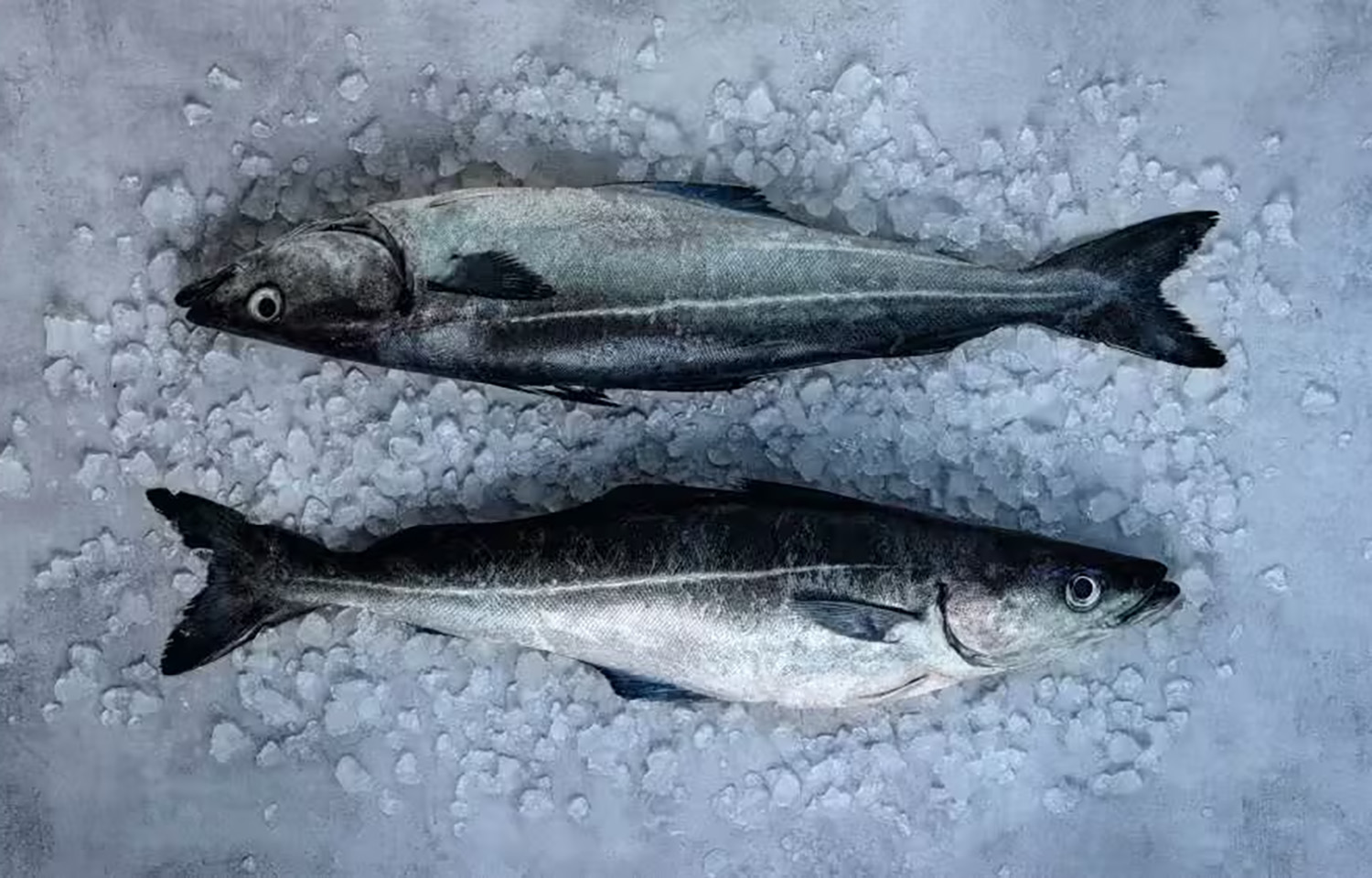
A new Norwegian Seafood Council (NSC) report has posited that budget-conscious U.K. shoppers are increasingly considering purchasing lesser-known species of seafood, citing cost as the main barrier to eating traditionally popular options like cod.
Dramatically reduced quotas have lessened cod’s availability in markets like the U.K. and, therefore, have made it much more expensive for the buying public. Recent Kantar analysis backed up these claims, stating that cod consumption in U.K. homes has decreased by as much as 18 percent in recent years.
As a result, U.K. consumers are turning elsewhere to get their seafood, according to the NSC report “Navigating the World of Megatrends,” and one species they are turning toward is saithe, which the council described as a protein-rich fish that has healthy stock populations in the Barents Sea.
The NSC further explained that saithe – currently the most-caught whitefish in Norwegian waters – aligns with the evolving preferences of younger shoppers, citing new insights from McKinsey+ that assert Gen Z consumers are more likely to buy healthy, lower-calorie, high-quality fresh products and foods that are higher in protein. NSC suggests this drive to maximize protein intake while shopping on a budget paves the way for saithe to cater to that demand from younger consumers.
“Saithe is a great example of how premium quality is about more than just price; it includes the fish's quality and production,” NSC Head of Strategy and Sustainability Bjørn-Erik Stabell told SeafoodSource.
Though it has several positive qualities, saithe is still underutilized in many markets, Stabell said, with consumer perception, retail hesitance, and unfamiliarity with how to cook it among the barriers standing in the way of greater adoption, particularly in the U.K.
To resolve this, there needs to be more publicly available information on saithe as a product, he said.
“Establishing saithe as a great alternative that doesn't compromise on price or sustainability credentials needs to be communicated to retailers and consumers,” he said. “Demonstrating how it can be cooked and its nutritional benefits is also crucial. Saithe hasn't received the same attention as other species, so naturally, there is some work that needs to be done in simply talking about saithe as the versatile and great alternative it is. Although this isn’t aimed at the Gen Z demographic specifically, we have noted that the growing protein trend might make a difference on the consumption of saithe in this demographic going forward.”
Other strategies the NSC can take to earn saithe better market penetration is highlighting its sustainability credentials – like Norway’s quota-based management model – at the point of sale, NSC Consumer Behavior Analyst Lars Moksness said.
“Consumers should feel certain that they do not have to compromise on ethics or quality when choosing seafood,” he said. “One method could be for producers to showcase the traceability and transparency information on the packaging, highlighting the Norwegian origin. Novel traceability technologies like blockchain can enable trustworthy information about provenance and processing to be accessed by scanning QR codes, for instance.”
Moksness is also confident that saithe can become a permanent fixture in shopping baskets rather than just a temporary response to inflationary pressures “because it is a good alternative.”
“History is rife with examples where macroeconomic or societal events have permanently influenced what we eat one way or the other (e.g., post-war industrialization and processing, globalization and trade liberalization, etc.),” he said. “This is just another point in history where food habits are poised to evolve.”
France, Germany, and Sweden are Norway’s most important markets for fresh and frozen saithe, according to the NSC, while the Dominican Republic, Congo, Brazil, and Jamaica lead when it comes to destinations for cured saith products such as clipfish, which is a dried, pressed, and salted product that is rich in the same vitamins and other health benefits that fresh whitefish has.
Though populations in the Barents Sea are currently healthy, stocks of saithe in other bodies of water like the North Sea have fallen below sustainable levels.
The North Sea saithe fishery lost its Marine Stewardship Council (MSC) certification in late June, with the certifying body stating that the announcement came after a period of low stock productivity and a recently revised assessment by the International Council for the Exploration of the Seas (ICES) that rated the stock outside the green zone of sustainability.
“Stocks may only be fished at levels that allow them to remain healthy or recover. The updated scientific data do not provide the necessary evidence that this is still the case for North Sea saithe,” MSC Regional Director for Northern Europe Erin Priddle said. “Therefore, the independent auditors responsible for assessing the certified fisheries determined that they no longer meet the MSC’s requirements for certification.”
