



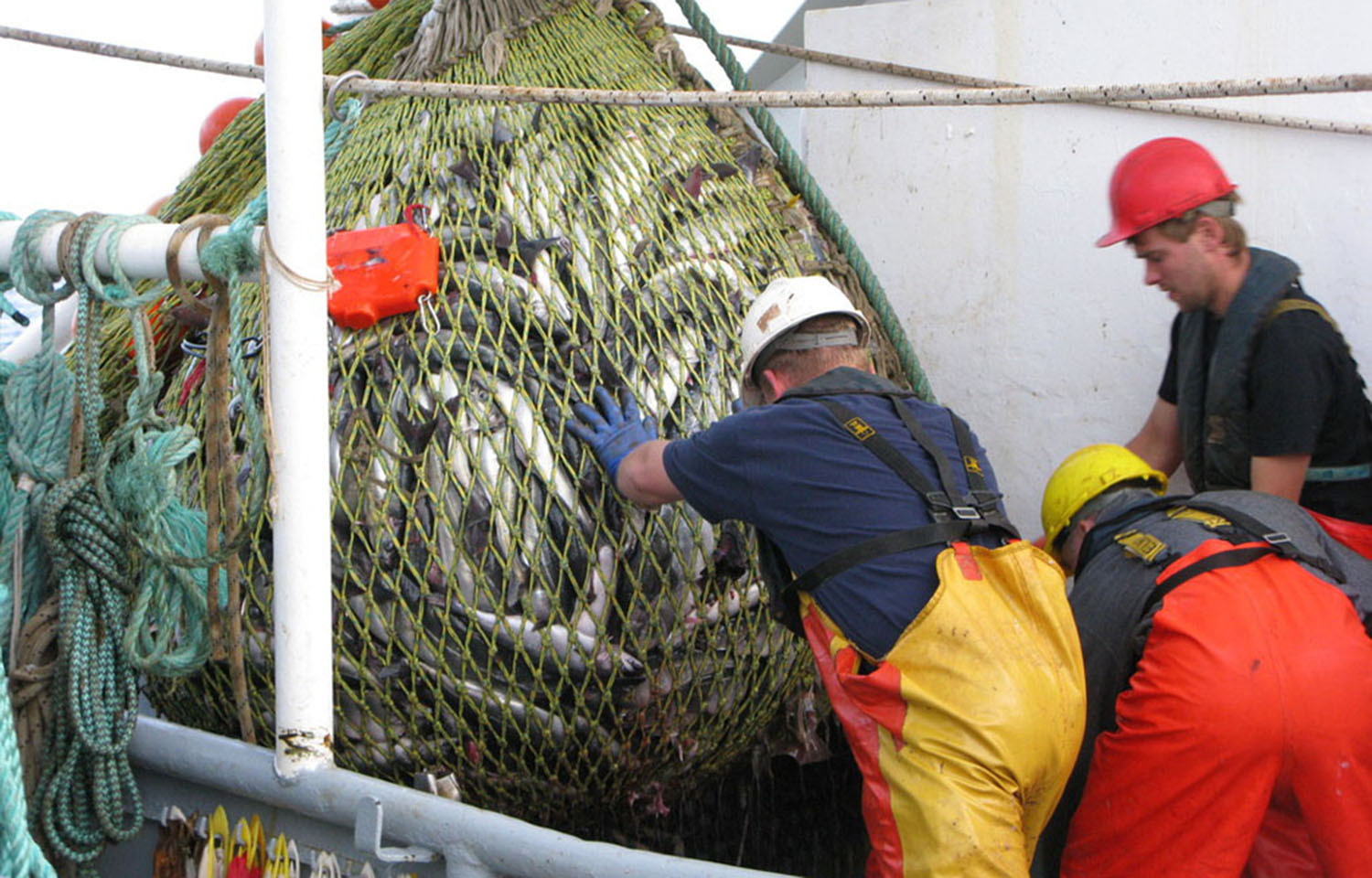
The North Sea saithe fishery will lose its Marine Stewardship Council (MSC) certification as of 30 June 2025, the latest fishery in Northern Europe to lose certification.
The MSC announced the suspension on 2 June, which it said follows a period of low stock productivity and a recently revised assessment by the International Council for the Exploration of the Seas (ICES) that rated the stock outside the green zone of sustainability. All told, the North Sea saithe fisheries comprise 45,000 metric tons (MT) of catch every year.
“Under the MSC Fisheries Standard, fishing must not compromise the long-term health of fish populations,” MSC Regional Director for Northern Europe Erin Priddle said in a release.
The loss of MSC certification for North Sea saithe makes it the latest cold-water species in the region to fall below the certification body’s standards. The North Sea cod fishery also had its MSC certification suspended in 2019, due to the stocks of that fishery falling below safe biological levels. Nearby fisheries in the Northeast Atlantic, mainly pelagic fisheries including Atlanto-Scandian herring and blue whiting, also lost certifications in 2020.
The difference between the pelagic fisheries and the latest loss in the North Sea is that the pelagic fisheries lost certification largely due to mismanagement by the coastal states, leading to repeated overfishing that has pushed the stocks to a tipping point. Political deadlocks between the countries have resulted in overfishing beyond the level advised by ICES.
North Sea saithe, in contrast, has met all the requirements for sustainable fishing, the MSC said, with management of the stock lining up with scientific advice. However, the expected growth of the stock at scientifically advised fishing levels has not materialized.
“Stocks may only be fished at levels that allow them to remain healthy or recover. The updated scientific data do not provide the necessary evidence that this is still the case for North Sea saithe,” Priddle said. “Therefore, the independent auditors responsible for assessing the certified fisheries determined that they no longer meet the MSC’s requirements for certification.”
The MSC said that outside factors and external pressures such as climate change can cause changes in stocks and impair recruitment for certain species – as well documented by the organization’s earlier suspension of the North Sea cod certification.
“We deeply regret this suspension,” Priddle said. “These fisheries have been role models in sustainable fishing – well-managed, well monitored, and in close collaboration with science. The fishery implemented key improvements early on, such as bycatch reduction and less ocean floor contact through modified fishing gear.”
Despite all of those measures, the stock never bounced back and the MSC said scientists now believe climate-related impacts are likely impacting cold water species like saithe.
“Fisheries hold great responsibility to adapt to changes in marine ecosystems,” Priddle said. “Sustainability isn’t a nice-to-have – it’s the foundation for any viable fishery. That’s truer than ever in the face of climate change.”
While the North Sea saithe fishery has lost its MSC certification, the organization said saithe caught in the Northeast Atlantic fishery will maintain its certification. That fishery totals 275,000 MT, and remains in operation.
