




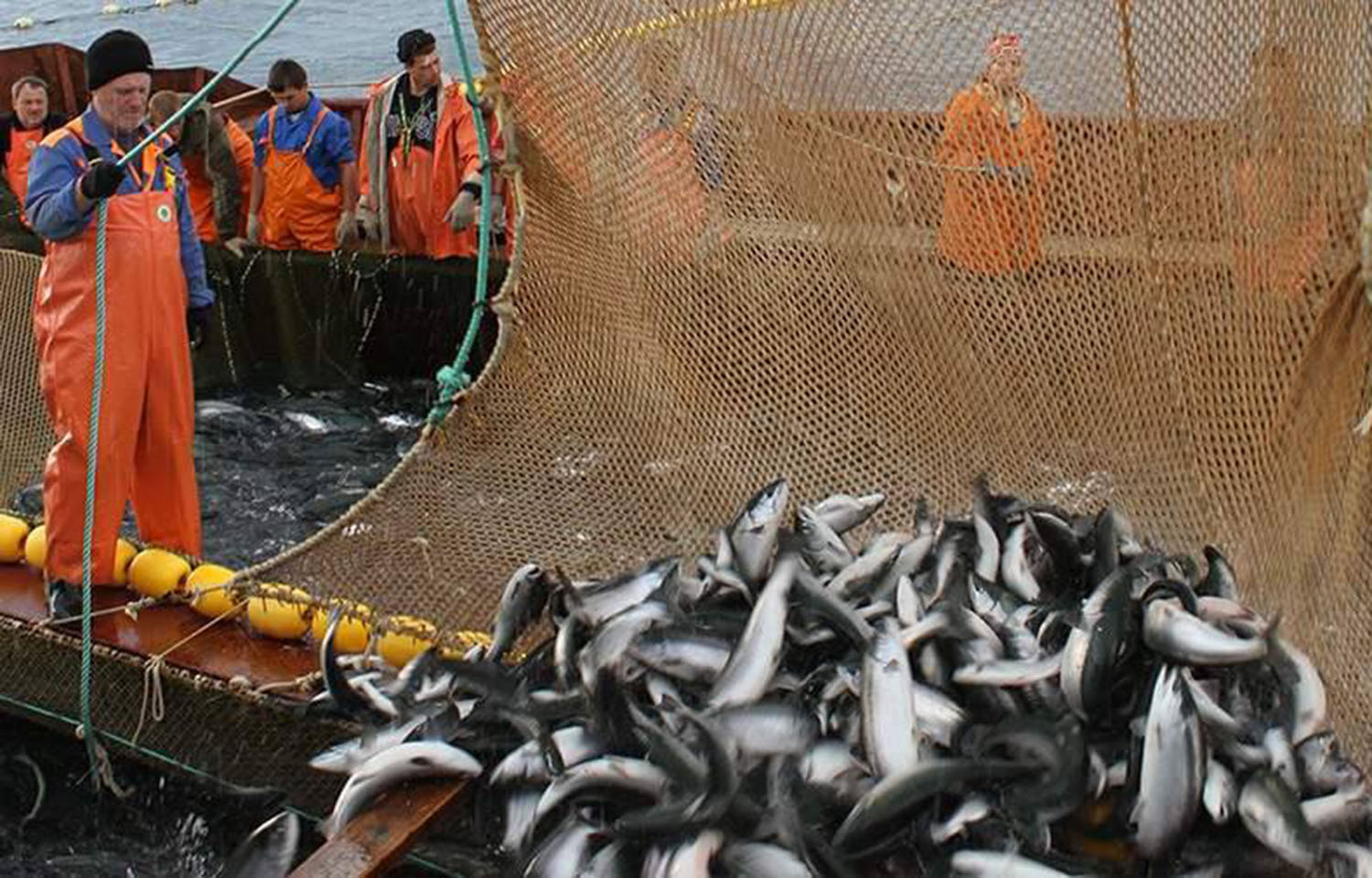
Statistics posted by the Russian Federal Fisheries Agency (Rosrybolovstvo) indicate the fishery is gaining momentum across all regions of the Far East, but scientists predict the total catch in the year will near historic lows.
Russian scientists predicted a relatively low catch for 2025 compared to past odd-numbered years. Typically, Russia compares even-numbered and odd-numbered years to each other, as the largest species by volume – pink salmon – has a two-year life cycle.
So far, Kamchatka has caught 27,900 MT, Khabarovsk has caught 9,200 MT, Primorsky has caught 7,900 MT, Magadan has caught 6,000 MT, Sakhalin has caught 1,500 MT, and Chukotka Autonomous Okrug has caught 235 MT – up from 19 MT in 2023.
For the full year, Russian scientists predict a catch of just 312,000 MT of salmon, down significantly from the 609,000 MT that the country caught in 2023.
Of that 312,000 MT, the vast majority will be caught in Kamchatka, where scientists are predicting fishermen will catch just under 200,000 MT of salmon.
Russia has had trouble with its salmon forecasts in the past, and in 2020, the country called for new methods of forecasting after the worst salmon season in 10 years. This year, Rosrybolovstvo said it is taking a number of actions to help shore up its science on the salmon fishery.
“For effective scientific support of the salmon fishing season, seasonal observation points will be organized, the number of salmon producers allowed to spawn will be recorded using manned and unmanned aerial vehicles and hydroacoustic equipment, as well as during walking surveys of watercourses,” Rosrybolovstvo said.
In its catch update, Rosrybolovstvo said the Russian Research Institute of Fisheries and Oceanography (VNIRO) is continuing to use drones and other tools for assessing the fishery.
Russia has also been releasing fry of salmon species in the region, including more than 1 billion released from June through mid-July in an attempt to boost numbers.
