



Russia’s seafood industry has caught over 4.6 million metric tons (MT) of seafood so far in 2024, with a huge drop in the salmon catch dragging down the total.
Russia’s Federal Fisheries Agency (Rosrybolovstvo) reported the total catch so far in 2024 as of 7 December had reached 4.66 million MT, down 7 percent compared to the just over 5 million MT it had caught in the same period in 2023.
The largest portion of that catch is made up of pollock, which has seen increases in 2024 compared to 2023. Russia has so far caught 1.87 million MT of pollock, an increase of 18,900 MT over the same period of 2023.
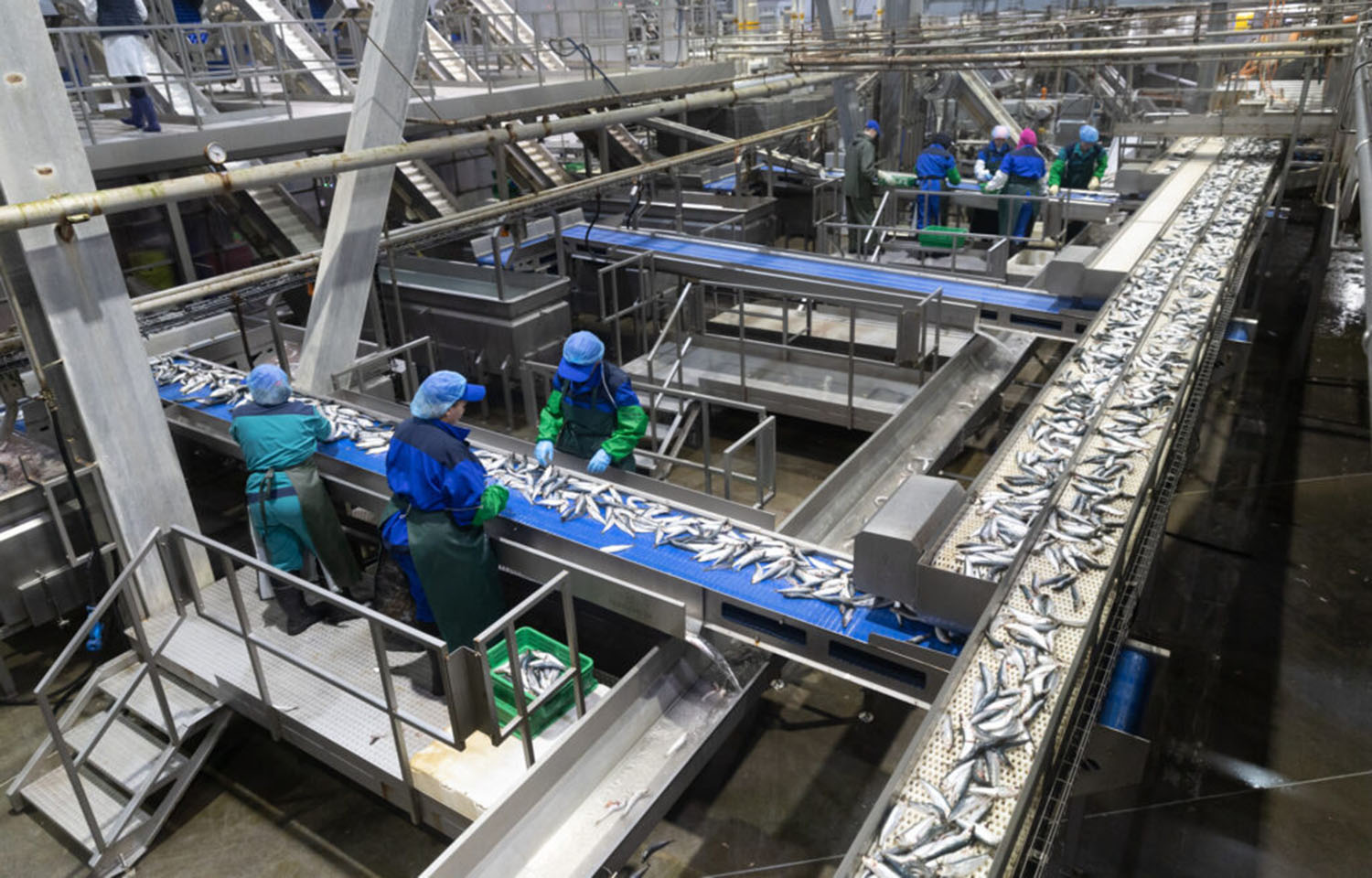
Another species making up a huge portion of the catch in 2024 is Iwashi sardines. Russia has caught more than 563,000 MT of the species so far in 2024, roughly 48,400 MT more than it caught in the same period of 2023 and a new record for Russia in the post-Soviet era.
"Thanks to the renewal of the fishing fleet, the efficiency of the fishery has increased,” Rosrybolovstvo Head Ilya Shestakov said. "If in Soviet times about 200 vessels were engaged in the extraction of Iwashi sardine, now there are about 50. In addition, the quality of the product has improved; fresh catches are processed directly on board.”
Russia has also caught 315,400 MT of cod so far in 2024, down from the 364,900 MT it caught in the same time frame of 2023. The drop in catch follows lower quotas instituted for the species. The Barents Sea cod quota was 885,600 MT in 2021, but the Norwegian-Russian Joint Fishery Commission dropped the shared quota all the way to 453,427 MT for 2024.
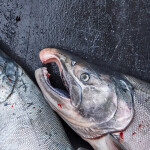
Salmon was another species that saw big drops in 2024 compared to 2022. Russia typically compares salmon catch on even-numbered years with the last even-numbered year that occurred, as the largest species by volume, pink salmon, has a two-year life cycle. The same goes for odd-numbered years.
In 2024, Russia caught 235,500 MT of salmon across all species, far below the 320,000 MT catch that the All-Russian Research Institute of Fisheries and Oceanography (VNIRO) predicted for the year.
In August, Russia’s salmon catches began to accelerate in the country’s Far East after a slow start. That increase started to outpace 2022 and even led VNIRO to increase its catch predictions by 8 percent, or 25,800 MT.
That pace soon fizzled out, though, and the catch ended up well below predictions but in line with multiple years of poor runs.
In 2020, for example, the catch of 299,200 MT was seen as so low that it prompted calls for a new forecasting approach for salmon. Preseason predictions had estimated the catch would be as high as 384,000 MT.
The poor catch in 2020 was, at the time, the lowest total since 2009 and 44 percent less than it caught in 2018.
The catch was even poorer in 2022, with 272,000 MT caught – a level which caused prices for salmon to jump.
While the salmon catch was one of the lowest on record, the capelin catch has jumped to 51,700 MT – up 28,600 MT, or 124 percent, compared to 2023.
Russia has also caught 405,100 MT of Pacific herring, up nearly 40,000 MT compared to 2023; 59,500 MT of Far Eastern flounder, down from 73,600 MT caught in 2023; 59,600 MT of haddock, down from 74,000 MT caught in 2023; and 22,900 MT of Baltic herring, down slightly from the 23,700 MT caught in 2023.
