






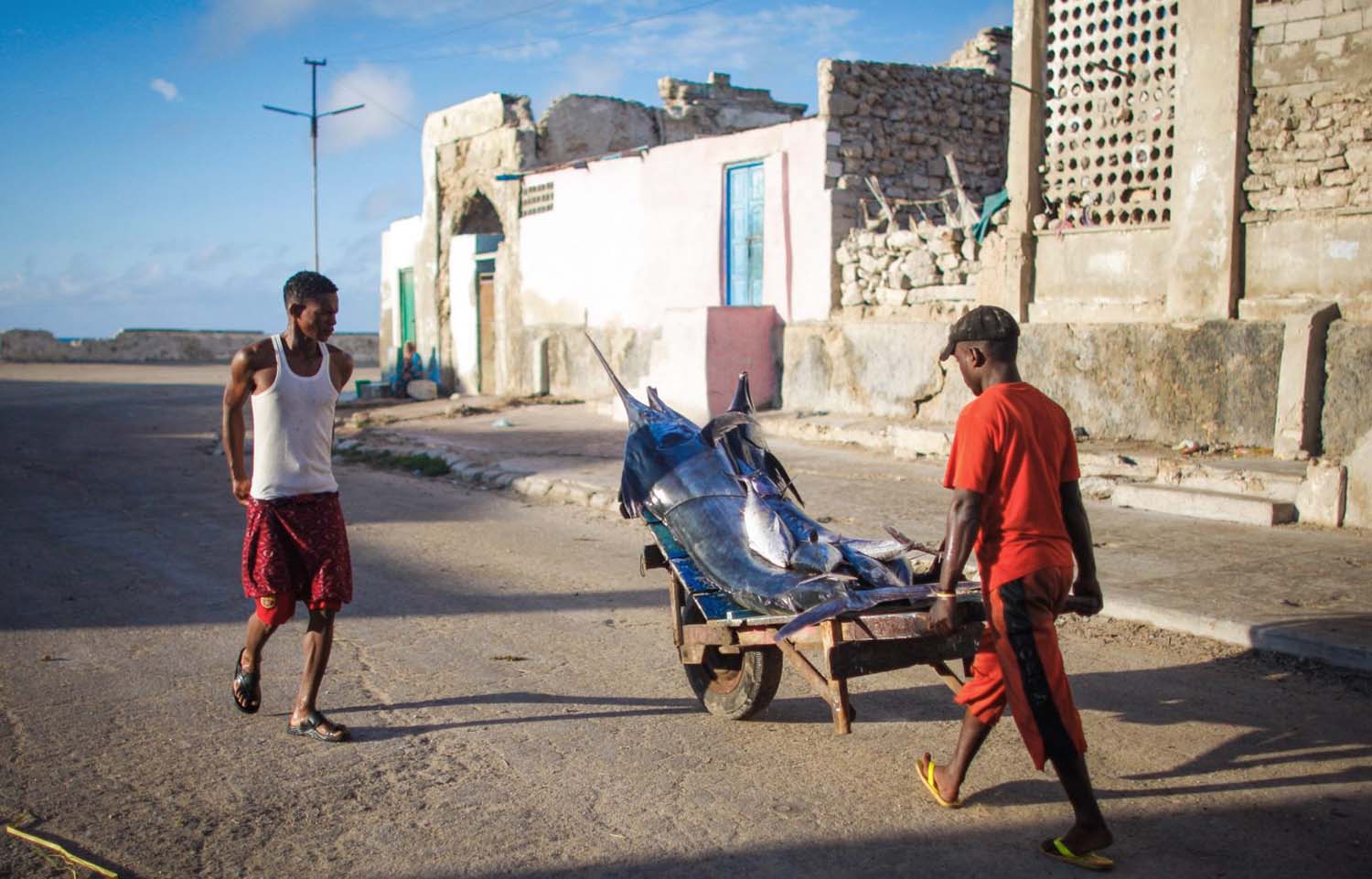
Somalia’s Ministry of Fisheries and Blue Economy has published new regulations for controlling and managing the safety and quality of the nation’s fish, value-added products, and fish feed as part of its long-term goal of enhancing seafood traceability and boosting its competitive edge in the global seafood marketplace.
The existing regulatory structure in Somalia has been roundly criticized for its fragmented framework, namely the fact that the licensing procedures of various activities along the fisheries value chain are overseen across multiple government agencies. Additionally, weak enforcement of fishing laws have left opportunities for illegal, unreported, and unregulated (IUU) fishing to thrive, costing Somalia an estimated USD 306 million (EUR 263 million) every year.
Minister Ahmed Hassan Aden said the new regulations include the creation of a dedicated national agency responsible for monitoring fish quality and ensuring food safety across Somalia’s fishing sector. Other personnel who will join the government include a national director general of fisheries, who will be responsible for overseeing the Ministry of Fisheries and the six directors general of fisheries for each of Somalia’s six states: Puntland, Galmudug, Hirshabelle, Southwest, Jubaland, and Somaliland.
To safeguard the health of seafood consumers and deter irregular activities, the regulations additionally provide stringent conditions for the harvesting of shellfish species along Somalia’s 3,000-kilometer coastline, “unless with a special government permit by the ministry of fisheries.”
“No person shall possess a consignment or transfer any batch or consignment of bivalve molluscs to another person unless the consignment is accompanied by a certificate of origin,” the new regulations state.
Regarding the issue of disorganized licensing, the regulations also introduce more streamlined and better supervised permission of permits, including licenses to start and operate any fishery enterprise, the construction or refurbishing of a commercial aquaculture business, and for the transportation of fish, including live ones to market.
The announcement of new regulations builds upon the momentum started by other reform measures introduced by the country, including standard operating procedures for licensing tuna-fishing vessels unveiled last year.
Somalia’s fishing sector contributes just 3 percent to the country’s gross domestic product and 2 percent to national export share, according to the Somalian Ministry of Fisheries and Blue Economy. However, estimates suggest Somalia’s exclusive economic zone could sustainably produce 380,000 to 500,000 metric tons annually, far exceeding current production levels.
