






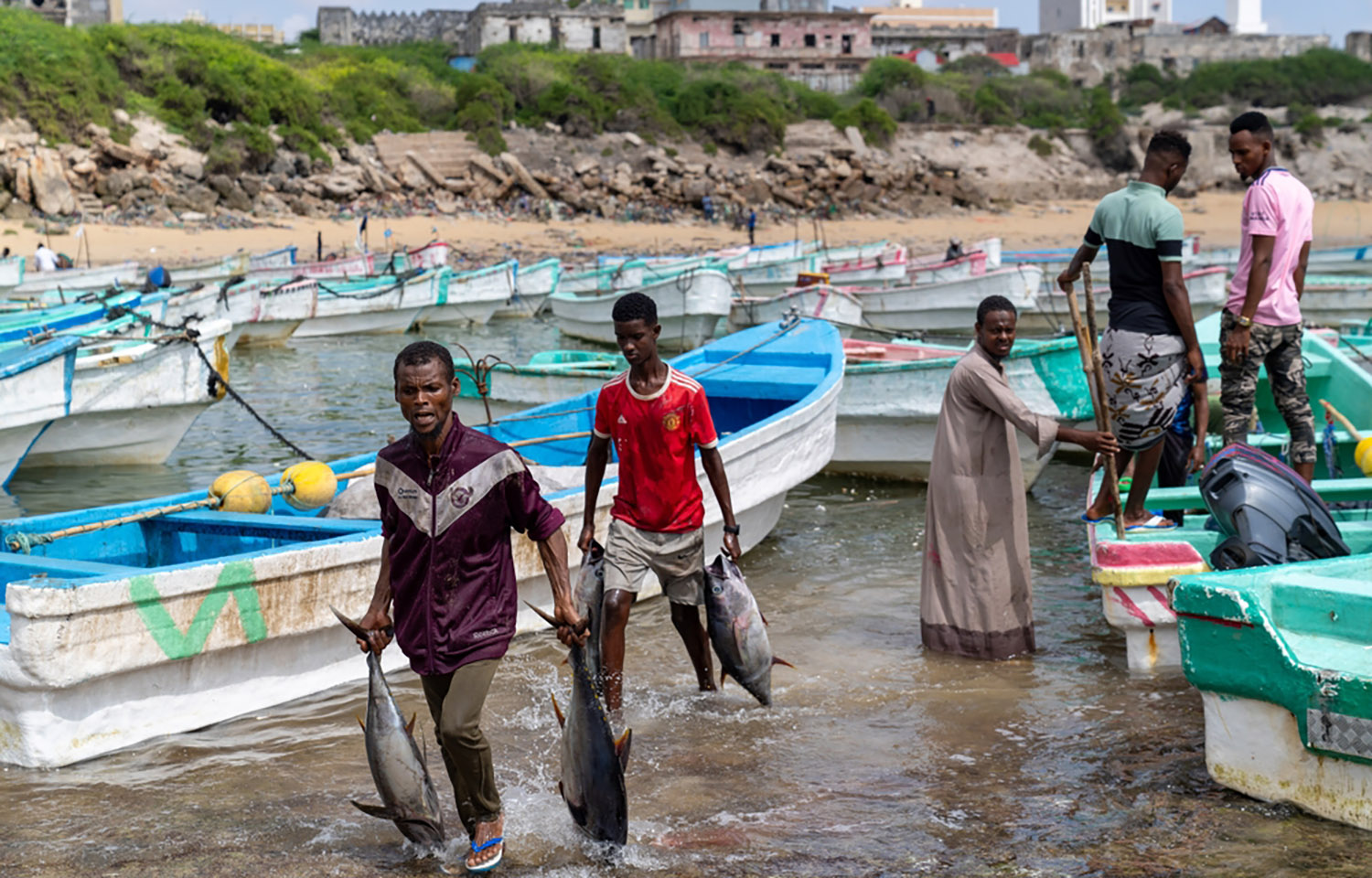
With the U.S. government attempting to pull the plug on aid funneled through the U.S. Agency for International Development (USAID), officials from developing countries such as Somalia are voicing their praise of China and the assistance, such as fishery development aid, the country offers.
Nur Daud Ibrahim, a fisheries officer at the Somalian Ministry of Fisheries and Blue Economy, told SeafoodSource that Chinese aid both financially and in the form of training has been helpful to developing the East African country’s fisheries sector.
“The training has provided us with a wealth of knowledge and practical experience that we are eager to apply to improve Somalia’s fisheries sector. We are particularly inspired by China’s approach to aquaculture and its fisheries management practices,” he said. “During our training in China, we gained invaluable knowledge in sustainable aquaculture practices, marine and freshwater farming systems, and water quality management. Thanks to the support of the China Fisheries Education and Training Center and the Chinese government, we are now utilizing this knowledge to improve the fisheries sector back home.”
Nur said the Somalian government is keen to secure investment in its fisheries sector, with the country boasting the longest coastline in all of Africa.
“Over 150,000 metric tons of fish could be sustainably produced in Somalia each year, even without aquaculture, according to studies,” he said. “This could generate billions of dollars and make a substantial contribution to the country's GDP. This industry could be extremely important to the country's economy.”
Aquaculture, on the other hand, is more of a distant goal for the country, Nur said.
“While aquaculture is a long-term goal, we are preparing for the future, should the need arise to further develop this area as part of Somalia’s broader fisheries strategy,” he said.
In order for development to come to fruition, though, external aid is essential, especially as issues like underinvestment, a lack of infrastructure, and ongoing recovery from years of instability has rendered the fisheries sector “underdeveloped despite its potential,” Nur said.
“There is a concerted effort to build infrastructure, improve the management of marine resources, and implement sustainable fisheries practices. This includes opening up opportunities for both local and foreign investment to strengthen the sector and create long-term economic benefits for Somalia,” Nur said.
China is not the only foreign entity offering assistance to Somalia.
Nur also cited assistance from the E.U. and the United Nations’ Food and Agricultural Organization, which have contributed to the development of Somalian fisheries policies, research, and sustainable practices.
Additionally, Somalia recently signed a memorandum of understanding with AD Ports Group, a United Arab Emirates-based port development firm, to help the East African country increase the output of its marine fisheries.
Meanwhile, experts critical of the U.S.’s attempts to gut USAID have warned of situations like the one going on in Somalia, saying that though the agency sends money to other countries, its projects also reap less quantifiable rewards for the U.S. on which it would now be missing out.
“USAID, Peace Corps, Farmer to Farmer volunteers, and more have supported hundreds of thousands of small businesses to start up and build free market economies that have raised the standard of living for millions around the world,” Kevin Fitzsimmons, an aquaculture specialist and an environmental science professor at the University of Arizona who has consulted on USAID projects, told SeafoodSource. “These … turned many into consumers of U.S. trucks, boats, and farm tools. I can guarantee that lack of U.S. investment will induce them to buy from China or the E.U. instead.”
