






Spot rates for ocean shipping have remained relatively stable in mid-June, but experts are warning industry stakeholders to prepare for more upheaval as the Israel-Iran conflict escalates.
Average spot rates between the Far East and the U.S. West Coast, according to shipping price analysis service Xeneta, rose just slightly, reaching USD 5,345 (EUR 4,639) per 40-Foot Equivalent Unit (FEU), up from USD 5,082 (EUR 4,411) on 5 June.
Average rates between the Far East and the U.S. East Coast also went up slightly to USD 6,568 (EUR 5,701) per FEU from USD 6,160 (EUR 5,347).
Xeneta Chief Analyst Peter Sand said that this relative stability appeared to be likely due to recent trade talks between the U.S. and China.
“A narrowing of the market mid-high and mid-low in Xeneta data indicates the fear and uncertainty that drove spot rates upward in the wake of the 90-day lowering of U.S.-China tariffs is now easing,” he said.
He added, however, that the emerging conflict between Israel and Iran could change things again.
“Geopolitics is once again threatening the safety and stability of global supply chains, so we must hope for deescalation in the conflict between Israel and Iran, with concerns it could see a de-facto closure of the Strait of Hormuz – a vital entry point for container ships calling at ports such as Jebel Ali and the wider Arabian Gulf region,” Sand said.
Any closure in the Strait of Hormuz, Sand explained, would increase reliance on Indian West Coast ports, increasing rates significantly on routes in the vicinity and spiking prices throughout routes globally.
Shifting tariff policies coming out of the U.S. remain another complicating factor for logistics professionals.
Port of Los Angeles Executive Director Gene Seroka said in a 13 June press briefing that his port was feeling the effects of the nation’s tariff program.
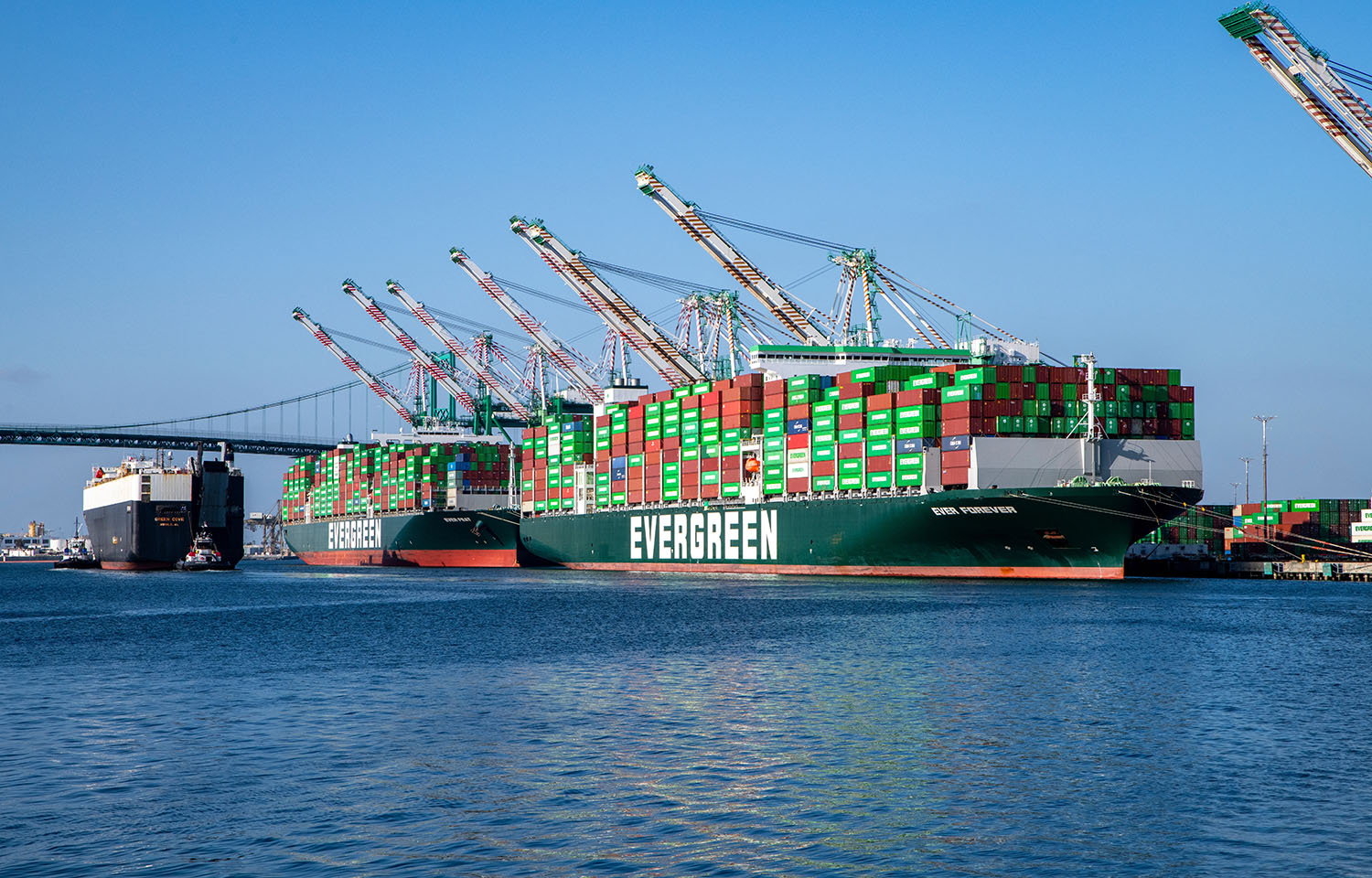
Seroka said that the port, the nation’s busiest, processed 716,619 20-Foot Equivalent Units (TEUs) in May, marking a 5 percent drop from the same month last year.
“Unless long-term, comprehensive trade agreements are reached soon, we’ll likely see higher prices and less selection during the year-end holiday season,” Seroka said. “The uncertainty created by fast-changing tariff policies has caused hardships for consumers, businesses, and labor.”
Seroka was joined at the briefing by Ernie Tedeschi, director of economics at The Budget Lab at Yale University, who said that the tariff policy was likely to constrict the import market, as well as hurt individual consumers.
“The Budget Lab has been modeling the impact of tariffs on American households since the first announcements earlier this year. Tariffs would raise average prices by 1.5 percent, a loss in purchasing power of nearly USD 2,500 [EUR 2,175] per household per year,” Tedeschi said. "But, that impact isn’t the same across all families or products: Lower-income and working-class families see a bigger hit than higher-income families, and products more likely to be imported like shoes, apparel, and consumer electronics will see double-digit percent price increases.”
The International Chamber of Shipping, which released its yearly Maritime Barometer Report in June, also said that shipping industry stakeholders are deeply concerned about how global instability and tariffs will continue to affect their businesses.
The report, which shares the results of the ICS’s annual survey of risks and confidence among maritime industry stakeholders, listed political instability as its respondents’ top concern.
“Shipping operates in a rapidly changing world, where political unpredictability has become the new normal,” ICS Chairman Emanuele Grimaldi said in the report's preface. “Geopolitical instability is making and reshaping our business operating environments, adding caution and uncertainty to commercial decisions, in addition to rewriting longstanding trade relationships and trade routes. These all have costly implications for our industry and the wider economy, strengthening the possibility of a global recession.”
