






Representatives from coastal nations that fish for pelagic species in the Northeast Atlantic Ocean met in London, U.K., on 10 and 11 June to negotiate quotas for blue whiting.
However, in similar fashion to other negotiations focused on establishing comprehensive pelagic quotas in the region, the talks quickly hit an impasse.
Since 2015, the E.U., the U.K., the Faroe Islands, Norway, Iceland, Greenland, and other coastal nations fishing in the Northeast Atlantic have been unable to establish a comprehensive quota agreement. With no deal in place, the countries have unilaterally set their quotas, leading to consistent overfishing of pelagic stocks in the region.
The latest talks, taking place at the headquarters of the Northeast Atlantic Fisheries Commission, were chaired by the E.U., which proposed a new agreement that would reduce Norway's quota by more than 20 percent compared to the previous deal and making the E.U. and the Faroe Islands the countries with the most significant share of blue whiting quota.
The proposal has angered the Norwegian delegation, making a comprehensive deal much less likely.
Audun Maråk, one of the Norwegian delegates and the CEO of Fiskebåt – a shipowner's organization in Norway – published a statement where he accused the E.U. of sabotaging the negotiations.
"The E.U.’s frivolous and unsubstantiated proposal for a share agreement of blue whiting is a step back in reaching an agreement, not only for blue whiting but also for mackerel and Norwegian spring-spawning herring. It [will also] have consequences for future fisheries cooperation between Norway and the E.U.," Maråk said.
He added that while he previously advocated for pragmatism during recurring disputes with the E.U., he has now concluded that the E.U. "is and will remain a Norwegian opponent."
“This is so far out that I think nobody else will support this proposal,” he told SeafoodSource.
The European Commission declined to provide specifics on the proposed deal, but Maråk told SeafoodSource the E.U. suggested a share that would give the Faroe Islands the biggest quota with 35.5 percent, followed by the E.U. at 33.55 percent, Iceland at 16.23 percent, the U.K. at 7.89 percent, and Norway at 5.78 percent. Around 1 percent was left for Greenland and the rest of the nations fishing in the region.
That proposal marks a radical departure from the last agreed-upon deal in 2005, when the E.U., which at that time included the U.K., had 30 percent of the quota, the Faroe Islands had 26.13 percent, Norway had 26.2 percent, and Iceland had 16.63 percent.
Currently, the E.U. claims 36.5 percent of blue whiting quota, the Faroe Islands claims 35.5 percent, Norway claims 26.2 percent, Iceland claims 22.9 percent, and the U.K. claims 8.5 percent. Because those totals add up to nearly 130 percent of the quota, overfishing has continued to plague the fishery.
Due to this overfishing, since 2019, the North Atlantic Pelagic Advocacy Group (NAPA) has collaborated with buyers of Northeast pelagic stocks to pressure the coastal nations into reaching a comprehensive agreement on the stocks. The group represents 50 global organizations and companies involved in retail, aquafeed, salmon farming, foodservice, and seafood processing.
Members of NAPA have committed to its pledge to source alternative species if Northeast Atlantic coastal nations can’t end long-term overfishing.
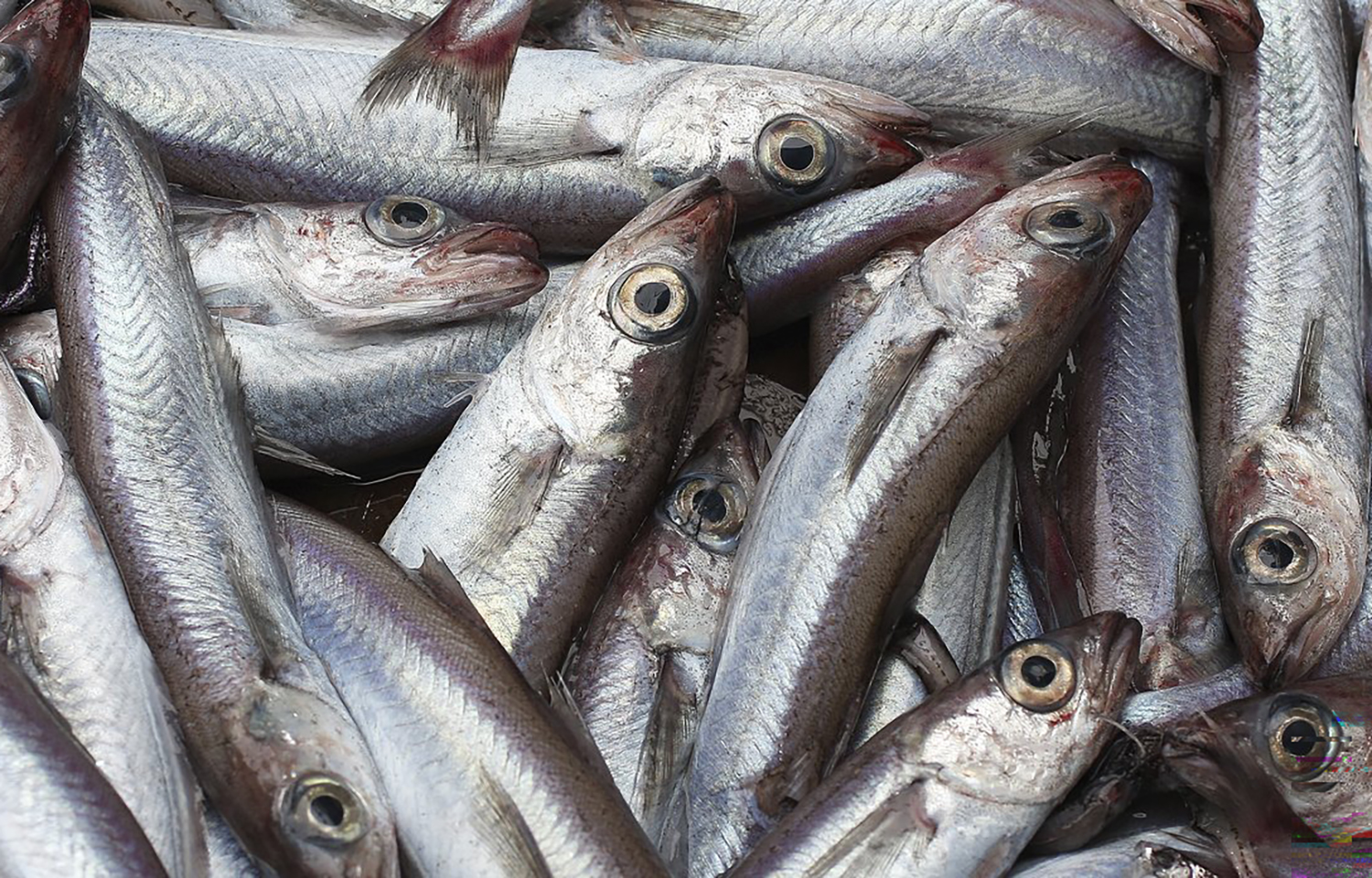
Regarding blue whiting in particular, the fish, unlike closely related cod, isn’t usually fished for human consumption and mostly ends up as fishmeal or fish oil used to produce feed for aquaculture.
NAPA claims to represent 80 percent of Norwegian salmon production, with members such as Mowi, Grieg, Leroy, and more, and said its partners will seek other fish soon if no agreement is reached.
"While blue whiting is considered to be at a good level biologically due to unprecedented booms in recruitment in recent years, overfishing is rife, and the stock is starting to decline. Our markets cannot rely on good luck and extraordinary productivity in the stock any longer; the consequences of years of political inaction and poor governance have already arrived," NAPA said. "We believe a comprehensive sharing agreement that aligns with scientific advice is the only solution. Failure to achieve this could result in the majority of the world's blue whiting purchasing power, including 80 percent of Norwegian salmon production, walking away from the stock in exchange for well-managed, certified alternatives."
