






China is doubling down on efforts to become the global partner of choice for developing countries seeking to expand their aquaculture and fisheries sectors, and the country’s latest outreach initiatives have come in the form of summer training programs led by Chinese officials.
One such program included a delegation of Southeast Asian fishery officials undergoing a 14-day aquaculture training program in southwestern Yunnan Province, which borders Laos and Myanmar.
Hosted by China’s Ministry of Science and Technology, the program included visits to Chinese aquaculture ponds, introducing the delegates to the nation’s aquaculture techniques, technology, and expertise.
In eastern Anhui Province, aquaculture specialists from Southeast Asia, South America, and Africa attended a seminar that featured such topics as aquaponics, recirculating aquaculture systems, and climate change adaptation.
Elsewhere, 22 trainees from academia, global government departments, and seafood firms, hailing from Asia, Africa, and the Middle East, attended a training program in China’s key tilapia-producing province of Hainan that highlighted innovations in aquaculture technology.
“By establishing a regular mechanism for scientific, technological, and cultural exchange, [the training program] aims to assist developing countries in cultivating specialized technical personnel in the aquaculture sector,” a Hainan provincial statement on the program said.
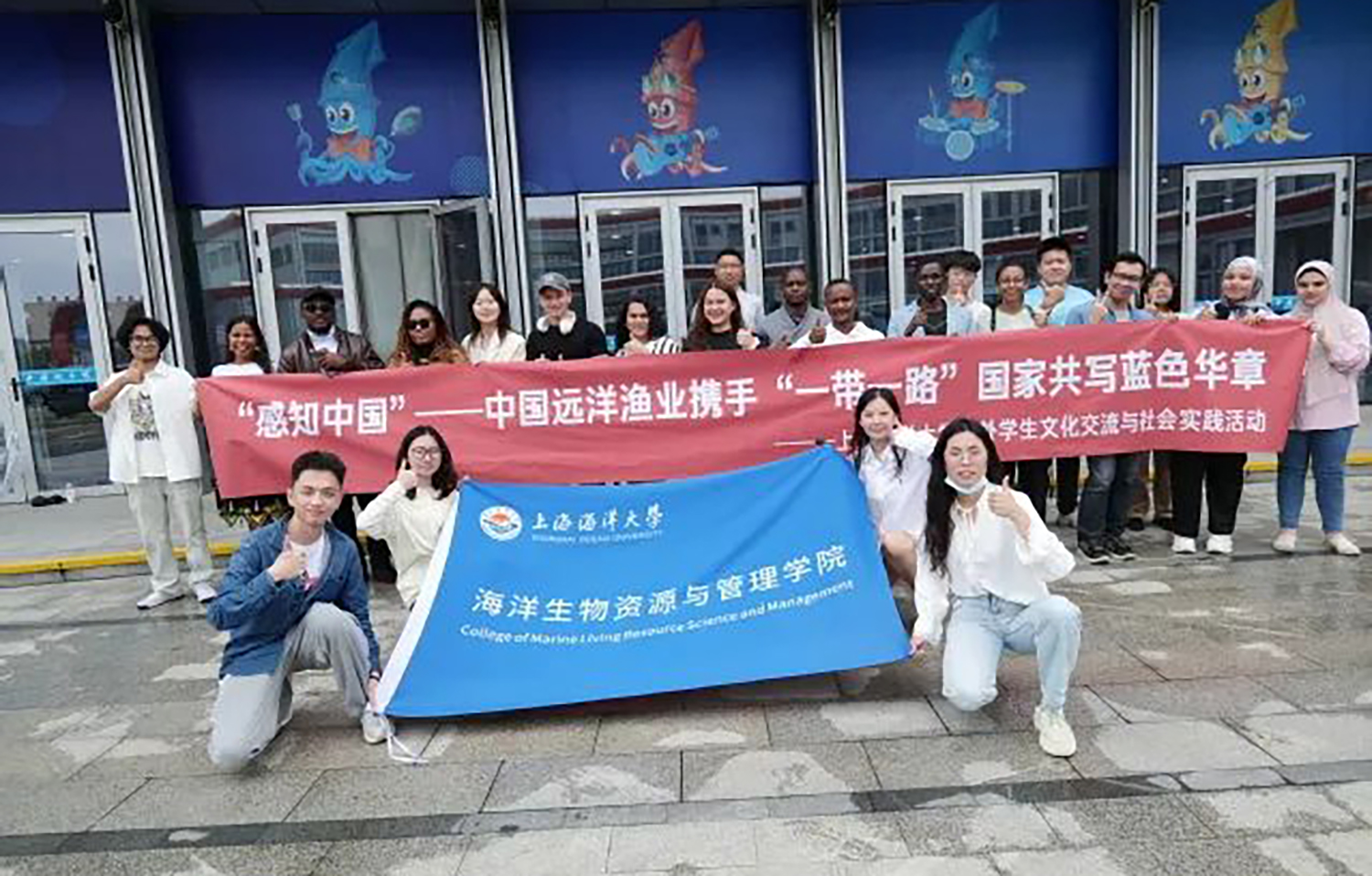
International students from eight countries studying in China on scholarships also visited a series of distant-water fishing firms recently, including processing facilities operated by Zhejiang Ocean Family and CNFC Ocean Fisheries in the eastern port city of Zhoushan.
All of these programs come as other top global economic powers like the U.S. have cut back on foreign aid programs as well as domestic scientific spending, which has resulted in several nations around the world turning toward China for assistance.
Earlier this year, Nor Daud Ibrahim, a fisheries officer at the Somalian Ministry of Fisheries and Blue Economy, told SeafoodSource that Chinese aid both financially and in the form of training has been helpful to developing the East African country’s fisheries sector.
“The training has provided us with a wealth of knowledge and practical experience that we are eager to apply to improve Somalia’s fisheries sector. We are particularly inspired by China’s approach to aquaculture and its fisheries management practices,” he said. “During our training in China, we gained invaluable knowledge in sustainable aquaculture practices, marine and freshwater farming systems, and water quality management. Thanks to the support of the China Fisheries Education and Training Center and the Chinese government, we are now utilizing this knowledge to improve the fisheries sector back home.”
In order for development to come to fruition in countries like Somalia, external aid is essential, according to Nor, especially as issues like underinvestment, a lack of infrastructure, and ongoing recovery from years of instability has rendered Somalia’s fisheries sector “underdeveloped despite its potential.”
“There is a concerted effort to build infrastructure, improve the management of marine resources, and implement sustainable fisheries practices. This includes opening up opportunities for both local and foreign investment to strengthen the sector and create long-term economic benefits for Somalia,” he said.
Experts critical of the U.S.’s attempts to gut foreign aid warned of situations like the one going on in Somalia and elsewhere, saying that though foreign aid projects resulted in money going to other countries, the projects also reaped less quantifiable rewards for the U.S., on which it is now missing out and on which countries like China are continuing to capitalize.
