





As the use of glucagon-like peptide-1 (GLP-1) medications for diabetes and weight loss has continued to soar, seafood brands have increasingly rolled out products targeting this demographic.
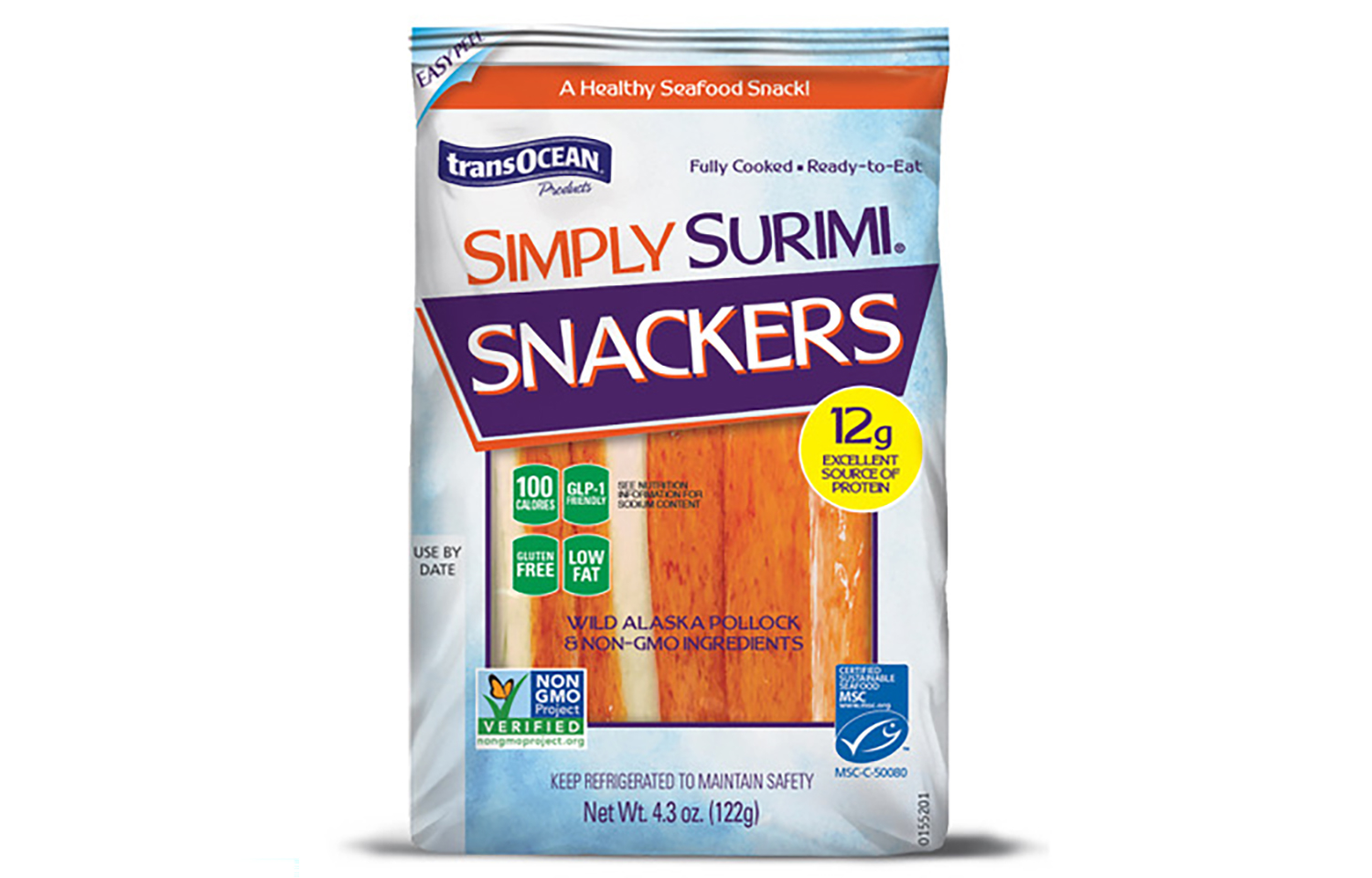
Bellingham, Washington, U.S.A.-based Trans-Ocean Products, which specializes in Alaska pollock-based surimi products, is capitalizing on the trend by increasing the protein content in its top-selling product and labeling it “GLP-1 friendly.”
After upping the protein content in its Simply Surimi Snackers product and conducting extensive legal research on the topic, the firm is going “all in” on marketing, Trans-Ocean Business Development Manager Doug Coffman told SeafoodSource.
“There’s no real regulation on [the term ‘GLP-1 friendly’] right now, [but] because the protein is so high, we feel comfortable claiming it,” Coffman said, adding that the supplier has already received interest from national retailers.
People taking GLP-1 medications are often recommended to eat a diet high in fiber, whole grains, and lean proteins. Aligning with this advice, the company increased the package size on its Simply Surimi Snackers from 3 ounces to 4.3 ounces, which increased the protein content to 12 grams per package.
“We feel the non-GMO clean formula with increased protein will meet consumer demand,” Trans-Ocean Vice President of Sales and Marketing Lou Shaheen told SeafoodSource.
The timing on the product’s label rebrand comes as 22 percent of U.S. households have a current GLP-1 user, which is double the adoption rate seen nearly three years ago, according to recent data from market research firm Numerator. GLP-1 users now account for more than USD 660 billion (EUR 576.3 billion) in consumer spending across consumer packaged goods, general merchandise, and quick-service restaurants, “making them an increasingly influential consumer group for brands and retailers,” Numerator said.
“As treatment continues, GLP-1 consumers shift away from pantry staples and carb-centric items such as pasta and bakery items toward fresh protein, seafood, functional nutrition, and more intentional snacking,” Numerator said.
The growth of GLP-1s is expected to continue rising, as well, as 23 percent of U.S. consumers who are not taking such medications say they would consider taking them, according to Numerator.
The label rebrand also comes as surimi sales have seen steady growth.
Sales of refrigerated packaged surimi products increased 2.4 percent by value to reach nearly USD 249 million (EUR 218 million) in the U.S. for the year ending 9 August, according to market research firm Circana, but the growth is even more noticeable in the most recent 13 weeks, with sales by value rising 9.1 percent.
“I think it’s just due to the protein value proposition that surimi seafood, compared to other proteins, offers and that it’s so easy to use, versatile, has a long shelf life, and is mild tasting,” Shaheen said.
Other seafood suppliers have also launched products aligned with the recommended diets for GLP-1 users.
For instance, Gwynn’s Island, Virginia, U.S.A.-based The Plant Based Seafood Co. rolled out SMASH it! Brand Salmon Superfood Balls last year, featuring sockeye salmon, tri-colored quinoa, fresh kale, yam, chia seeds, flax meal, beets, purple and orange carrots, cauliflower, and turmeric.
SMASH it! is targeted for GLP-1 users; health, fitness, and overall wellness enthusiasts; and those Co-Founder and Chief Information Officer Shelly Van Cleve calls “iffy-fishy” consumers, who are not traditionally big fans of fish.
George Kouri, the CEO of New Bedford, Massachusetts, U.S.A.-based Northern Wind, which launched its Bon Cuisine Seafood Proteins range earlier this year, told SeafoodSource the growing use of GLP-1 medications is encouraging many consumers to eat smaller portions and prioritize nutrient-dense, protein-rich foods, making seafood an ideal food choice for such a demographic.
“Seafood fits naturally into all these areas, particularly when it is offered in an easy-to-prepare format,” he said. “With the emphasis today on healthy eating and ingredients, seafood is well-positioned based on consumer trends. Shoppers are looking for high-protein foods, healthier meal options, and products that offer convenience without sacrificing quality.”
