





Canada’s largest aquaculture project has jumped a final hurdle on the way to becoming a reality.
After almost three years of proposals, reviews, and appeals, Newfoundland Minister of Municipal Affairs and Environment Graham Letto has given approval for the Placentia Bay Aquaculture Project, a joint venture between Grieg Newfoundland, a subsidiary of Norwegian salmon farming firm Grieg Group, and St. John’s, Newfoundland, Canada-based Ocean Choice International.
Originally proposed in 2016, the project will have the capacity to harvest up to 33,000 metric tons (MT) of salmon annually from 11 cages placed around Placentia Bay. The CAD 250 million (USD 200 million, EUR 172 million) project includes a CAD 75 million (USD 57 milllion, EUR 50 million) land-based hatchery and nursery in Marystown, providing up to seven million triploid smolt annually for the cages, which will occupy 24 hectares in the bay.
Grieg will provide CAD 210 million (USD 158 million, EUR 139 million) towards the investment. The Province of Newfoundland is providing a CAD 30 million (USD 23 million, EUR 20 million) repayable loan with a further CAD 10 million (USD 7.5 million, EUR 6.6 million) loan coming from the Atlantic Canada Opportunities Agency. When fully operational, the Placentia Bay project is projected to create 800 jobs.
The Atlantic Salmon Federation and seven other environmental organizations had opposed the fast-tracking of the project's approval process by a previous minister, which they felt understated the risk to local salmon stocks. Lawsuits against the new farming project advanced to the Newfoundland and Labrador Supreme Court, then the Newfoundland and Labrador Court of Appeal. Judges in both courts agreed that the minister at the time exceeded his authority in providing speedy approval to the project. They ordered Grieg to perform an environmental impact statement, which was completed earlier this year.
Construction has already begun on the hatchery, and will be completed late 2019 or early 2020, according to Grieg NL Project Manager Thomas Grieg. Production at the site will begin in August or September 2019 and the first fish will go into cages in 2020, Grieg said. The first harvest is scheduled for 2021, with the company planning to scale up production to 8,000 to 10,000 MT annually after that, reaching the farm’s 30,000 MT capacity by 2025, Grieg said.
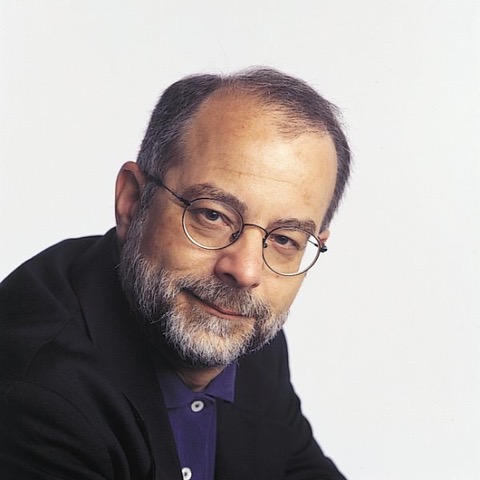
Photo courtesy of Grieg NL
