



The Echebastar Indian Ocean purse seine skipjack tuna fishery has been approved into the next round of assessment by the Marine Stewardship Council following a ruling by an independent adjudicator.
WWF International had objected to the scoring of conformity assessment body Acoura Marine, which recommended the fishery for MSC certification after assessing it through an 18-month process. But John McKendrick, the adjudicator, dismissed most of WWF’s objections, allowing the fishery to advance toward eventual MSC certification.
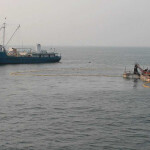
The Echebastar fishery is comprised of five purse seine vessels in the fleet of Spanish firm Pesqueras Echebastar. The fleet uses free-school and drifting fish aggregating devices (FADs) in the Indian Ocean and catch around 15,000 tons of skipjack tuna per year. The Echebastar fishery is the first using drifting fish aggregating devices (dFADs) to be assessed against the revised MSC 2.0 standard.
Echebastar previously applied for MSC certification for its skipjack and yellowfin fishery in the Indian Ocean in 2013, but its application was denied in 2015 by a separate adjudicator after objections from WWF.
As part of its new application for certification, Echebastar has introduced new measures to improve the sustainability of its practices, including 100 percent observer coverage; revised FAD design to minimize silky shark and turtle bycatch; and the introduction of second conveyer belts for processing catch on three of the fishery’s vessels, enabling the release of unwanted catch back to the sea.
Despite the improvements made by Echebastar, WWF objected to Acoura Marine’s scoring of the fishery on six grounds.
“WWF’s objections were made on the following grounds, in particular: although the Echebastar fishery targets skipjack tuna, a major portion of its catch is yellowfin tuna which is already overfished and for which no harvest strategy exists in the Indian Ocean (moreover, the effectiveness of rebuilding measures for yellowfin tuna stocks has not been assessed); the fishery uses fish aggregating devices (FADs) which increase the catch of non-target species and diminish the populations of already threatened ocean wildlife, including sharks; and that the management plans to reduce the mortality of sharks – particularly silky sharks – are inadequate,” WWF said in a press release.
McKendrick, the adjudicator, dismissed four of the objections. On the fifth, Acoura agreed to provide a greater detail and clarity on the fishery’s impact on yellowfin tuna, and the final objection was withdrawn by WWF following an agreement that as a condition of certification, the fishery will investigate the effects of FADs on key ecosystem elements, including both tuna and sharks, according to MSC.
“I am satisfied the CAB’s scoring is justified and the decision to certify the Echebastar Fishery is one open to the CAB in the exercise of its professional judgement,” McKendrick said. “Whilst I agree with the CAB’s scoring, it is important to acknowledge areas of the final report will be strengthened because of WWF’s helpful engagement and crucially important scientific research will now be carried out in respect of the effect on sharks of the deployment of FADs in the Indian Ocean. This is an important conservation measure and one that will add to the protection of marine environments whilst permitting sustainable fishing. WWF’s engagement strengthens the overall mission of the MSC.”
However, in a press release, WWF said seafood buyers “should not consider this fishery as meeting a sufficient standard of environmental performance for MSC certification.”
“WWF is most concerned that the Marine Stewardship Council (MSC) certification of the Echebastar Indian Ocean skipjack tuna purse seine fishery has been granted in spite of major flaws in the assessment. WWF raised its concerns through a formal objection process but they were all dismissed,” it said. “WWF recognizes that the Echebastar Indian Ocean skipjack tuna purse seine tuna fishery has made a significant effort to enter the MSC certification assessment. However, WWF believes that it is premature for this fishery to be certified as meeting the standards of environmental performance commensurate with the MSC standard.”
WWF continued to criticize MSC more broadly regarding the application of the MSC standard. Its comments follow up on a leaked report from 2016 that cast doubt on the integrity of the program and subsequent calls from WWF for MSC to improve the accuracy and objectivity of its assessment process and the ecological rigor of its standard.
“WWF considers that fisheries certification systems like the MSC can provide a useful incentive to help drive fisheries towards better environmental performance,” WWF said. “Unfortunately, this has not been the case for the Echebastar Indian Ocean purse seine skipjack tuna fishery MSC certification process because the existing MSC standards have not been applied with sufficient rigor, in WWF’s view. Furthermore, WWF has raised a series of concerns about the application of the MSC standard, broadly, including the objection process.
The final step for the Echebastar fishery to receive certification will come in the next few weeks, as Acoura Marine updates its final report on the fishery and moves to certify it. MSC Science and Standards Director Michel Kaiser said the process the fishery went through, and the improvements it has made and will be forced to make to retain its certification, show the MSC standard works to improve global fishing practices.
“The MSC Fisheries Standard is designed to recognize well-managed fisheries, and to incentivize those with a clear pathway towards greater sustainability through positive changes to fishing practices and behaviors,” Kaiser said. “This approach is contributing to achieving healthy oceans for the future.”
Photo courtesy of Pesquera Echebastar
