
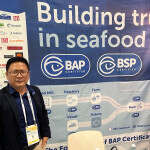




Jasmijn Venneman is commercial outreach manager for Seafood Trade Intelligence Portal (STIP), which is a social enterprise based in Utrecht, the Netherlands. STIP aims to improve the transparency and sustainability of the global seafood sector. Through its online products and tailored-made consultancy, STIP provides intelligence on established and upcoming markets and sourcing countries.
SeafoodSource: What is your role with STIP?
Venneman: My main role is to engage with seafood buyers and suppliers around the world to convince them to become a member and/or create a profile in our company database. I also represent STIP during events and trade shows and also work on market-related consultancy assignments for STIP members and external parties.
SeafoodSource: What are the skills or traits necessary to be successful in your job?
Venneman: As a commercial outreach manager I believe it’s important – and I hate the phrase, but it’s true – to be a “people person.” This means for me that you have to enjoy being around people and enjoy making new connections with people that often speak a different language and have a different cultural background. You have to enjoy networking and need to be able to identify opportunities for new business and collaboration with other companies. Only with a extensive network with the right connections and strong collaborations is STIP able to grow as fast as its doing right now.
SeafoodSource: How does your background with Anova Seafood, as purchase and account manager for frozen products, help you with your current job at STIP?
Venneman: Looking back, the time with Anova has given me the foundation of knowledge and experience I need to understand the global seafood industry, its people, and the commercial side of the business. It has given me the opportunity to understand what it takes for a company to be successful in the seafood business, and what are the complexities and difficulties that companies in it face when they are active in the sector. This knowledge allows me to relate to the STIP members and understand how we can support them best.
On the other hand, aside from all the knowledge and experience I gained, during my time at Anova I also grew to love the sector, the international and intercultural nature of it, and the way each day is never the same as you deal with animals, currents of the sea, climate, etc. Looking back at my time with Anova, it couldn't have had a better company to have started my professional career.
SeafoodSource: What do you see as the biggest challenges related to transparency in the supply chain and sustainable seafood resources? What solutions do you envision to address these challenges?
Venneman: I think the biggest challenge related to transparency is the actual lack of transparency in the seafood supply chain itself. This lack of transparency is exactly the reason why STIP was founded. The fragmented nature of seafood supply chain makes it hard to really understand what is happening, which makes making business decisions more difficult and investments in seafood seem more risky. We believe that by creating more transparency through providing intelligence and showing what is actually going on in a specific seafood sector of a country leads to better, more sustainable business decisions and more investments in sustainable seafood will be made.
Another challenge is the protectionism of seafood businesses and lack of communication between them. Afraid of losing a competitive advantage over other seafood companies, the seafood sector seems to think lack of transparency is best for them and benefits them by protecting their competitive advantage. I firmly believe the global seafood sector would benefit from better communication and the initiation of pre-competitive initiatives to address and find solutions for industry wide concerns and issues. Examples of that are the pre-competitive stakeholder dialogues STIP organized to address the problematic situation on antibiotics in the importation of Indian shrimp to the E.U. Another issue that I believe also would benefit from a pre-competitive dialogue is the treatment of shrimp and how to deal with that for the E.U. or globally. In these types of pre-competitive collaborations consensus on pre-competitive levels are reached and ground rules are defined, which leads to a more honest, sustainable, and transparent seafood business.
Apart from transparency and communication, I believe education is indispensable to increase sustainable practices in aquaculture and demand for sustainable seafood options. For example, on the farmer level, teaching about antibiotic-free farming or sustainable usage of water. And educating the consumer on sustainability, treatment, and so on so they will be better able to judge a product and make a well-thought decision on sustainable seafood. With pressure from end consumers wanting a more fair and sustainable product this will, in the end, be the real accelerator for the demand for and increase of sustainability in the overall sector.
SeafoodSource: What are three things people would be surprised to know about STIP?
Venneman: STIP is a small organization, but we have a global presence through our network of associates and Solidaridad regional offices that allow us to have our boots on the ground in all major seafood producing areas globally.
STIP was initially founded by Solidaridad to develop a supplier/buyer database with extensive, detailed profiles that would enable profitable and sustainable seafood partnerships. In the meantime, we have developed into a full-service company that has a focus on seafood intelligence, and thereby increasing the transparency on a broad level.
The motto of STIP is “we don’t judge,” which actually means that when people read our intelligence, the ShrimpTails magazine, or any other intelligence or supplier profile we publish, they can be assured they read only factual information on which they are able to base sustainable business decisions.
SeafoodSource: What are three things people would be surprised to know about you?
Venneman: People would be surprised to know that even while I am in a commercial position, I am actually not a sales person – never have been and I do not even like sales. I use my drive to make connections with people and sell by making the connection and building strong relationships with people. Apart from that I speak Spanish fluently and I have lived three times in Spain.
