




The evolution of the fishery improvement project (FIP) landscape over the last five years can be summed up in one word – diversity.
According to California-based consulting group CEA, FIPs have shown diversification in geography, species, models, end goals, and the government systems they are working within. Driven largely by increased industry engagement, there has been a 221 percent increase in the number of FIPs with multiple lead organizations – typically between industry and NGOs, between 2018 and 2023.
CEA recently released its State of FIPs Review, providing a comprehensive overview of FIPs and their activities across the globe.
As older FIPs transition to certification or become inactive, the total number of active FIPs is plateauing at approximately 300 projects, and the numbers may even be in decline. Global landings from FIPs have seen little increase since reaching 11 percent in 2016. There are likely a number of factors influencing the leveling off.
“Price, not sustainability, remains the primary concern for industry in an era of increased uncertainty. Trade barriers and changing geopolitical landscapes were cited as reasons for heightened uncertainty among distributors and importers. Such uncertainty negatively affected their ability and willingness to engage in FIPs," CEA Consulting Director Marah Hardt, who authored the report, said. "Trade dynamics and policies have reduced the competitiveness of some FIP products, especially from the Global South to the U.S. and E.U. Demand from East Asia for sustainable seafood is mounting, but it is still too soon to assess the strength of these markets.”
While business headwinds may account for some of the slowdown, the model has been successful across the globe from Mexico to South Africa to Indonesia, and the strategy may have already captured the low-hanging fruit of fisheries improvement. The number of total FIPs increased 145 percent over the last ten years, according to the report. Now, expansion of the model into new markets and difficult fisheries will likely move at a slower pace.
“FIPS in larger, industrial fisheries have managed to engage a vast majority of the large retailers and buyers in North America and Europe. Building out the model in new, smaller fisheries requiring the engagement of a new set of market players who recognize the value of FIPs is a tall order. We're seeing some progress in Japan. We're seeing some progress in Korea, but there is going to be a lag in those markets as they work to build up the demand for sustainability and create supply chain leverage for the model,” Hardt said.
Despite the challenge of building route-to-market solutions for FIPs, Southeast Asia is a hotspot for FIP activity and has become the region with the greatest number of FIPs, driven in part by growth in Indonesian and Taiwanese improvement projects.
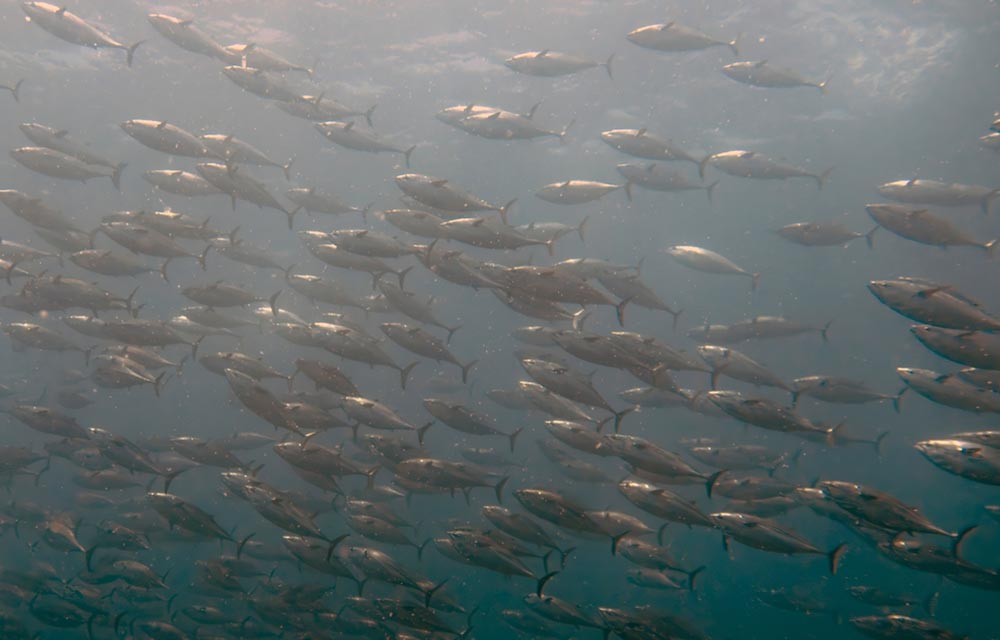
While multi-species, lobster and squid/octopus FIPs have seen growth, tuna FIPs are still the most prevalent for species, but like FIPs generally, growth has slowed. Tuna FIPs reflect the diversifying but stagnant trend in FIPs generally. Despite not growing in numbers, tuna has seen a diversification of models including “bottom-up” FIPs that are launched by fishing cooperatives or processor associations.
“In tuna, you still have traditional, ‘top-down’ FIPs driven by retailers pushing requirements down through the supply chain. But we are seeing more FIPs launched to drive improvements to access markets rather than retain markets. They do not start with a connection to the market or retailers – they are trying to build market connection through the verifiable practices in a FIP. This is a difficult process and slow going,” Hardt said.
Along with market headwinds, model saturation, and the challenges of the bottom-up model, diminishing financing – particularly from foundations – has also likely contributed to the number of FIPs that have gone inactive. Philanthropic dollars going to FIPs have decreased by close to 40 percent since 2019 and 50 percent since 2016, reflecting a broader reduction in funding going toward work in the seafood sector. Rather than supporting individual FIP projects, the money that has continued to flow into the FIP space from philanthropy has been focused on infrastructure for the growth of the FIP model, with funding going to FisheryProgress, Sustainable Fisheries Partnership’s ratings program, the FIP Community of Practice, and the Conservation Alliance for Seafood Solutions, according to the report.
Funding from seafood companies and industry associations was estimated by CEA to be at nearly the same level as philanthropic funding in 2024, and it is likely that industry will continue to play a leading role in financing FIPs.
FIPs are also starting to see new types of financing mechanisms, including the new Fishery Improvement Fund (FIF), the SSF Tech and Markets Intermediary Collective, and a loan guarantee facility, but as CEA points out, these innovations are engaging less than 10 percent of FIPs.
Diminishing numbers does not necessarily mean diminishing impact. Individual FIPs continue to improve the management of fisheries resources to the benefit of fishing communities and supply chains that can access new, responsible seafood products.
Another area where it’s difficult to gauge progress is in FIP interactions with government.
“Governance capacity remains one of the strongest predictors of FIP success, yet the ways FIPs interact with government structures are complex and difficult to measure. Political turnover and shifting priorities frequently disrupt progress, forcing implementers to reinvest time and resources in re-engaging new officials, especially in long-running projects,” Hardt said. “But the work FIPs are doing to build out the enabling conditions allow governments to build on these activities to formalize data collection and stock assessment activities and/or focus on critical government activities like rulemaking and enforcement. The role of instigators of good management that FIPs play delivers real value to fisheries management, communities and responsible supply chains.”
