






 Victor Scargle
Culinary Director
JCB Collection
Yountville, California, U.S.A.
The first question Victor Scargle asks when he’s told someone doesn’t like fish is, “Why not?”
Scargle usually finds the reaction stems from a bad experience, perhaps from childhood, of from it being poorly prepared, overcooked, or fishy-tasting (he says fish should never taste “fishy”). His first reaction is to reach for Alaskan halibut, local petrale sole or even scallops. Secondly, for a method, he recommends poaching in grapeseed oil over low heat.
“Grapeseed oil is a sweet, non-greasy oil and really healthy,” Scargle said.
As some meat-eaters like good texture in a dish, Scargle often adds some crisp, thinly sliced cucumber, shallots for added depth, and a sweet tartness of the verjus.
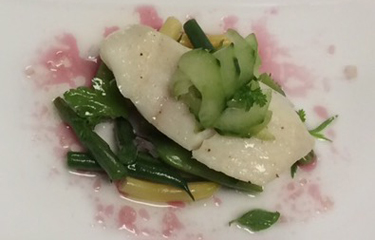
Grapeseed oil-poached Alaskan halibut with pole beans, torn herbs verjus vinaigrette
Serves 8
- 2qts Grapeseed oil (Scargle uses the Salute Sante. It can be strained, refrigerated and reused.)
- 8 x 6oz filets Alaskan halibut center cut pieces (uniformity of thickness)
- Kosher salt
- Pepper
- 3oz each Bluelake, yellow wax, Romano and Haricot Verte beans cut into 1” pieces blanched in salted water and shocked in iced water
- 1 medium shallot, Brunoise
- 1 Persian cucumber, thinly sliced
- juice of ¼ lemon
- 2 tablespoons extra virgin olive oil
Seasonings
- 2 tablespoons tarragon leaves
- 2 tablespoons chopped chives
- 2 tablespoons chervil sprigs
- 2 tablespoons torn basil leaves torn
- 2 tablespoons torn parsley sprigs
- 1teaspoon coriander seed
- 1 teaspoon fennel seeds
- ¼ teaspoon white peppercorns
- 2 bay leaves
- 2 tablespoons red Verjus
Place half of each of the fresh herbs and all of the spices in cheesecloth and tie with butcher’s twine. Place in grapeseed oil in sauce pan or casserole dish large enough to hold the fish in a single layer, and slowly bring to just a simmer - 140 degrees.
Season fish with kosher salt on both sides and a little bit of pepper on the side where skin was removed. Place fish in the oil making sure it is completely submerged.
While fish is cooking place shallots in a sauce pan with a little bit of oil and sweat over low heat for 4 minutes, then add beans just to warm through.
Mix thinly sliced cucumber with lemon juice, salt to taste and a little extra virgin olive oil.
Check halibut with a skewer or point of a knife into the side of the fish so guest cannot see where you checked it. It should slide in without resistance.
To finish and plate, add fresh herbs to beans, season with salt and add Verjus (do not add Verjus too early or the acid will turn the beans brown.) Place beans and shallots in the center of plate or bowl. Remove fish from oil and place on top of beans (beans should not be in a pile but spread out or when you place the fish on the beans it will break fish apart, you also want to show all the different colors of beans so spread them out)
Once fish is on top of beans add a pinch of finishing salt kosher or Maldon and then place cucumber salad on top of fish. You can finish with a drizzle of Verjus in the oil from the beans.
