




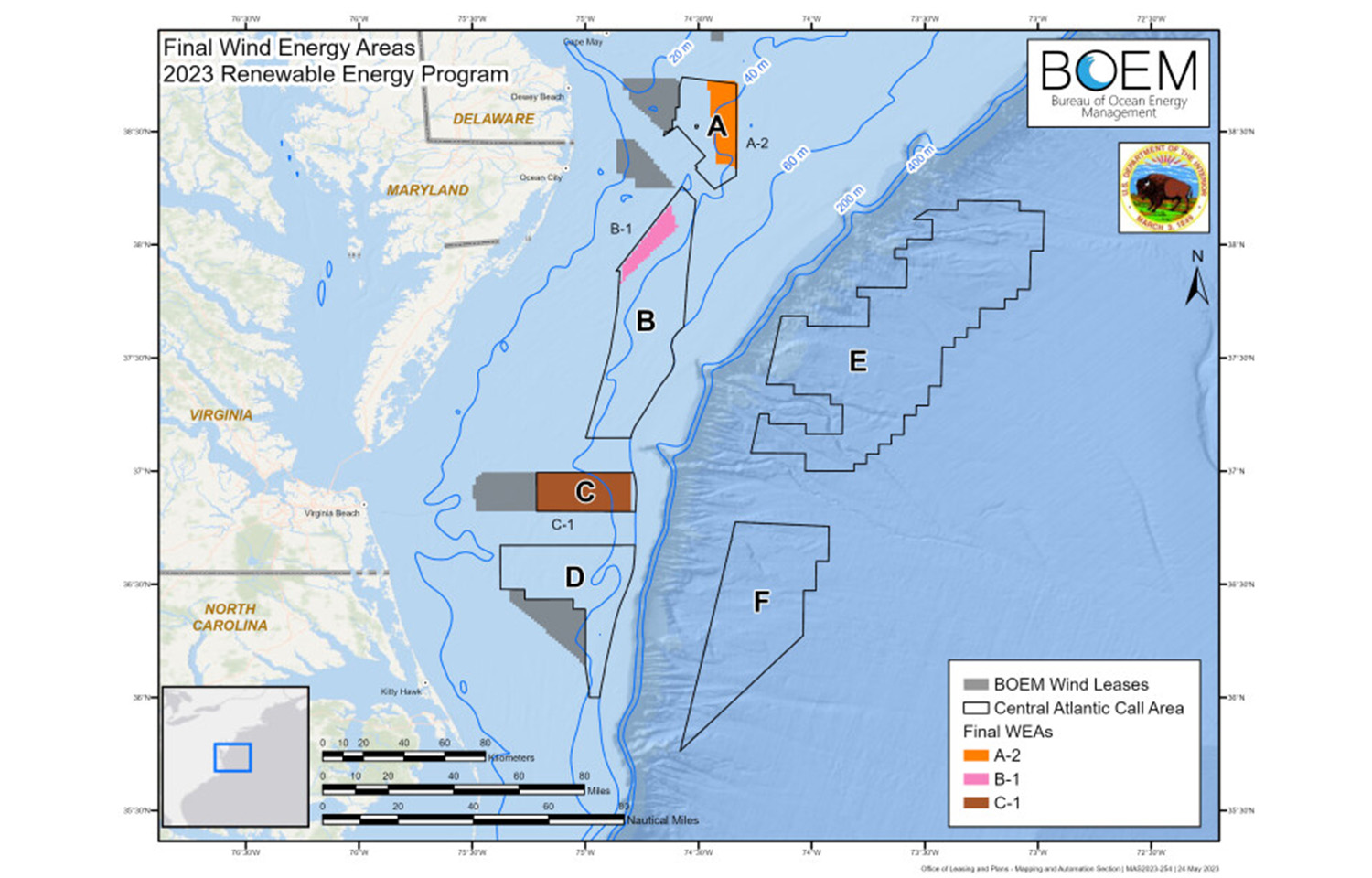
The Bureau of Ocean Energy Management (BOEM) dealt a massive blow against offshore wind on 30 July by abruptly rescinding all Wind Energy Areas (WEAs) it had designated on the Outer Continental Shelf (OCS), canceling years of planning dating back to 2014.
“By rescinding WEAs, BOEM is ending the federal practice of designating large areas of the OCS for speculative wind development and is de-designating over 3.5 million acres of unleased federal waters previously targeted for offshore wind development across the Gulf of America, Gulf of Maine, the New York Bight, California, Oregon, and the Central Atlantic,” BOEM said in a statement.
BOEM’s cancelation of the WEAs followed Interior Secretary Doug Burgum’s order on 29 July to “end preferential treatment for unreliable energy sources like wind.”
“At the end of the last administration, over 3.5 million acres offshore were designated as WEAs, which are pre-approved zones where the federal government could auction leases for offshore wind development,” a statement from Burgum’s office said. “By terminating these, we are safeguarding our coastal environments and local economies from unchecked development while ensuring our power grids are not underpinned by unreliable, subsidized energy sources.”
The Interior statement further promised to engage with stakeholders who have opposed wind projects.
“The Department will strengthen its guidance to ensure more meaningful consultation regarding offshore wind development, especially with tribes, the fishing industry, and coastal towns,” it said. “The construction and operation of offshore wind turbines have disproportionate impacts on these stakeholders, from disrupting commercial fishing to driving away tourism.”
U.S. President Donald Trump campaigned in 2024 on a promise to end all offshore wind projects “on day one” of his second term, and Burgum moved to fulfill that by issuing a stop-work order on Equinor’s Empire Wind project off New York on 16 April.
BOEM then lifted the order in May – to the dismay and rage of offshore wind opponents such as the Fulton Fish Market Cooperative who have been pressuring the administration to block wind developers.
Trump himself has only intensified his denunciations of wind power, publicly arguing on his recent trip to meet European leaders that their nations must abandon wind development.
Offshore wind advocates at the Oceanic Network reacted quickly to the Interior Department’s broadside.
“The Department of Interior’s latest directives continue a false narrative on an established American industry that will prevent an important source of baseload power generation from reaching the grid when ratepayers are already feeling the effects of rising electricity prices,” Oceanic Network Vice Senior Vice President of Communications and External Affairs Stephanie Francoeur said. “This will result in even higher energy costs, increased blackouts, job loss, and billions of dollars in stranded investments, further delaying shovel-ready projects supported by a domestic heavy manufacturing supply chain renaissance that spans 40 states.”
