



An environmental court in Chile has accepted claims filed by the Chilean arm of salmon-farming firm Cooke Aquaculture against disciplinary measures issued by the country’s Superintendence of the Environment (SMA).
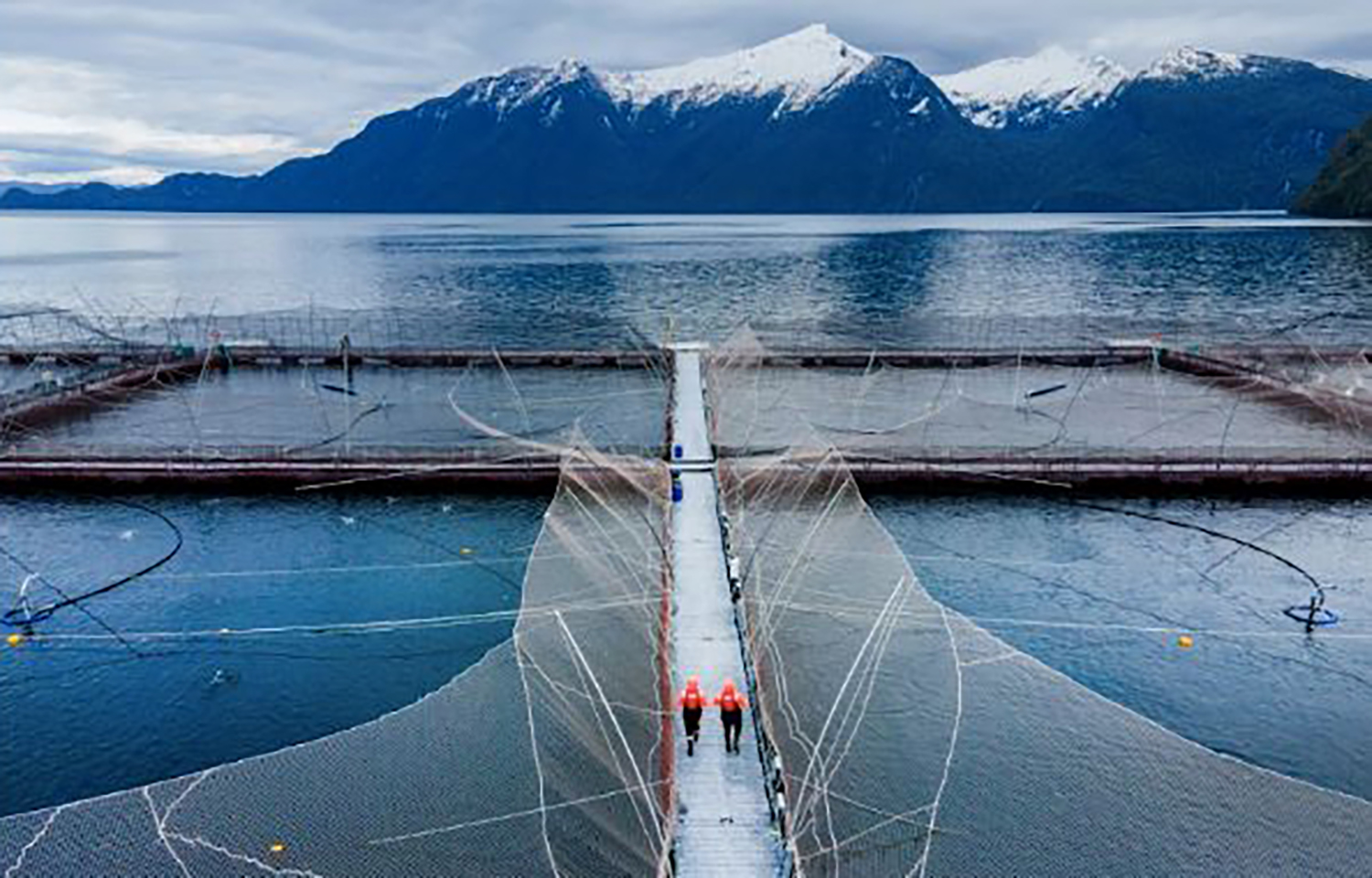
According to the ruling, which concerns Cooke’s Huillines 2 and Huillines 3 farming centers in southern Chile’s Aysén region, the centers’ operations do not represent an imminent danger to the environment, and as such, SMA’s orders for the centers to partially halt operations were unjustified.
In August, SMA ruled that Cooke Chile had to partially close the two centers and levied fines on the firm totaling CLP 1.38 billion (USD 1.42 million, EUR 1.22 million) for what it determined were environmental crimes committed by the company.
However, SMA “did not provide concrete or updated technical evidence to accredit the specific environmental effects,” the court said in its recent ruling, reinforcing that Cooke Chile has all the necessary sectoral permits for the development of its business.
Cooke Aquaculture Chile CEO Andrés Parodi has been outspoken in his criticism of SMA’s procedures throughout this case, calling the process unprecedented, nonsensical, and arbitrary and claiming the watchdog has been “blinded by its unlimited and ideological power.”
In its resolution, the environmental court agreed with Parodi on some of his claims.
“Any affirmation about the existence of an imminent environmental risk must be supported by additional, specific, and technically robust antecedents,” the resolution said.
In making its decision, the court pointed to environmental reports from the Chilean National Fisheries and Aquaculture Service (Sernapesca), an independent SMA-appointed expert, as well as external studies commissioned by Cooke, which found that the centers operate under aerobic conditions and comply with the standards of oxygenation and culture density required by the nation’s General Law of Fisheries and Aquaculture.
These reports “do not constitute mere administrative reports but correspond to technical environmental monitoring instruments based on scientifically and operationally validated parameters, whose purpose is to objectively determine the environmental status of the farming site,” the ruling stated.
The environmental court also reproached the SMA for its prolonged use of provisional measures against Cooke, reinforcing that those measures are meant to be exceptional and temporary.
“The distortion of the temporary and exceptional nature of the provisional measure has, in fact, meant that it operates as a camouflaged sanction against the [firm], imposed without a prior procedure that would permit [the company] to adequately exercise its right to defense,” the ruling said.
Parodi applauded the court’s ruling.
“We appreciate that the justice system has recognized the legality of our operations and Cooke Chile’s permanent adherence to standing regulations. This ruling not only vindicates our position but also demonstrates SMA’s arbitrary and technically unfounded actions,” he said. “For years, we were prevented from operating two of our fully authorized centers, with an impeccable environmental record, based on arguments that lacked scientific support. Justice takes time, but it came. Unfortunately, the damage has already been done to our operations, our workers, and our trust in the SMA.”
Still, the judicial decision will now provide the legal certainty that the aquaculture sector requires, Parodi said, noting that the ruling will serve to reinforce confidence in the institutional framework regulating the industry.
“We hope that this ruling will set a precedent and put an end to the unjustified use of interim measures without a technical or legal basis. The decisions of state agencies must be based on scientific evidence, not on ideological prejudices,” he said.
Parodi added in a LinkedIn post that he hopes the firm can now move forward.
“I celebrate that there were objective judges of integrity who got to the bottom of the matter and ruled under the law and in our favor,” he said in a post. “This is the justice that Chile deserves, not that which is guided by ideologies and poetry. To cause so much damage, they should at least have had foundations and facts. I find it incredible that for years, they did not want to listen to us; I hope that now they do and we can turn the page and work tranquilly.”
Cooke Aquaculture entered Chile in 2008 when it purchased Salmones Cupquelán for USD 106 million (EUR 90.1 million). In 2013, it spent USD 20 million (EUR 17 million) to acquire a 54 percent stake in fellow salmon-farming firm Invermar, and in 2017, it purchased a processing plant and offices in Tepual, Chile, from Marine Harvest, allowing it to develop its own processing capacity.
