



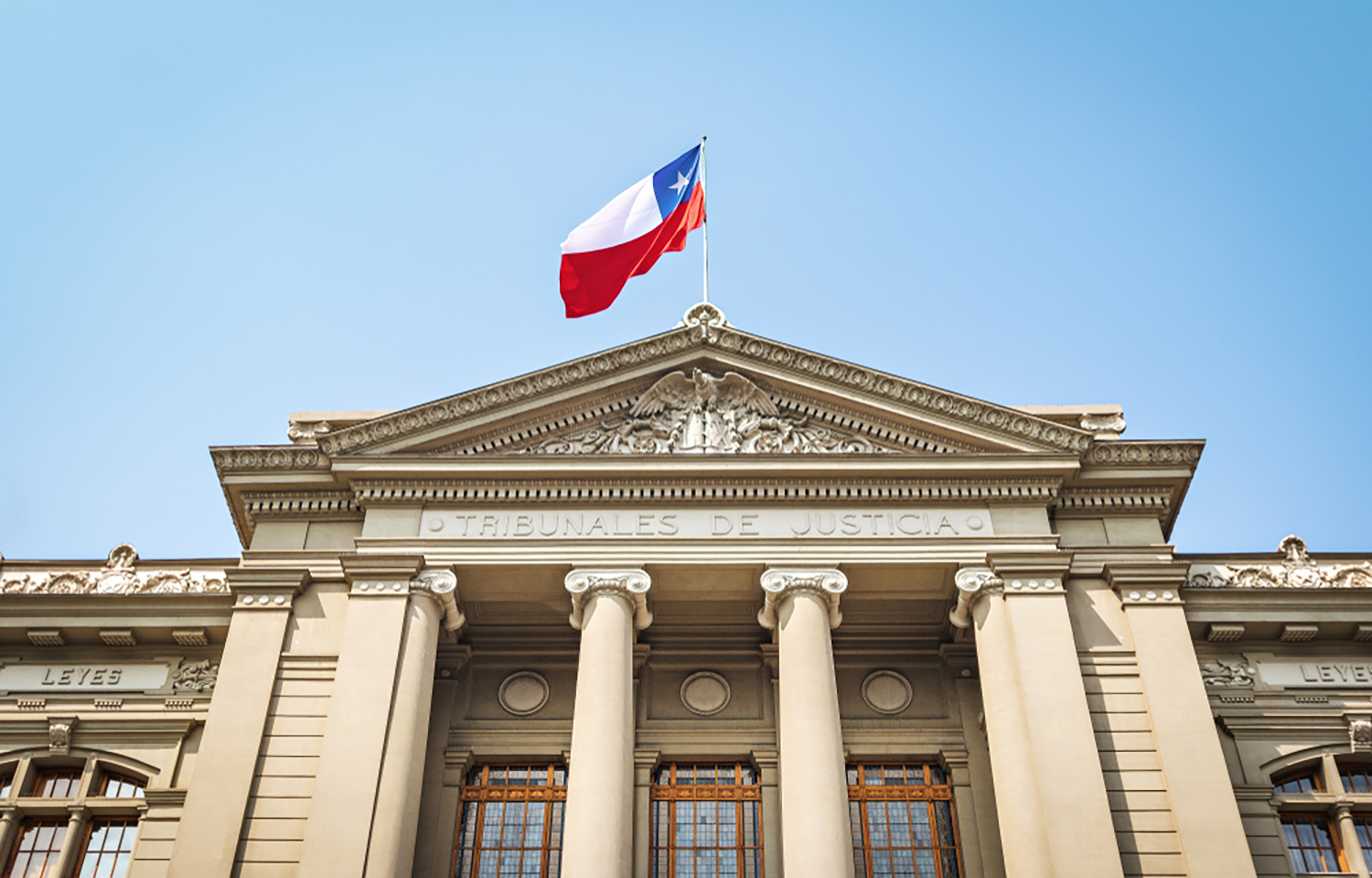
Salmon-farming firm Cooke Chile has taken a recent decision made by the Chilean environmental regulation supervisory authority, SMA, to the nation’s Supreme Court, ramping up the four-year feud between the two sides.
“The system needs to be reformed urgently!” Cooke Aquaculture Chile CEO Andrés Parodi said in a post on LinkedIn. “Companies that comply with the rules and have all the permits that the growing bureaucracy demands are damaged by those who [do not operate] based on facts or science. I want to believe that the Supreme Court will restore the rule of law and put an end to this unjust, discriminatory, arbitrary, and baseless attack of which we have been a victim.”
Cooke Chile's dispute with the SMA dates back to 2021, when the supervisory entity filed charges against Cooke, accusing it of producing salmon at levels beyond its environmental permit and of maintaining some of its concessions illicitly inside the Laguna San Rafael National Park.
The salmon company, for its part, has argued that rules have been changed capriciously since it originally won the concessions in the 1990s.
Parodi has also insisted that sanctions and other measures SMA has carried out are arbitrary, such as the mandated halting of operations at Cooke’s Huillines 3 grow-out center. According to the company, this move has generated significant economic losses for which it may seek international arbitration.
The Chilean Third Environmental Court sided with the SMA in its move to halt operations at the center, but now, Cooke Chile has appealed to the Supreme Court, saying that operations at the Huillines 3 center has been paralyzed without objective grounds, leading to the loss of dozens of jobs and economic damage of USD 27.5 million (EUR 23.4 million).
Cooke Chile is seeking a Supreme Court ruling of cassation, which would annul the environmental court ruling, on the grounds the move violates Article 48 of the Organic Law of the Superintendence of the Environment. Cooke asserts that the SMA’s provisional measure is equivalent to the de-facto closure of a farming center, even when there is no proof of there being a risk of imminent damage to the environment – a requirement under the law to justify such a closure.
The environmental court ruling “has ignored abundant evidence provided by the company, which proves that the operation of the farming center does not generate any risk, while the SMA has not provided any evidence [to the contrary] in this process or in the respective administrative sanctioning procedure,” Cooke reportedly said in its case before the Supreme Court.
Cooke has asserted that the only information the SMA used to justify imminent risk to the environment included an article published by an environmental NGO, which the company has said represents a conflict of interest.
The accusation of environmental activism influencing government actions is not new to Chile; fellow salmon-farming players such as Blumar CEO Gerardo Balbontin and SalmonChile President Arturo Clement, as well as some parliamentarians, have questioned the ulterior motives of environmental NGOs and called on Chile to establish a countrywide vision to turn salmon farming into an economic pillar.
Cooke Inc. CEO Glenn Cooke has also cast doubt on what he said were unscientific claims stemming from activists.
“You get these big organizations like [outdoor clothing retailer] Patagonia that end up driving governments like in Chile,” Cooke said in 2023. “They obviously fund a lot of campaigns.”
Cooke Chile asserted that the information the SMA used to justify imminent risk to the environment also included a paper prepared in Norway – Chile's largest competitor in the salmon-farming industry – which refers in general terms to the potential effects that aquaculture can have and does not mention the operations at the Huillines 3 center specifically.
“We do not understand the reason why the environmental court has not considered our claim, since, as we have always stated, we have all the sectoral authorizations established by law to stock the center and develop our activity in accordance with current regulations, as Cooke has done since it began its operations in the country,” Parodi reportedly said. “The center has been inspected on repeated occasions, and it has never been possible to prove imminent environmental damage, as the SMA maintains. They just prevent us from working. For this reason, we will go to the Supreme Court, where we trust that this prohibition will be reversed and the law will be respected.”
Cooke Aquaculture entered Chile in 2008 when it purchased Salmones Cupquelán for USD 106 million (EUR 90.1 million). In 2013, it spent USD 20 million (EUR 17 million) to acquire a 54 percent stake in fellow salmon-farming firm Invermar, and in 2017, it purchased a processing plant and offices in Tepual, Chile, from Marine Harvest, allowing it to develop its own processing capacity.
