





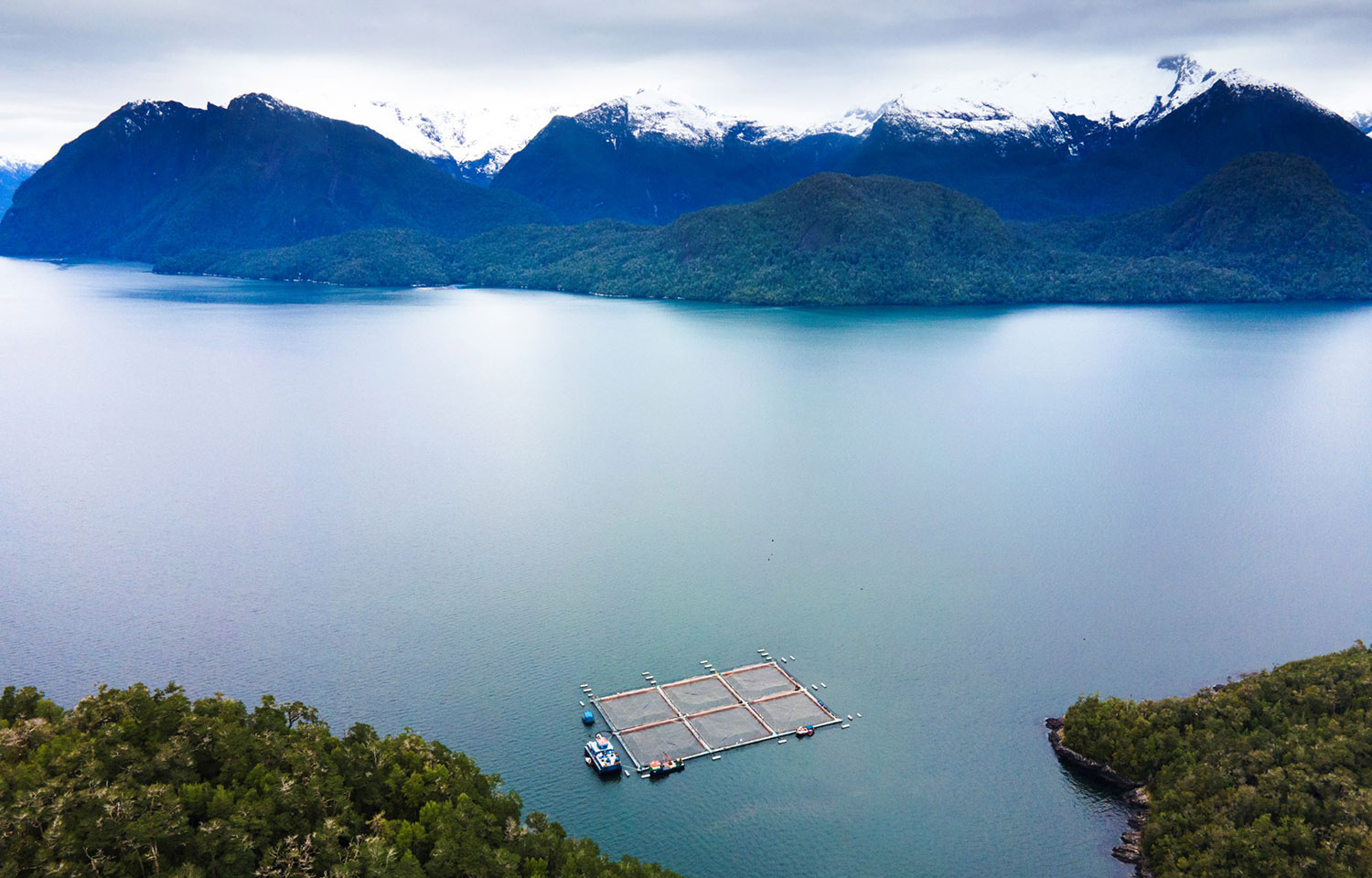
The Chilean branch of salmon-farming firm Cooke Aquaculture has yet again raised concerns it is being discriminated against by Chile’s Superintendency of the Environment (SMA), which the firm claims has affected its operations and for which the company continues to say it may seek international arbitration.
Cooke Chile and the SMA have locked horns for years.
The environmental watchdog has filed charges against Cooke and has accused it of overproducing and operating concessions illegally within the Laguna San Rafael National Park.
In early 2023, Cooke filed a lawsuit asking for relief from the SMA’s mandates.
At the time, Cooke Aquaculture Chile CEO Andrés Parodi said in a letter to Chile Environment Minister Maisa Rojas that SMA’s order to significantly reduce production at its farms is “simply unthinkable from an economic standpoint and would lead to the need to close those centers, besides constituting a regulatory expropriation.”
Parodi recently said that these issues have not gone away.
In several posts on LinkedIn, he lamented regulatory sanctions and measures that the company considers arbitrary, such as the mandated halting of operations at its Huillines 3 growout center, which according to the company has generated significant economic losses.
According to Parodi, when salmon-farming operations began there, the SMA established a minimum amount of salmon production required for each concession. However, in recent years, the watchdog arbitrarily turned that idea on its head and determined that the minimum amount had become the maximum amount of production allowed, according to Cooke.
“Huillines 3 … established minimum production so that there would be no speculation with the obtaining of concessions … to produce and develop [aquaculture] in the extreme south of the country. From then until today, Subpesca [Chile’s Undersecretary of Fisheries and Aquaculture] and the Economy Ministry have ratified this criterion through practice year after year,” he said. “The SMA unilaterally and retroactively changed the criteria, without coordination with the other state agencies, and decided that technical projects would no longer be a production minimum, but now a maximum, despite the fact that that word has never appeared or been used in the technical project of the center in question.”
He presented an analogy of the “unusual” move, stating that it would be similar to a highway that had a maximum speed limit of 100 kilometers per hour and a minimum speed of 10 kilometers per hour, with authorities then changing their minds, saying the minimum and maximum speeds would both be set at 10 kilometers per hour, and threatening fines or vehicle impoundment if drivers surpassed the new maximum speed.
“The SMA paralyzed the stocking of a farming center simply because it occurred to them one morning that the technical project was the ‘maximum speed’ at which we could go in 2024,” Parodi said. “All the experts hired by the company and the university suggested by the SMA have declared that this growout center complies with the current environmental provisions and has not caused damage to the environment.”
Parodi said that the measures “are not based on science.”
“In southern Chile, they put jobs, new investments, [and] trust in institutions at risk [and] do not respect signed agreements,” he said.
He insisted that Cooke Chile has demonstrated “full compliance with environmental standards and that there has been no damage to the environment,” with no faults found even after several inspections by authorities.
“This is what the SMA has done to Cooke Chile in practice; it does not let us work a concession legitimately granted by the state, which translates into a covert expropriation, and for what reason? Pressure from NGOs? Demonizing a sector? Delusions of power?” he said.
He is not alone in questioning undue pressure from NGOs in Chile.
Executives such as Blumar CEO Gerardo Balbontin, SalmonChile President Arturo Clement, and Congressman Miguel Angel Calisto have questioned the ulterior motives of some environmental NGOs and called on Chile to establish a countrywide vision to turn salmon farming into an economic pillar.
“We are approaching the fourth year that the SMA has not allowed us to work two concessions for salmon farming granted by the state,” Parodi said. “Goodbye legal certainty, good faith, legitimate expectations, objectivity, investment protection, coordination between state entities, and acquired rights.”
Cooke Aquaculture entered Chile in 2008 when it purchased Salmones Cupquelán for USD 106 million (EUR 104 million).
Its decision to enter the South American market was driven by “the stability of the regulation and the seriousness of the decisions made by the Chilean authorities,” Parodi said previously.
