






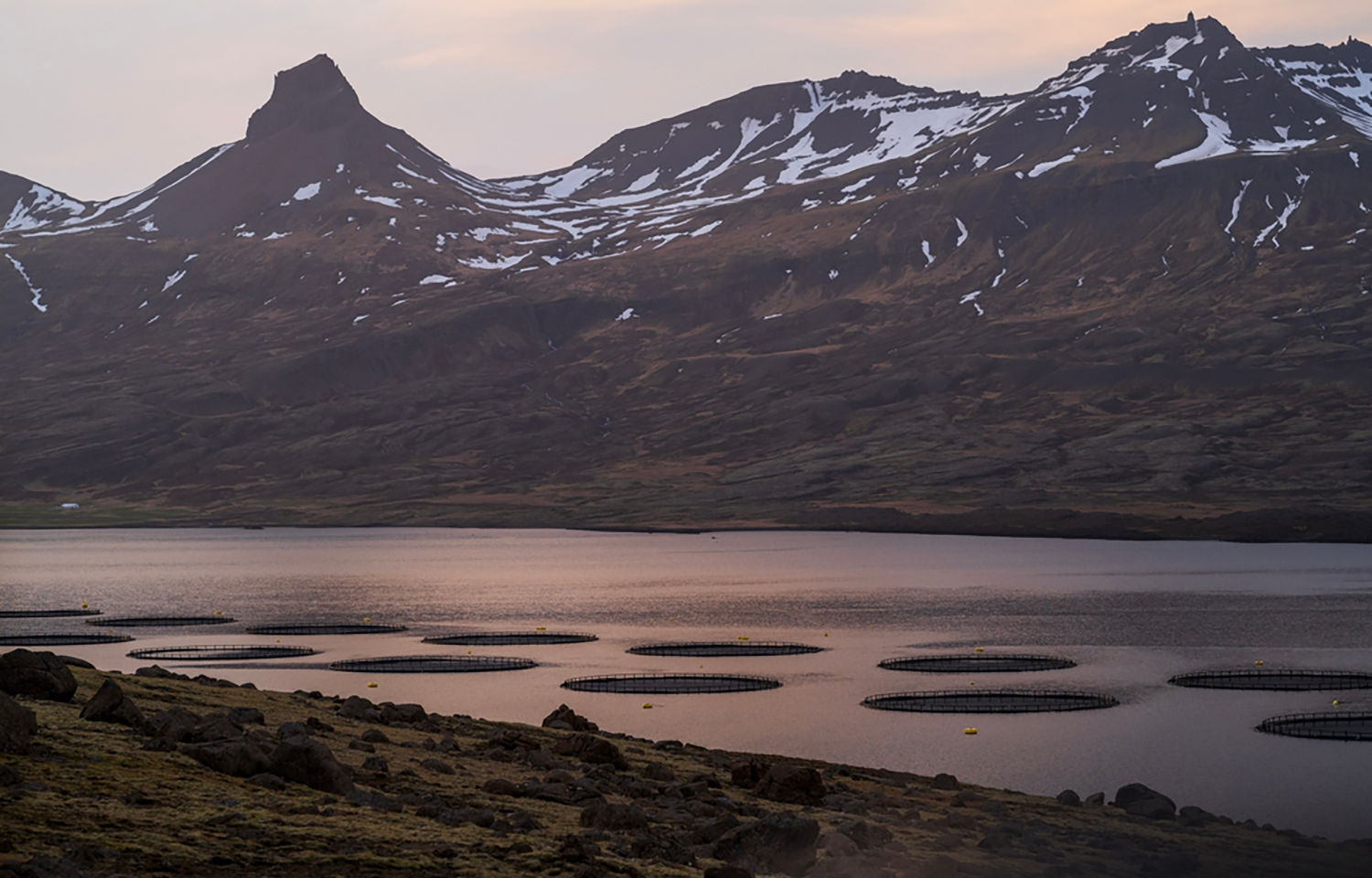
The Icelandic government is proposing a new bill that, if passed, would place the nation’s entire aquaculture sector under a unified regulatory framework.
The draft of the bill working its way through Icelandic Parliament aims to lessen the environmental impacts of fish farming and support sustainable growth through such actions as encouraging closed-containment systems, stricter governmental responses to sea lice infestations and fish escapes, stronger electronic monitoring, simplifying the process to acquire operating licenses, and more.
As part of the bill’s path through parliament, the Icelandic government opened it up for consultation, garnering vehement feedback from the nation’s seafood industry, NGOs, the public, and other interested parties.
“When you look at the proposed bill, the main objectives are very vaguely worded and very non-bio[logical] when it comes to nature and ecosystem protection,” Federation of Icelandic River Owners (FIRO) Manager Jóhann Helgi Stefánsson said. “The disappointment begins just in the first article of this proposed law.”
Like more than 800 other organizations and individual Icelandic citizens, FIRO submitted comments on the bill during the public comment period, which ran until late January.
According to Stefánsson, many small villages in Iceland depend on wild salmon, and he said wild stocks would be in danger if net-pen salmon farming increases.
“We need to have strict rules regarding these companies because it is not only the protection of the wild salmon for its own worth. It is hugely important also for local economies,” he said.
The organization proposed only allowing the farming of sterile fish to prevent interbreeding between wild and farmed salmon. Although he concedes that it’s not a common practice, he said he is convinced that if the market demands it, science “would find a way to do it.”
The Icelandic aquaculture industry has faced biological challenges in recent years, including high mortality rates and sea lice infestations, leading Icelandic Wildlife Fund representative Jón Kaldal to say that rather than letting industry grow, the government should call for a total pause until biological metrics are under control.
“[There should be] no more growth until they can show us they can do this,” he said.
Kaldal also said that the government is setting very few demands on the industry. He told SeafoodSource that the law, which is still under review, “would be an absolute disaster for Iceland's nature and wildlife.”
The Icelandic public has also expressed concern over aquaculture growth in the country. A Gallup poll from July 2025 showed that 64 percent of Icelanders have a negative view of open pen farming at sea.
Elsewhere, Iceland’s seafood industry has expressed doubts about the bill in its current state.
Though seafood industry federation Fisheries Iceland (SFS) highlighted some positives of the draft in its feedback to the government, it also criticized many aspects of the law, including overly burdensome provisions.
“Fisheries Iceland generally supports the objectives of the draft bill and agrees that the legal framework for aquaculture should be updated to support the sustainable development of the sector,” the organization said in a written comment sent to SeafoodSource. “That said, we consider several provisions of the draft bill unnecessarily burdensome and lacking in predictability. SFS therefore calls for further revisions and continued consultation to ensure the framework safeguards the competitiveness and investment conditions of the industry.”
Regarding the immense pressure that environmentalists had put on the law, including from such organizations as Patagonia, SFS said that balance must be struck between environmental concerns and sector growth.
“We recognize that environmental and anglers’ organizations, both domestically and internationally, are actively engaged in the debate, given the environmental stakes involved. Ultimately, the goal should be to establish a balanced framework that both protects the environment and enables sustainable growth and value creation in the aquaculture sector,” SFS said.
While the debate rages on, land-based operators have suggested that sea-based operations and land-based operations should be governed separately.
Land-based operators in the country have bet on Iceland soon becoming a major hub for land-based salmon production, with executives at the recently held 2026 North Atlantic Seafood Forum (NASF) outlining ambitious plans to scale output, which they say will be achieved by tapping into the country’s abundant water resources, renewable energy, and supportive communities.
The bill is currently under review by parties in the parliament and is expected to be back for open debate soon.
