



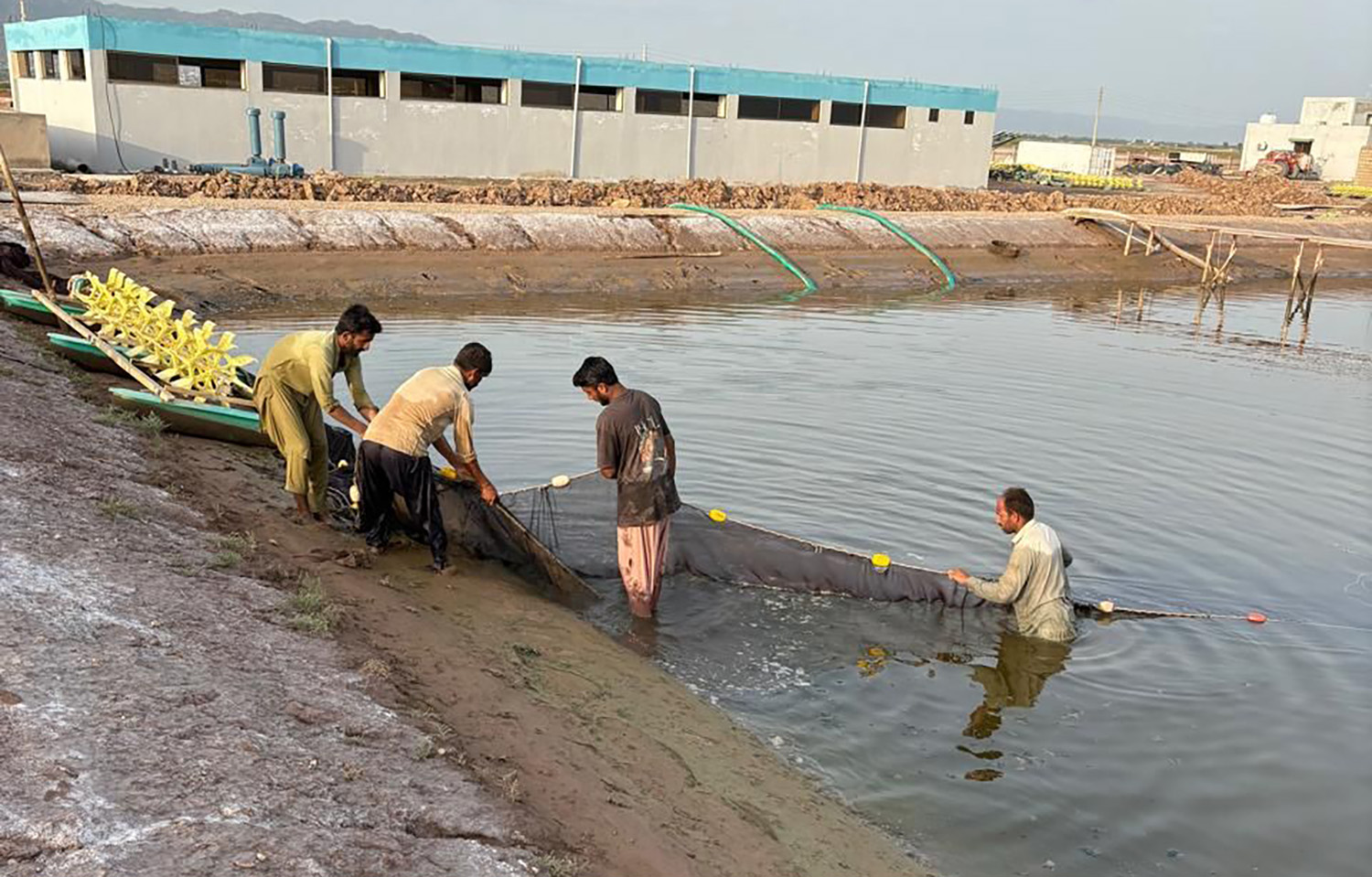
Pakistan’s most populous province, Punjab, has authorized a large-scale aquaculture initiative to develop shrimp-farming operations across 5,600 acres of land.
According to Pakistan’s Business Recorder, the project, described as the province's largest blue economy investment to date, aims to convert saline and unproductive land in the province into shrimp farms.
Official progress reports confirm that initial development at a site near the city of Sargodha has seen nine ponds constructed over 20 acres and a 5,320-meter drainage system finalized. Surveys for a 10-acre expansion are also complete, according to Business Recorder.
To support the program, two laboratories are being constructed: a PKR 4.5 billion (USD 16.1 million, EUR 13.7 million) quality control laboratory in Lahore is nearly complete, as well as a research laboratory in Muzaffargarh.
The initiative also includes a focus on technical capacity, with Pakistani experts pursuing specialized training in Saudi Arabia and Mexico.
Besides farm construction, the Punjab project has plans to become vertically integrated, including construction of hatcheries and processing plants, alongside improvements to cold storage and an integrated logistics chain. This ambitious infrastructure will be bolstered by international support from the United Arab Emirates, Saudi Arabia, Thailand, Ecuador, Australia, and Mexico, according to Arab News.
The push for shrimp farming in Punjab comes as Pakistan seeks to boost the value of its seafood exports. The country’s seafood exports set a record by volume in the 2024-25 fiscal year, which ended in June 2025, but still fell short of hitting the sector’s long-held value goals.
Exports by value rose 13.4 percent in the period to USD 465 million (EUR 399 million), and though that total spiked year over year, it still fell short of the sector’s long-held goal of USD 500 million (EUR 428 million).
However, demand in key markets picked up as 2025 came to a close, as Pakistan’s seafood exports to China rose 24 percent year over year to USD 240 million (EUR 204.6 million) in the first 11 months of 2025, driven by rising demand and improved cold chain logistics.
