






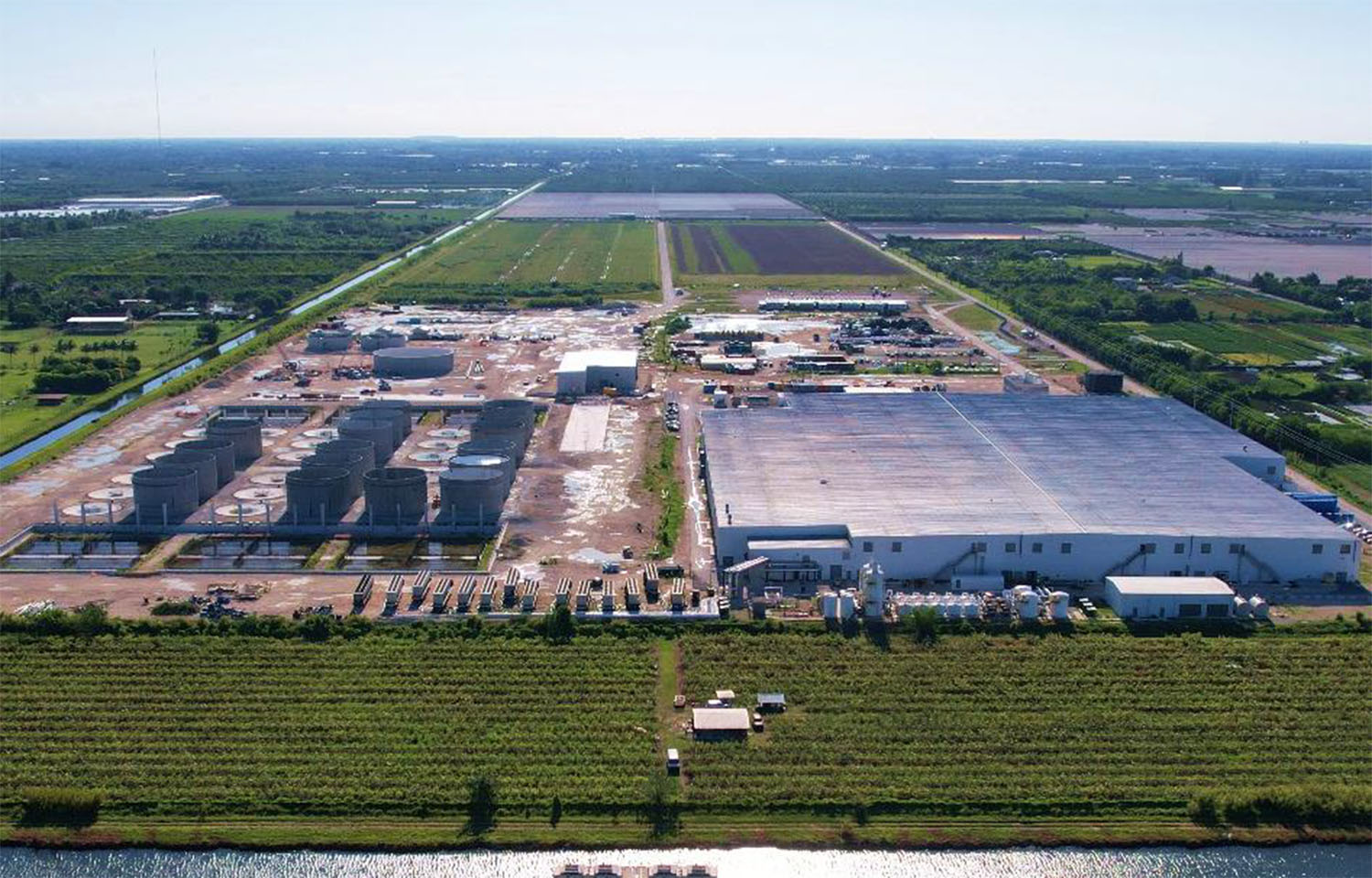
Miami, Florida, U.S.A.-based Atlantic Sapphire has OK'd a share capital increase to raise USD 64 million (EUR 57.5 million) for infrastructure improvements at its Atlantic salmon recirculating aquaculture system (RAS) facility.
The company first announced a potential share capital increase on 20 August and proposed a fully underwritten rights issuance of up to USD 60 million (EUR 54 million) and a directed convertible loan issuance of a minimum of USD 20 million (EUR 18 million). Existing shareholders including Nordlaks Holding, Condire Management, Strawberry Capital, as well as external investors, underwrote the equivalent of USD 60 million in Norwegian krone, the company said in August.
On 17 September, the company held an extraordinary general meeting which approved the plan, revising the amount to USD 64 million.
According to Atlantic Sapphire, the net proceeds from the rights issuance will be enough to finalize investments in infrastructure that will move toward achieving a positive EBITDA for its Phase 1 operations. The company said it estimates it will reach that point in Q4 2025 – five years after it harvested its first Atlantic salmon from its Miami-based RAS.
“The company further estimates an optimized Phase 1 to deliver 8,250 to 8,750 metric tons [MT] head-on, gutted of salmon in annual harvest at an EBITDA of USD 1.50 to 2.00 [EUR 1.34 to 1.79] per kilogram, as if on a standalone basis,” the company said.
According to the posting on the Oslo Børs, Nordlaks Holding, Condire Management, and Nokomis Capital all plan to acquire USD 15 million (EUR 13.5 million) of the rights issuance, and Strawberry Capital plans to acquire USD 5 million (EUR 4.5 million) of the issuance, reaching USD 50 million (EUR 45 million) in total.
In a recent presentation, Atlantic Sapphire said it has been making progress on its Miami-based RAS, and the infrastructure improvements it made in October 2023 have been successful. Those improvements came after the company undershot its biomass targets due to water temperature issues in June and July 2023. During the two months, Miami faced a record-breaking heatwave, with 46 days straight of a heat index reaching more than 100 degrees Fahrenheit.
Atlantic Sapphire later installed water chillers to solve its water temperature issues, which it said resolved those issues in October 2023. Since that time, the company has harvested every batch of salmon that was affected by the temperature issues, which it said means future revenue should improve as smaller salmon were giving “significantly lower revenue than expected due to not matching premium criteria on size.”
The company said alongside the new equipment, it also changed protocols, which have resulted in a much lower mortality. The company said it has had less than 1 percent mortality since November 2023, compared to prior months that would see mortality as high as 8 percent in some cases.
Even with that strong improvement, Atlantic Sapphire said it is not meeting the expectations it had for its Phase 1 operations. Based on current harvest totals, the company will fall short of the 9,500-MT capacity that it said the phase should have – which is already 500 MT lower than the 10,000 MT it originally projected.
The company acknowledged that despite the strong improvement in performance, it is not meeting the expectations from an equity round it held in Q1 2024.
“Unforeseen maintenance and limitations to the RAS facility’s water treatment capacity (bottlenecks) have forced the company to run at lower feeding volumes than planned,” Atlantic Sapphire said. “New management have identified several debottlenecking initiatives which requires additional capex to reach practical capacity of Phase 1.”
The company said it continues to construct its Phase 2 operations and once completed, the Miami RAS will have a targeted annual production capacity of 25,000 MT. The company also said it continues to shoot for its ultimate goal of producing over 200,000 MT of salmon a year.
