


Miami, Florida, U.S.A.-based Atlantic Sapphire said it experienced sustainable biological performance in its salmon recirculating aquaculture systems (RAS) throughout Q3 2025, with low mortality rates and steady harvest weights, and the company is predicting its cost trajectory will put it into positive EBITDA by the end of 2026.
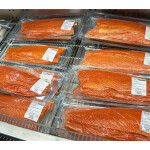
Atlantic Sapphire reported a total harvest volume of 1,427 metric tons (MT) of head-on gutted (HOG) salmon in Q3 2025, with average harvest weights above 3 kilograms HOG. That salmon achieved an average sales price of USD 8.58 (EUR 7.44) per kilogram, which the company said was a 19 percent premium compared to comparable price indexes for the species.
That price achievement came as the company said it managed to have 95 percent of its salmon achieve premium rating.
“Our operations continue to perform consistently, with stable biology, strong fish health, and improving production efficiency across all systems,” Atlantic Sapphire CEO Pedro Courard said. “Survival rates remain above 99 percent, harvest weights are consistently above 3 kilograms, and feeding efficiency has reached structural highs.”
The solid biological performance comes after a long, and at times tumultuous, journey for the salmon RAS company, which faced a suite of setbacks including emergency harvests of its fish and mortality events at its pilot Denmark-based facility – a facility which burned to the ground months later.
The company’s troubles didn’t end with the fire, as its Miami farm was undershooting biomass targets in 2023 thanks to high water temperatures that resulted in it forecasting lower harvests than expected.
After sorting out the water temperature problem, the company has realigned with its original farming projections.
Atlantic Sapphire Chief Sales and Marketing Officer Damien Claire told SeafoodSource in March the company was focused solely on growing large, healthy salmon in 2025.
During a presentation of the company’s Q3 2025 results, Courard said the solid biomass results are a direct result of the work the company has put in on its operations.
“We have continued the process of operational improvement in all areas, allowing us to keep our ambitions in terms of future production,” Courard said. “As we are finishing the operational update started in 2025, we are now realizing the positive impact of having more stable systems.”
Courard said the feed conversion ratio (FCR) for its fish remained stable throughout the quarter – remaining at 1.3 – but was achieved despite a constant increase in feed consumption, allowing the company to sustain future production plans.
“These developments strengthen our confidence in the underlying economics of the business and our ability to further reduce cost per kilogram as we move into 2026,” Courard said.
The company said it is aiming to achieve biological FCR of approximately 1.15 long term, which will help the company as it works to move toward positive EBITDA in 2026.
Looking forward, the company is anticipating its cost trajectory will continue to improve as its stable operations allow it to reduce its cost per kilogram of salmon.
Atlantic Sapphire CFO Gunnar Aasbo-Skinderhaug said the company has taken new measures to reduce energy costs and improve cooling efficiency.
“As Pedro mentioned, the maintenance program has been executed and completed and will drive down unit costs going forward,” Aasbo-Skinderhaug said. “We see further potential going forward.”
Aasbo-Skinderhaug said there is room for greater efficiency to further reduce operational costs per kilogram, with the optimized cost for its Phase 1 operations sitting at roughly USD 8.00 (EUR 6.93) per kilogram – below the company’s target sales price of USD 12 (EUR 10.40) per kilogram.
As the company continues to focus in on Phase 1, it said it has not been spending on Phase 2 and that it currently does not have a cost estimation on the new phase. The company projects that once both phases are eventually operational, the larger scale will allow it to reduce costs per kilogram and improve profitability.
“With a more predictable operation and clear visibility toward EBITDA break-even by the end of 2026, we are laying the foundation for sustainable profitability and long-term value creation for our shareholders,” Courard said.
