






Eskifjordur, Iceland-based Kaldvik – which recently changed its name from Ice Fish Farm – posted increased revenues in Q2 2024, but low harvest volumes, as well as harvesting and wellboat costs, led to the company posting a loss.
The company achieved NOK 62 million (USD 5.9 million, EUR 5.3 million) in revenue in Q2 2024, up from NOK 20.6 million (USD 2 million, EUR 1.8 million) posted in the same period of 2023. That total came on 514 metric tons (MT) of harvest.
Kaldvik said in its recent earnings report its relatively low harvest volume led to high costs due to fixed harvest and wellboat costs, which pushed the company’s earnings down. Kaldvik said its EBIT per kilogram was a loss of NOK 28.60 (USD 2.72, EUR 2.45).
Kaldvik’s operational EBIT in Q2 2024 was a loss of NOK 14.7 million (USD 1.4 million, EUR 1.3 million), though that was a slight improvement from the NOK 23.6 million (USD 2.2 million, EUR 2 million) loss posted in Q2 2023. Year to date, the company’s EBIT stands at NOK 13.5 million (USD 1.3 million, EUR 1.2 million), up from the NOK 23.9 million (USD 2.3 million, EUR 2.1 million) loss it posted in 2023.
Despite the negative results, Kaldvik said its operations have been solid and its smolt production has been growing “at an unprecedented rate with improved survival,” which has helped the company be on track to increase its smolt output. The company said it expects to outstrip the 5.4 million smolt it produced in 2023 and achieve 7 million to 8 million smolt of between 300 and 400 grams in 2024.
The larger smolts, which the company is dubbing “super post-smolts,” have increased survivability at sea, the company said.
“This initiative will lower risk and contribute to our long-term goal of increasing production efficiency,” Kaldvik said.
The company is also planning to invest NOK 290 million (USD 27.6 million, EUR 24.9 million) in capex projects throughout 2024, as it works to enhance operations and reach a stable production capacity of 30,000 MT of salmon annually. In Q2 2024, the company invested NOK 81.5 million (USD 7.8 million, EUR 7 million) on a number of cap-ex projects, focused mainly on smolt facilities.
“This investment is part of our ongoing commitment to operational excellence and sustainability,” Kaldvik said.
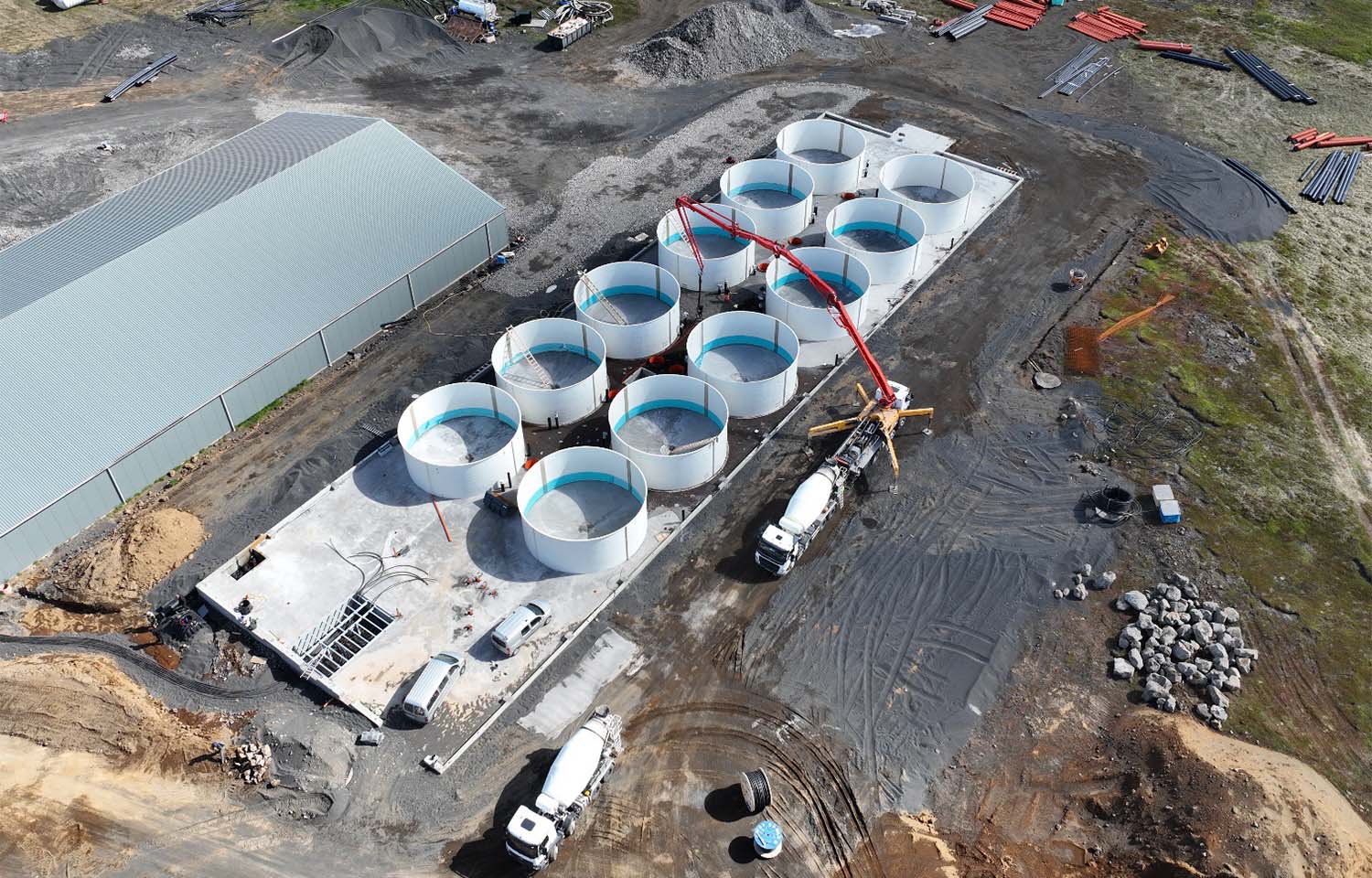
The company is also building a new growout facility in Rifos, Iceland, that will be designed to accommodate 10- to 30-gram fish as part of its smolt enhancements.
Kaldvik said its full-size salmon are also performing well. It is predicting it will be able to escalate its production and harvesting to 17,500 MT in 2024, up from 4,394 MT in 2023.
“This surge in production is expected to positively impact our costs per kilogram, benefiting from the economies of scale now in place,” the company said. “With our comprehensive infrastructure of employees, sites, cages, barges, cameras, boats, and a highly efficient team, our operational capacity is optimized for increased utility and efficiency.”
While harvests will increase, the company predicted market prices will be low in Q3 and Q4 2024. As a result, the company said it plans to delay part of its planned harvest and utilize licenses and growth periods in the sea in the second half of the year. It added that while autumn is normally “jellyfish season,” the company is prepared with new equipment to protect the salmon.
Jellyfish have caused issues for salmon farmers in 2024, with SalMar and Mowi both reporting jellyfish swarms ate into their production estimates in Q1.
The company is projecting it will reach its 30,000 MT production milestone sometime after 2025.
