






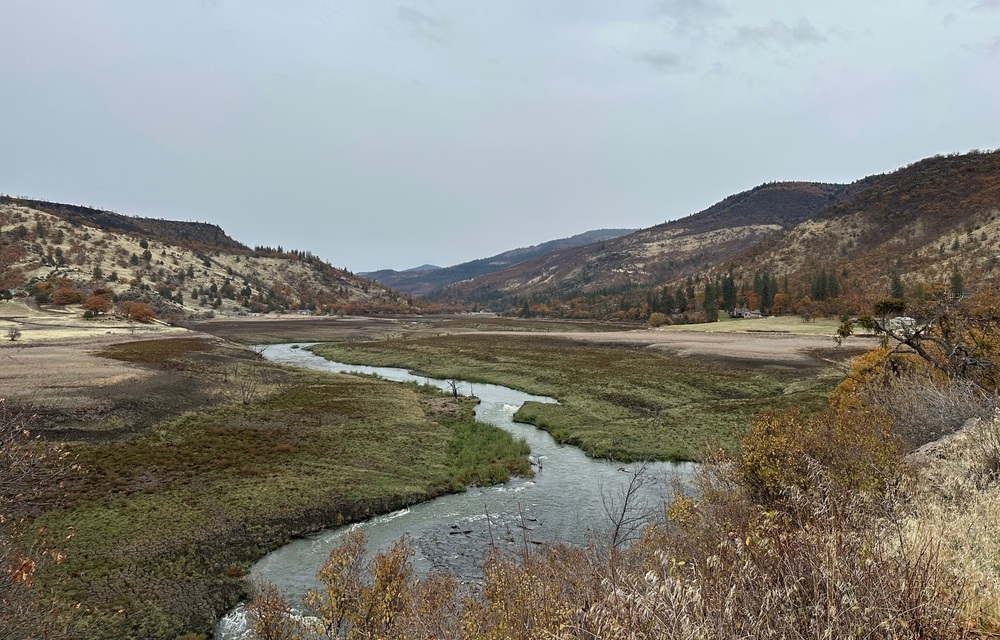
State officials in California and Oregon and conservationists are celebrating the return of Chinook salmon to the Klamath River following the removal of four hydroelectric dams last year.
“The speed at which salmon are repopulating every nook and cranny of suitable habitat upstream of the dams in the Klamath Basin is both remarkable and thrilling,” said Michael Harris, the environmental program manager of the California Department of Fish and Wildlife’s (CDFW) Klamath Watershed Program. “There are salmon everywhere on the landscape right now, and it’s invigorating our work.”
Touted as “the largest river restoration project in American history,” the state of California began removing the first of four hydroelectric dams on the lower Klamath River in 2023. CDFW claimed removing those obstructions would open up 420 miles of salmon habitat, providing a valuable lifeline to the struggling population.
Though California has not released fall-run numbers for Chinook salmon returning to the Klamath River in 2025, observers have already spotted salmon far upriver. Conservation nonprofit California Trout reported 24 November that 10,000 adult-sized salmon had already passed north of its SONAR fish-counting station just below the former Iron Gate Dam site as of 14 November, which was “30 percent higher than fish counts at this same time last year.”
“As the world’s largest dam removal project, the Klamath is creating a blueprint for river restoration globally,” California Trout said in its announcement. “Ongoing scientific monitoring has already documented dramatic improvements in water quality, temperature, and the rapid return of native salmon to newly opened habitats.”
Last month, officials in the state of Oregon similarly announced that salmon were making “exciting progress” in their return to the upper parts of the river, which extends into that state.
"The run so far this year has been incredibly exciting, and we're expanding our monitoring program on an almost daily basis to keep adapting," said Mark Hereford, the Oregon Department of Fish and Wildlife’s (ODFW) project lead on returning salmon to the Klamath. “It is incredible to be a part of this historic return and see where these salmon go and what they do."
ODFW has been tracking the salmons’ progression upriver through monitoring cameras and radio tags, already detecting fish around Upper Klamath Lake. In California, snorkel crews have documented juvenile salmon and steelhead in “nearly all of the newly accessible tributaries in the reservoir footprints,” according to CDFW.
"What we're seeing now is incredibly encouraging and the result of strong collaboration among state and federal agencies, Tribes, and conservation partners who have all been working towards this moment for an incredibly long time," Hereford said.
Scientists have also reported cooler average temperatures along the river post-dam removal, creating a more welcome environment for salmon.
Tribal governments – which traditionally relied on Klamath River salmon for food – have also celebrated the fish’s return, which they have not seen in more than a century.
“The salmon caught each year out of the Sprague River provided more than half of the food supply for the Indians living there,” Klamath Tribes Chairman William Ray, Jr. said. "The loss of salmon was very serious. Salmon to the Indian is like bread and water to the white man.”
Ray encouraged Tribes to refrain from fishing for salmon for now as they reestablish themselves in their historic habitat.
“This is a time to honor their return by allowing them to spawn, rebuild, and restore the strength of their lineage,” Ray said. “Let’s give them the time and protection they need to thrive once again. They have come home. Now, it’s our turn to take care of them.”
The hopeful news of Chinook returning to the upper basin of the Klamath River comes after a disappointing fall run in 2024. While regulators had forecast a run of roughly 65,000 adults last year, the Pacific Fishery Management Council (PFMC) reported only 36,568 adult Chinook returning in the fall.
Salmon populations have struggled all along the U.S. West Coast; regulators have canceled California’s commercial salmon season for three years in a row to help the fish recover. California also provided substantial funding to support the state’s salmon stocks, though, and in 2024, Governor Gavin Newsom introduced the California Salmon Strategy for a Hotter, Drier Future to coordinate its response. In November, the state’s Wildlife Conservation Board (WCB) announced roughly USD 71 million (EUR 61 million) in funding for projects designed to improve salmon habitat. The state also opened the USD 35 million (EUR 30 million) Fall Creek Fish Hatchery last year, and the facility began spawning returning fall-run Chinook salmon in mid-October.
