






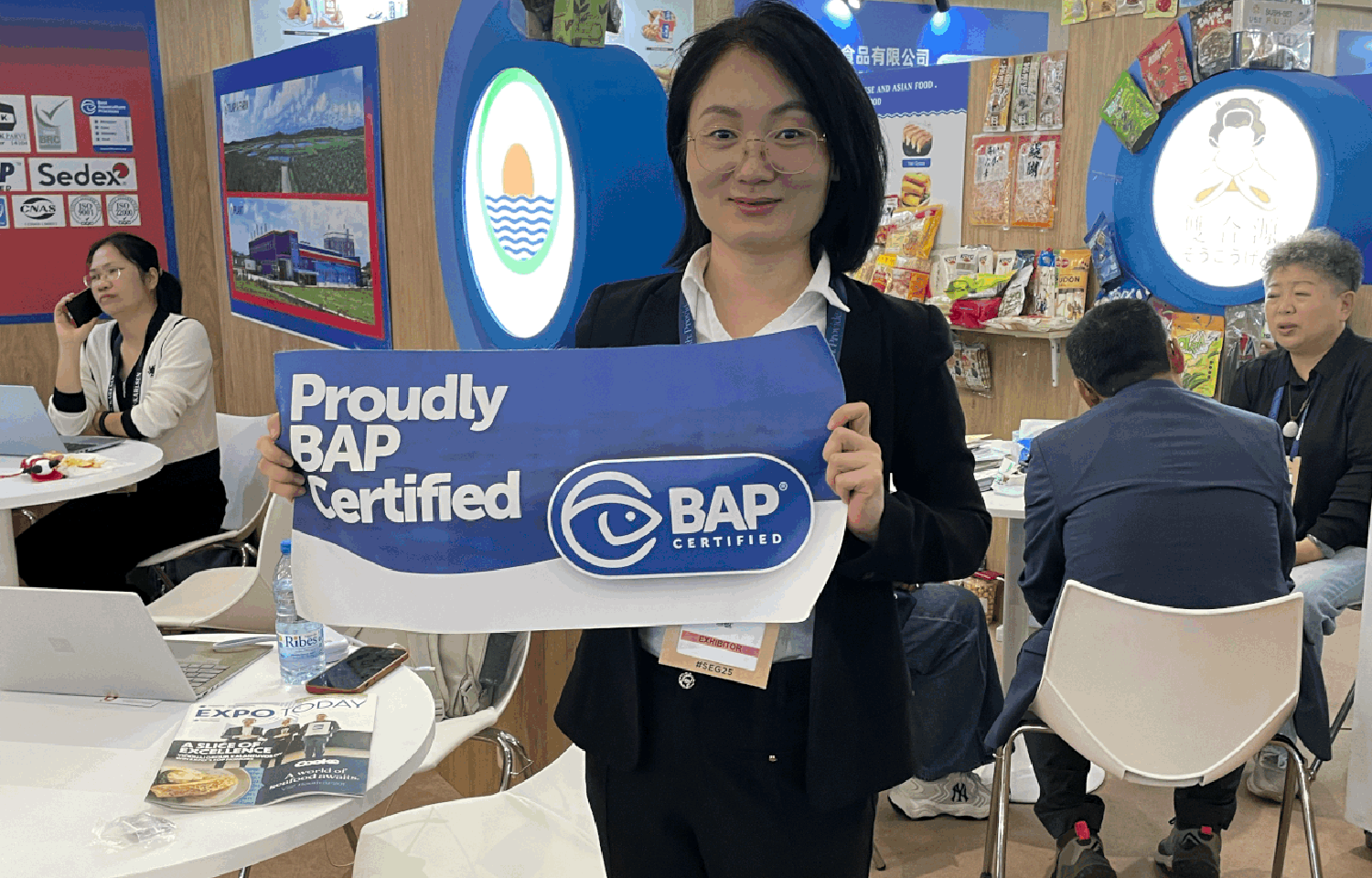
The Best Aquaculture Practices (BAP) certification program, which is operated by the Global Seafood Alliance (GSA), has experienced a surge in applications from seafood firms supplying China’s domestic market.
New applicants targeting the Chinese domestic market accounted for just 3 percent of new applications in the country as recently as five years ago, but that figure now stands at 50 percent, according to Iris Xin Wang, who is the GSA’s director of market development for China.
While export firms still represent the majority of BAP-certified operations in China based on total production volume, the growth in certifications for the domestic market is a clear trend, Wang told SeafoodSource.
“We’re always exploring better ways to share information about responsible seafood practices in a way that resonates with Chinese culture,” she said. “We do our best to support BAP-certified facilities and BAP endorsers by conducting marketing campaigns … and we have successfully done live-streaming promotions, an in-store children-facing course, and social media campaigns. We’re also working on a Chinese podcast which can be a more regular channel providing information about responsible seafood to the Chinese consumer.”
BAP isn’t the only certification scheme seeing greater opportunities to make inroads in China.
The Marine Stewardship Council (MSC) recently opened a second office in China aimed at serving the city of Shenzhen, which has been seeking to develop a more robust tuna industry.
The MSC said that Shenzhen officials “will actively support international organizations and business associations in the marine field to gather and deepen cooperation, build an upstream and downstream industrial ecology for offshore fisheries, create more opportunities in overseas markets such as international fisheries and trade for Chinese marine enterprises, and help Shenzhen build a global marine center city.”
Certification schemes like BAP and MSC are taking advantage of Chinese consumer willingness to pay extra for products certified by authoritative third-party auditors.
“Producers and retailers can address consumer concerns about food safety and environmental impact by investing in transparent supply chains and adopting blockchain technology for traceability,” a report released earlier this year in collaboration with the GSA said. “Such measures not only meet consumer demands but also potentially command premium prices in the market.”
Despite the momentum, Wang still said BAP in particular has a ways to go in terms of achieving widespread market recognition from Chinese end consumers.
“I won't say there's been a huge increase in terms of market awareness in the past year," Wang said. "The 6,000 or so questionnaires we collected from the Chinese market over the past two years show only approximately 26 percent of interviewees saw the BAP logo somewhere, but more than 60 percent of those interviewees said the BAP logo on seafood packages will make them more willing to buy the product.”
