






Global seafood brands are seeking to avoid responsibility for upholding labor standards in their seafood supply chains, according to Chris Williams, who is the coordinator of the International Transport Workers’ Federation’s (ITF) Fisheries Section.
Through his work at the ITF – a London, U.K.-headquartered federation that connects nearly 700 affiliated trade unions from 150 countries and aims to help their members secure rights, equality, and justice – Williams said he regularly encounters working conditions across global fishing vessels that are “medieval.”
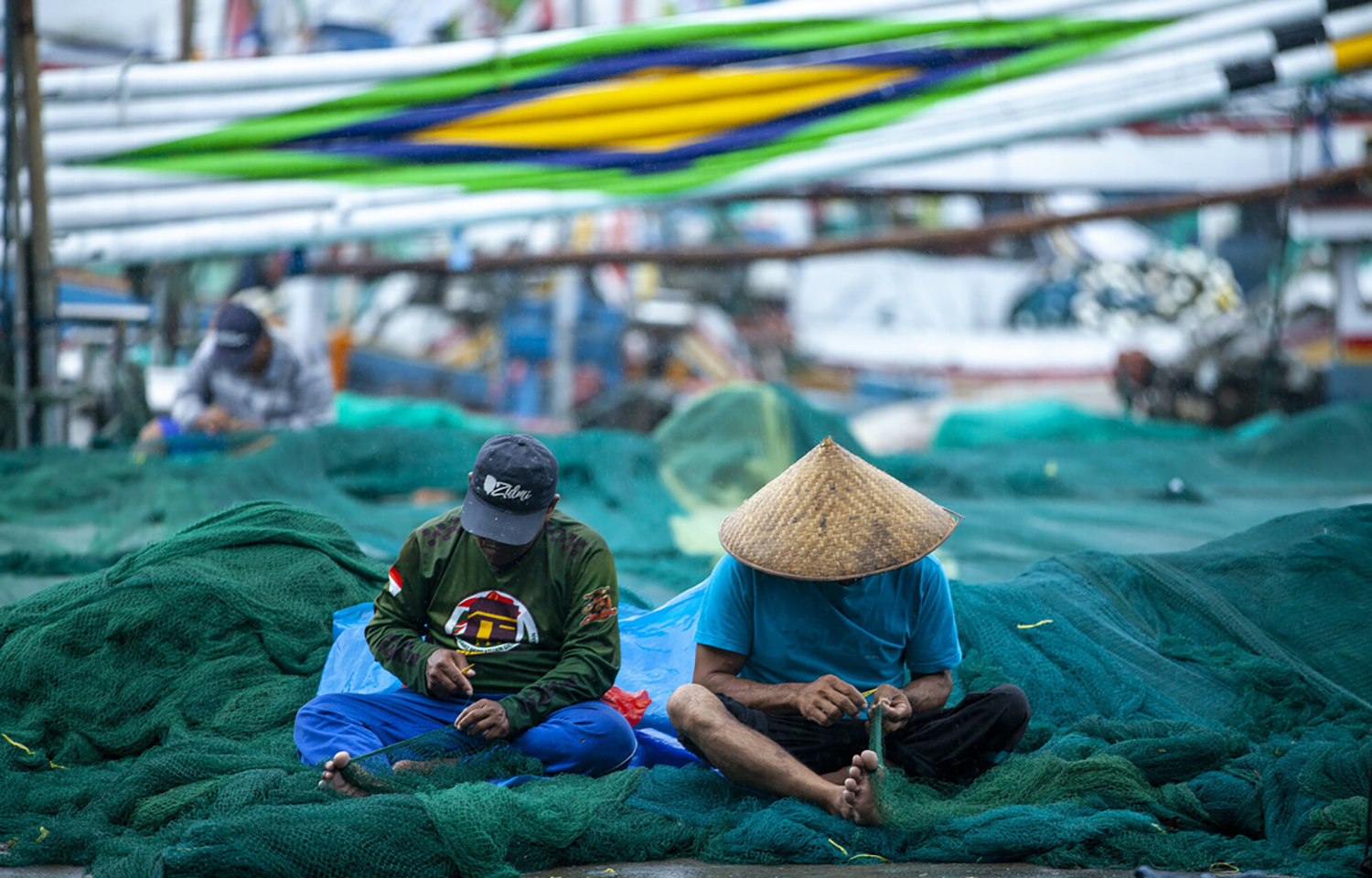
Yet, Williams claims seafood brands have sought to insulate themselves from the reality of an international fishing industry reliant on low-wage migrant workers to staff trawlers, purse seiners, and longliners.
The disconnect between seafood brands and the realities of the seafood they source is particularly obvious in imagery used for packaging and other marketing materials, Williams said.
“The pictures on marketing material are a fantasy. You see old white men with beards who have done an honest day’s work. Migrant workers don’t feature; there are no Asian or African workers depicted,” he said. “[Seafood companies] are happy to do due diligence via wholesalers or processors, but if you ask the company for a vessel list [of their suppliers], they won’t provide one.”
When seafood companies do announce they are taking action on labor abuse, Williams said these initiatives are often performative and serve largely as reputation risk management.
“They come up with their own voluntary schemes to make it look guilt-free,” he said.
Similarly, according to Williams and others, companies use certifications like Marine Stewardship Council (MSC) accreditation to advertise to consumers that the seafood they are purchasing comes from well-managed and sustainable fisheries, banking on widespread ignorance of the fact that that criteria does not include snuffing out labor abuse.
“The MSC likes the illusion or assumption that the blue tick covers labor conditions. MSC keeps informing me that they are not a social certification body, but they are happy for anyone to assume they cover social conditions,” Williams said. “They don’t, and the MSC tick isn’t a substitute for human rights due diligence.”
Global Labor Justice Legal Director Allison Gill agreed in an op-ed earlier this year, saying that the global seafood supply chain needs to “take concrete action to protect workers and eliminate forced labor and other labor abuses from their supply chains.”
“Many companies rely on audits, voluntary initiatives, and certification schemes like MSC to provide cover. In reality, however, MSC and the fishery improvement projects used as an on-ramp to certification allow companies to conceal labor abuses in their supply chains,” she said.
In order to effect larger-scale change, Williams said more nations need to follow the example of fishing industries that are unionized, like in Argentina, Norway, and Japan, where he said labor standards are better.
“The South Korean fishing sector is unionized, but the membership does not include the migrant workers [who are] mainly Indonesians. The pay and conditions are higher than other distant-water fleets but still not in line with the Korean minimum wage,” he said.
Williams said that projects like Outlaw Ocean are also extremely effective in exposing labor abuses in seafood industries like China’s.
Nevertheless, in the absence of effective action from the seafood supply chain, Williams said helping fishers who have experienced labor abuse continues to exist primarily on a case-by-case basis.
“Fishers on foreign vessels are very isolated at sea. They don’t know who to turn to,” he said.
