


The impacts of climate change are already being felt in fishing communities across the U.S. – to sometimes devastating results.
In January 2024, two massive storms in the northeastern U.S. region of New England sunk vessels, damaged docks, and flooded coastal communities. Janet Mills, the governor of the U.S. state of Maine, claimed in a request for federal aid in the wake of the storms that the weather caused USD 70.3 million (EUR 64.3 million) in public infrastructure damage in the state of Maine alone.
The administration of U.S. President Joe Biden ultimately approved disaster declarations for multiple states in New England and awarded funding to help repair the damage – but the incident served as an example of how climate change can negatively impact the seafood industry.
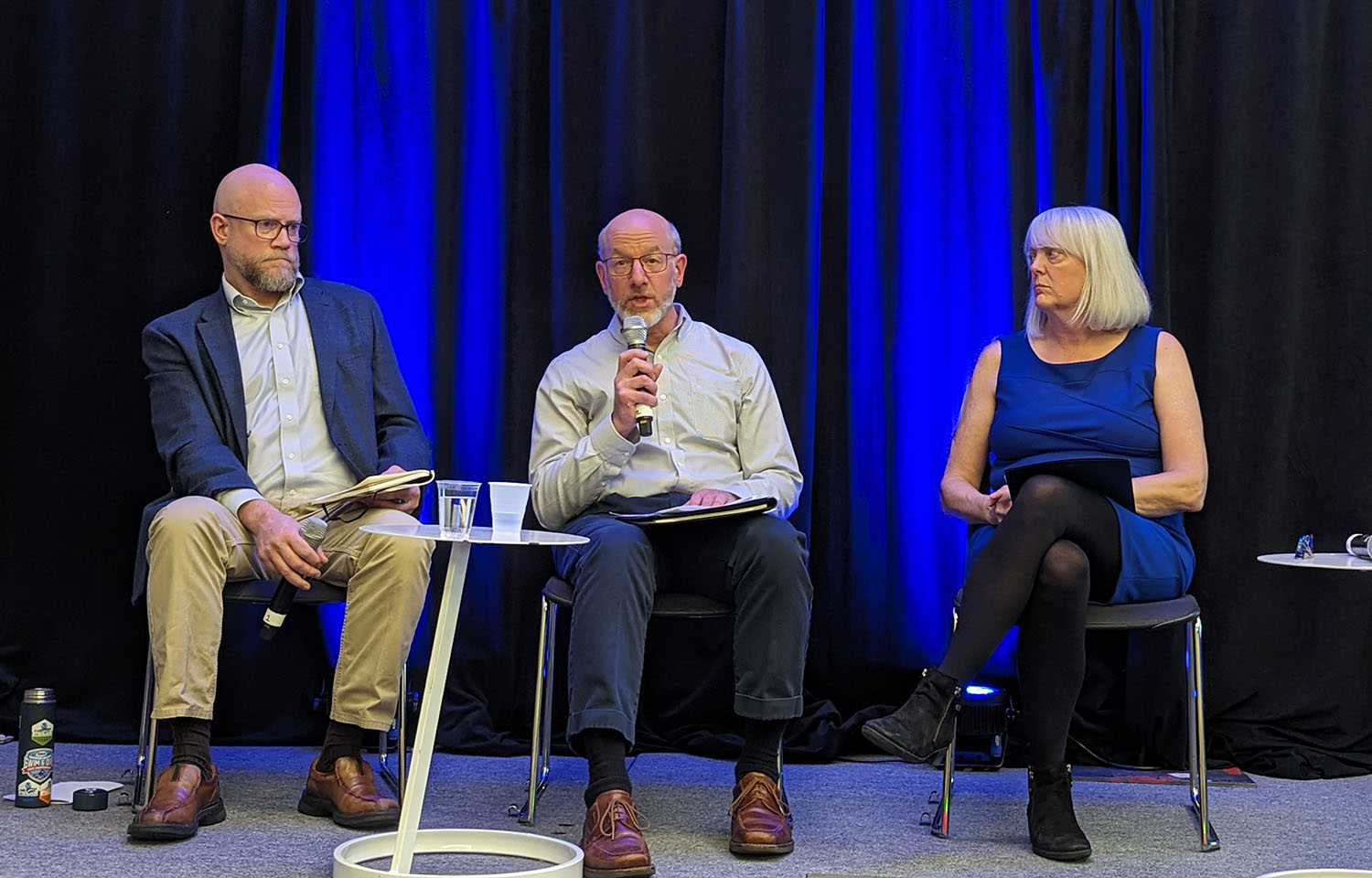
A few months after the storms, at Seafood Expo North America (SENA), which took place in March in Boston, Massachusetts – one of the states impacted – officials with NOAA Fisheries highlighted the impacts as a key example of why the regulatory body is working hard to predict how climate change will hit the seafood industry.
“A huge focus for NOAA Fisheries every day is looking at how we promote resilience in the face of climate change,” NOAA Assistant Administrator Janet Coit said.
Climate change is having impacts on both coasts of the U.S. and not just through devastating storms. Coit highlighted species like black sea bass which have shifted their distribution as far as 250 miles northward in the last few decades. Those shifts are forcing NOAA Fisheries to expand its scientific endeavors and determine new management methods to ensure the nation’s commercial fisheries are still sustainable as species move.
The U.S. state of Alaska is particularly feeling those impacts as stocks shift and fisheries management becomes more complicated.
“Climate change is having a rapid and unprecedented impact in Alaska. Alaskans feel it; the industry feels it,” Coit said. “There’s been a lot of leadership around how we understand better and predict what’s happening with ecosystems so that we can make sure the investments and the ample healthy seafood that we’ve come to expect and enjoy from Alaska – and all the jobs that are associated with that – are maintained.”
Alaska Fisheries Science Center Science and Research Director Robert Foy has a deep understanding of how climate change is impacting Alaska’s fisheries.
“Climate change is the most important driver in Alaskan fisheries and in global fisheries,” Foy said. “The changes we’re seeing and the scale we’re seeing them at are huge.”
Foy said that there’s long-term climate change that affects temperature and currents, which in turn affect the production of fisheries across the U.S. But, there’s also shorter-term, extreme changes which can hit fisheries hard.
“We’re getting heat waves. For instance, [there was a] marine heat wave in the Atlantic; we’ve had a couple of them in the Pacific,” he said. “They are happening much more regularly, and the frequency on a global scale is much more than one in every five years right now; that is now a new factor in how we look forward.”
The sudden and catastrophic collapse of Alaska’s crab population, which forced the state to shut down its lucrative crab seasons and was later declared a resource disaster, is a prime example of how extreme short-term events can devastate fisheries, Foy said.
“We lost 5 billion crab in 20 months associated with this heatwave,” Foy said. “We had another heatwave that made the Bering Sea cod stocks move 1,000 kilometers in 20 months. Think about how far that is.”
While some fisheries are being devastated by climate change, the impacts are not universally negative.
“Climate change does not necessarily mean everything is going to go down. The sablefish fishery – black cod – is having more production than we’ve ever seen in that stock, and if they would just grow up to be adults, the fishermen are going to be happy,” Foy said.
Another example is the sockeye salmon fishery. In 2022, the Bristol Bay sockeye run hit a record 76 million fish with a cumulative commercial catch of over 58 million.
“These are all positives in terms of the long-term and short-term changes that we’ve seen with climate change,” Foy said.
Those changes are forcing NOAA Fisheries and scientists to rethink how to manage fisheries.
“Basically, we have managed on the term ‘stationarity,’ which means that we believe that it’s a relatively stable environment with relatively stable production,” Foy said. “We are no longer in a stationary situation in any of our coasts. Non-stationarity means that we have to be more nimble and flexible.”
NOAA Fisheries Alaska Regional Administrator Jon Kurland said that the administration’s success at sustainable fisheries in the past shows that carefully considering the science and forming a plan can work, even in the face of changes.
“We need to celebrate the successes of our management process while at the same time seek out improvements, looking to better understand and adapt to climate-related changes around us,” Kurland said. “With Alaska stakeholders, whenever I talk to folks, there’s really no debate about whether the climate is changing or whether we’re seeing unexpected changes in Alaska’s marine ecosystems. Whether it’s fishermen, processors, scientists, or resource managers, everybody has a pretty good realization that now more than ever we really need to account for interrelationships between fisheries and the ecosystem.”
This tension comes as fisheries are working to find stability in their stocks and, thus, their livelihoods.
“This concept of non-stationarity is really disconcerting for our management systems and for all the businesses and communities that depend on that kind of stability,” Furland said.
The strain on the system is already showing in collapsing prices for certain species and the increasing demand being put on using emergency authority under the Magnuson Stevens Act to react to those shifts more rapidly than the typical management process allows. Requests by fisheries, such as a recent one to address Chinook bycatch in the pollock fishery, are becoming more common.
“The Magnuson Stevens Act gives us a mechanism to deal with emergencies, but the criteria are pretty stringent; they really need to be balanced against short-circuiting what's supposed to be a collaborative stakeholder-involved management process, so it's not a silver bullet to use the emergency authority,” Furland said.
As NOAA Fisheries considers the future and how to grapple with climate change, taking into account how changing stocks impact the market and what can be done to build in the nimbleness management needs will be key.
“To build fisheries that are more resilient and to try to be more predictive, NOAA Fisheries and the council are looking for new solutions, trying to be more flexible and respond to these situations as they emerge,” Furland said. “We need to do a better job of accounting for independent effects on fisheries, on bycatch, on observed mortality of certain organisms due to fishing practices, and impacts on habitat. We need to be wary of too much consolidation in the industry and how that affects independent fishermen in small communities. All these things are easier said than done, but the good news is that our management systems really are evolving and incorporating a lot of information to try to better position us to address these challenges.”
