



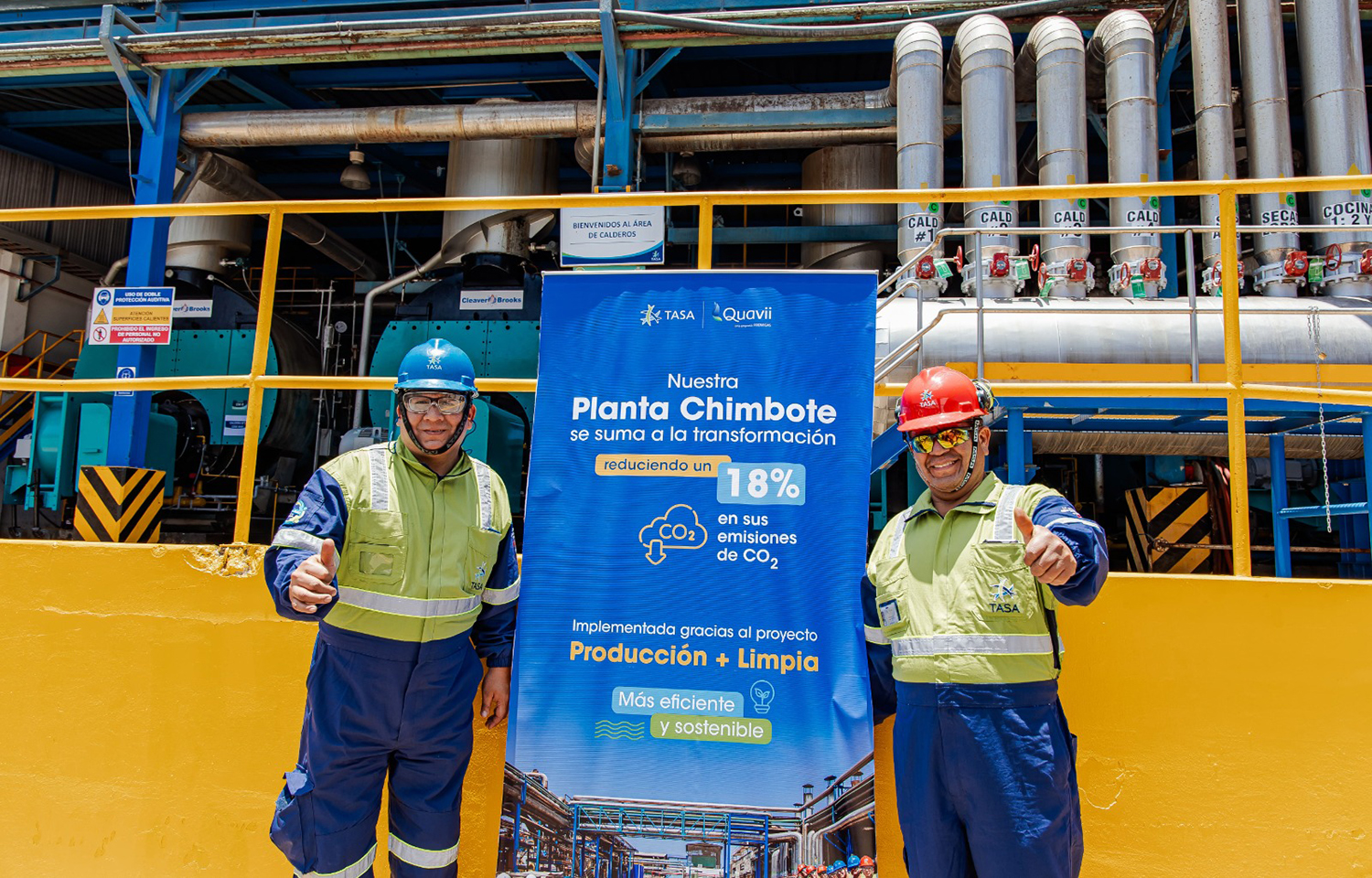
Peruvian industrial fishing company and fish oil and fishmeal producer TASA has converted its fishmeal plant located in Chimbote on the coast of Northern Peru to run on natural gas instead of heavy fuels.
TASA said the project will reduce emissions by 18 percent at the plant – equivalent to 6,500 tons of carbon dioxide equivalent (CO₂e) output per year – and the conversion of the facility, which TASA claims is the largest-capacity fishmeal plant in Chimbote, is the company’s fourth such plant that has been transitioned to a cleaner-burning fuel source.
“At TASA, we believe that sustainability is not a goal but a path that we take every day with concrete decisions that seeks to meet an ambitious goal by 2030. This energy transition is a clear example of how our operations can generate a positive impact on the environment, promoting cleaner and more efficient production,” TASA Legal and Corporate Affairs Manager Antonio Olórtegui said in a release.
TASA’s sustainability measures are based on four strategic pillars: the Cuidamar Program, in which the crews of its 48 vessels are trained in environmental stewardship and conservation of marine species; the Entrepreneurial Families program, whereby employees' spouses are supported in starting their own sustainable businesses; the Cleaner Production program, under which the company is working to reduce its carbon footprint and water use; and the Sustainable Artisanal Fishing program, where small-scale fishers, processors, and mongers are trained to hone business skills and develop sustainable ventures.
This project in Chimbote is part of the Cleaner Production program, and other initiatives introduced under the program include “Shore Power” – a system to supply vessels with electricity from plants, which reduces fuel use – while the company plans to install solar panels on ships to reduce onboard emissions.
The latest move also follows the launch of an innovative TASA program to turn operational waste into compost for use in beautifying the area surrounding operations at its Malabrigo plant, located in Peru’s northern coastal district of Rázuri.
It also follows similar initiatives from other South American seafood producers, such as the Chilean branch of Oslo, Norway-based salmon-farming firm Cermaq announcing recently that it planned to incorporate the use of bio-liquified natural gas (LNG) into its land transport network beginning in November.
Founded in 2002, TASA is the one of the world's largest producers and exporters of fishmeal and fish oil and one of the leading suppliers of refined fish oil and omega-3 concentrate. It has more than 2,800 employees.
