



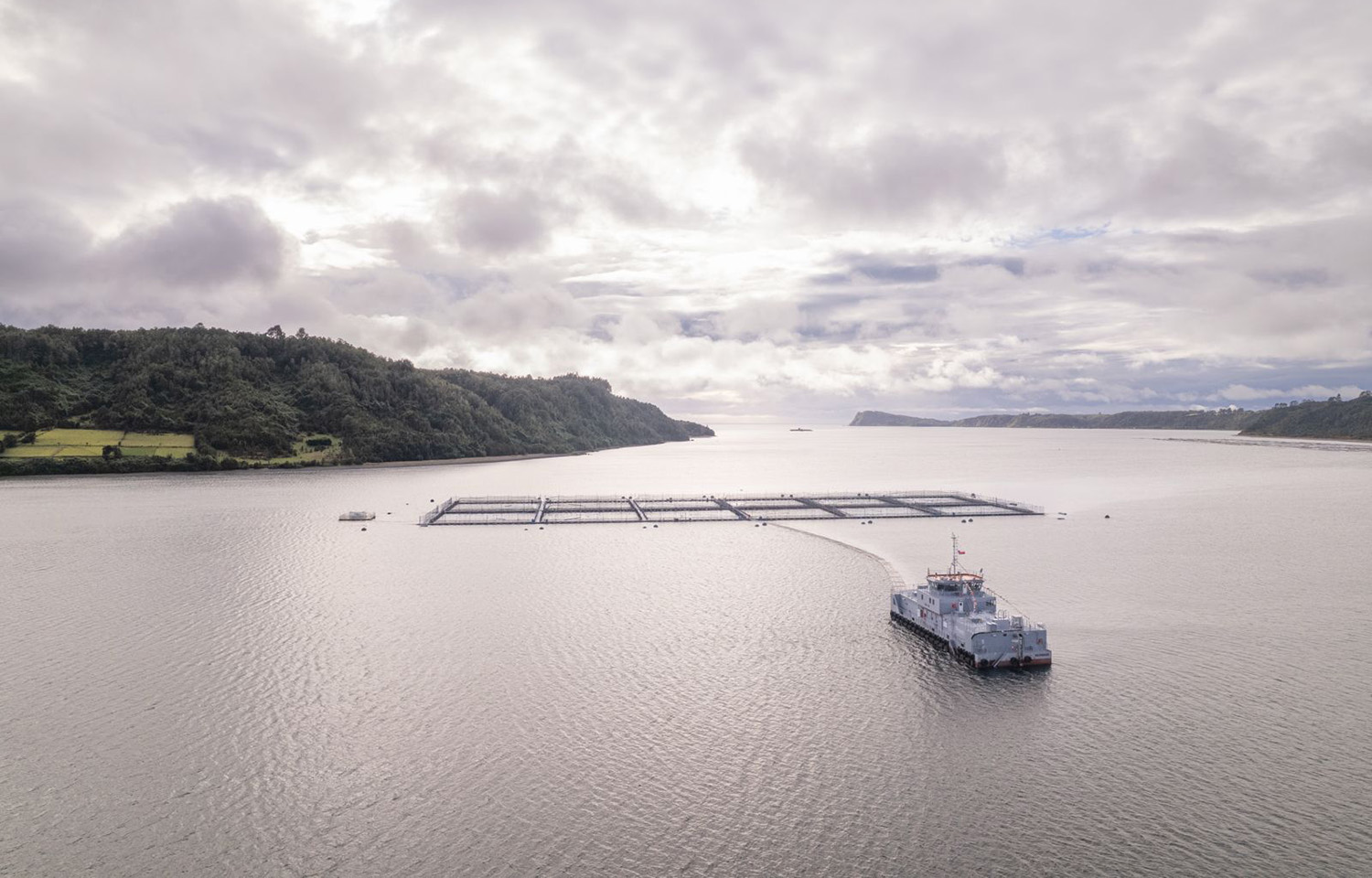
Puerto Montt, Chile-based salmon-farming firm Ventisqueros plans to continue strengthening its approach to sustainable operations, according to Chief Commercial Officer Javier Calvo.
“The company slogan is best-in-class performance, and that’s not just a phrase. We want to be leading the efforts in that direction. In this light, the company has been committed to many things, including reducing antibiotics,” he told SeafoodSource.
Calvo credited the strong sustainability focus partly to Ventisqueros’ parent company, the German holding company Schörghuber Group, which identifies the issue as one of its core values. The Munich-based group is family-owned and now in its third generation of controllers.
“One of the things that they say is that we don't want to be the biggest ones, we want to be the best ones,” Calvo said. “We think in terms of generations, we don't think about short-term returns. So, when you have this stance on a business like that in which we're involved and you're thinking about generations, you are really concerned about delivering a product that is sustainable. Coming from Chile, it's pretty much aligned with what we're doing as a company. When you're working with the environment the way we do, we need to be extra careful about this. Ventisqueros is passionate about sustainability. It's not just for the sake of it or because we need to have this for the consumers, and it's not a commercial thing.”
Calvo pointed toward a number of milestones the company has achieved in its sustainability push, including its E-Site fish-farming center that operates 100 percent on certified renewable energy. The company claims it is the first such center in the Southern Hemisphere.
“By doing this, we have reduced consumption of diesel by more than 200,000 liters per year and over 600 tons of CO2 per year as well. This is a very good example because we were the first company to move in that direction in the country,” Calvo said. “There are some others now following us; it’s fantastic to be a pioneer but also to actually make changes to benefit everybody else.”
In 2025, the company also began using biofuel along a few shipment routes, where it has been able to reduce 25 percent of the CO2 related to sea freight transportation.
“We are prioritizing certain routes with those cleaner vessels and we're also now using natural gas in a pilot program. We are hoping to expand it, but we're using natural gas and electric trucks to move our fish from the south of Chile [where the fish are raised and harvested] to [the capital] Santiago.”
Additionally, he highlighted the fact that Ventisqueros had the lowest CO2 footprint among all salmon producers in Chile in 2024, and the company is awaiting data confirmation whether they remained in the same position for 2025.
As for further moves in its sustainability drive, the company announced it will shortly move to kraft paperboard for its packaging.
“It might seem like a little thing, but in the end, kraft paper is way more sustainable and cleaner for the environment than using white cardboard where you need paints and other chemicals in order to treat the paper,” he said. “We're constantly looking at different ways to do this and especially with our Silverside brand. We're very committed to the brand, not only because it’s a sustainable product but also because it's coho and we feel that the country has a very good opportunity with that species.”
Ventisqueros is investing heavily in coho salmon, believing it will soon become a dominant export product. Currently, the firm’s sales are roughly evenly split between Atlantic salmon and coho, but the goal is to have that ratio shift to 60 percent in coho’s favor by 2030.
Silverside is Ventisqueros’ premium coho salmon brand, raised in Chilean Patagonia on Corbion’s AlgaPrime algae-based feed and sold in the U.S. via BluGlacier – a joint venture with fellow salmon farmer Blumar.
