



Puerto Montt, Chile-based salmon-farming firm Ventisqueros plans to increase efforts to decarbonize its operations, Ventisqueros Chief Commercial Officer Javier Calvo told SeafoodSource.
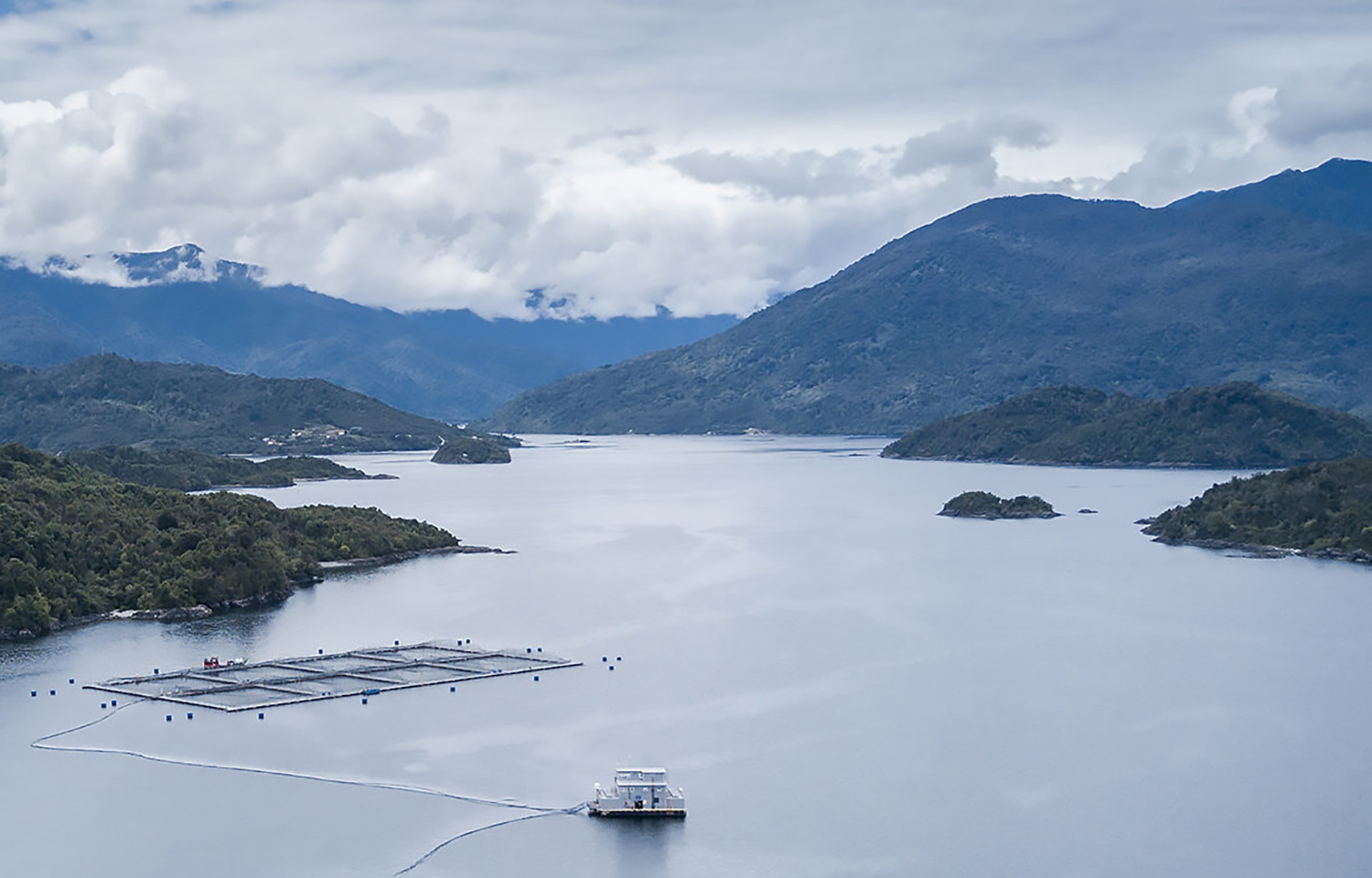
Calvo called 2024 “an especially significant year for Ventisqueros” in that it developed a fish-farming center that operates 100 percent on certified renewable energy. Ventisqueros’s E-Site, located in Tubildad on the island of Chiloé in Southern Chile, is the first such center in the Southern Hemisphere, according to the company.
The firm’s focus will now shift toward reinforcing its sustainability model, expanding the use of clean energy in more centers, and further reducing its carbon footprint.
“We are [already] one of the companies in the sector with the smallest [carbon] footprint in the world – of those that report publicly,” he said. “We are evaluating the conditions to implement this technology in at least two more centers in the coming years. The underlying goal is clear: to decarbonize our operations by 2045,” Calvo said. “These types of projects not only reduce the carbon footprint but also strengthen the bond with communities and show that it is possible to produce world-class protein without compromising the planet.”
Besides a small carbon footprint, Ventisqueros said there are a number of other aspects that make it a leader in the sustainability space, such as having been recognized by feed manufacturing firm SalmoFood for its antibiotic-free centers, with outstanding results in production efficiency and becoming the first Chilean company to certify 100 percent of its harvest under the Aquaculture Stewardship Council standard.
While its work progresses on sustainability, the firm is also trying to navigate global trade disruptions and is aiming to diversify its export markets as a result.
“We are closely monitoring any measures that may affect free trade, particularly with the U.S., which is a key market for the industry,” Calvo said. “However, our strategy of diversifying destinations – and value-added products – provides us with a solid basis to face these scenarios. We've learned that anticipation and flexibility are key. We are prepared to redirect volumes, adapt formats, and accelerate our penetration in other markets with less regulatory uncertainty.”
To accomplish this goal, Ventisqueros attended this year’s Seafood Expo Global, and Calvo noted the event was a valuable opportunity to strengthen the company’s international presence, generate new commercial opportunities, and consolidate strategic relationships with key players in the global aquaculture industry.
“The event allowed us to open new conversations with relevant markets and channels, especially in Europe and Asia, confirming the growing interest in products that combine quality, traceability, and environmental commitment,” Calvo said. “This experience ratifies our commitment to continue driving innovation and sustainability and to continue expanding our global strategic alliances with our customers. Participating in these instances reaffirms to us that the path toward a more responsible activity connected to global challenges is not only possible, but also valued by our customers and partners around the world.”
Currently, Ventisqueros’s exports are concentrated in the U.S., Brazil, Japan, China, Southeast Asia, and Chile. The company has identified opportunities to continue strengthening its presence in Asia and Europe, where demand for sustainable products such as its Silverside coho salmon is increasing, Calvo said.
On the domestic front, “the greatest challenge, without a doubt, continues to be the regulatory environment and the country's vision for the sector,” he said.
“Sustainable growth of the industry is not only possible but also necessary,” Calvo said. “Companies such as Ventisqueros have demonstrated this. The world is increasingly demanding more and better proteins and eyes are on the sea because it represents a more sustainable alternative. Norway has already done so and today leads the global market. Chile cannot continue to wait.”
He did, however, express hope in the aquaculture regulatory changes currently being debated by Chilean government officials.
“Any new legislation must have the sustainable development of the sector as its goal. We expect a modern law, based on science, that provides certainty, encourages innovation, and puts the protection of the environment and the well-being of communities at the center,” Calvo said. “We cannot continue with fragmented permitting and a framework that in many cases only serves to slow development. There is a huge opportunity to advance in governance that would allow Chile to maintain its position as the world's second-largest salmon producer.”
Ventisqueros is owned by the German holding company Schörghuber Group, which in 2023 tested the waters in offering Ventisqueros for sale. However, it decided to pull the firm off the market following first-round talks led by Dutch bank Rabobank, with interested bidders reportedly including investment funds, Chinese investors, fellow salmon farmers in Chile, and São Paulo, Brazil-based JBS – the world's largest meat processor.
Since then, the company has ruled out any consideration of a sale, emphasizing that it will take advantage of the current momentum of the global industry to continue profitable growth under the continued control of Schörghuber.
During 2024, Ventisqueros’ total salmon production reached 43,000 metric tons, bringing in revenues of more than USD 240 million (EUR 208.2 million).
