






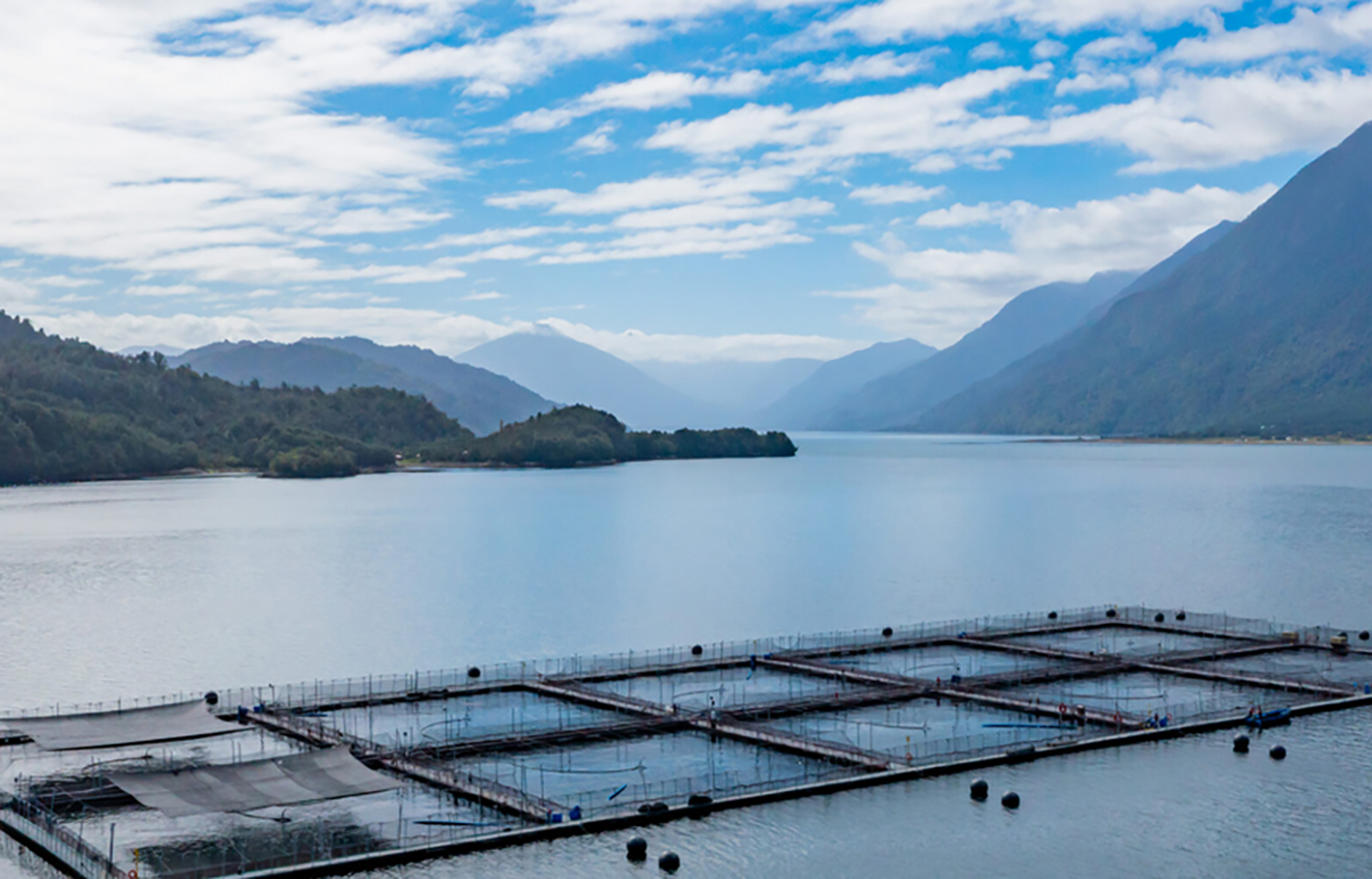
Puerto Montt, Chile-based salmon-farming firm Ventisqueros has incorporated the use of certified biofuel in its salmon export shipments in collaboration with international transportation services firm Andes Integración Logística and shipping company Hapag-Lloyd.
The move is expected to immediately reduce the company’s shipping carbon dioxide emissions by up to 25 percent and forms part of the firm’s 2024 Strategic Decarbonization Plan, in which Ventisqueros aims to reduce greenhouse gas emissions and achieve carbon neutrality by 2045.
“These types of partnerships reflect our commitment to concrete climate action. We know that environmental challenges require cross-cutting responses, and logistics is a critical part of our [carbon] footprint," Ventisqueros Technical Manager Igor Stack said in a company release. “Betting on biofuels is not only a technical decision; it is a declaration of principles.”
Ventisqueros has considered 2025 an especially significant year for tackling its sustainability goals. This year, it has already developed a fish-farming center that operates 100 percent on certified renewable energy. Ventisqueros’s E-Site, located in Tubildad on the island of Chiloé in Southern Chile, is reportedly the first such center in the Southern Hemisphere.
The firm’s focus will now shift toward reinforcing its sustainability model by expanding the use of clean energy in more centers and further reducing its carbon footprint, Ventisqueros Chief Commercial Officer Javier Calvo previously told SeafoodSource earlier this summer.
“We are [already] one of the companies in the sector with the smallest [carbon] footprint in the world of those that report publicly,” he said at the time. “We are evaluating the conditions to implement this technology in at least two more centers in the coming years.”
The recent moves build on momentum from prior years.
The company’s 2024 ESG Report highlights a cumulative 31 percent reduction in scopes 1 and 2 carbon dioxide emissions since 2019, as well as a 48 percent decrease in emissions intensity per metric ton of salmon produced. In addition, more than 79 percent of the energy used last year by Ventisqueros came from non-conventional renewable sources, and the company is ISO 50001-certified for energy efficiency.
“Sustainability is not an abstract concept; it is built up day by day with strategic decisions, investment in technology, and a systemic view of operations. Initiatives like this demonstrate that it is possible to move toward world-class salmon farming without compromising the planet we share,” Stack said.
