






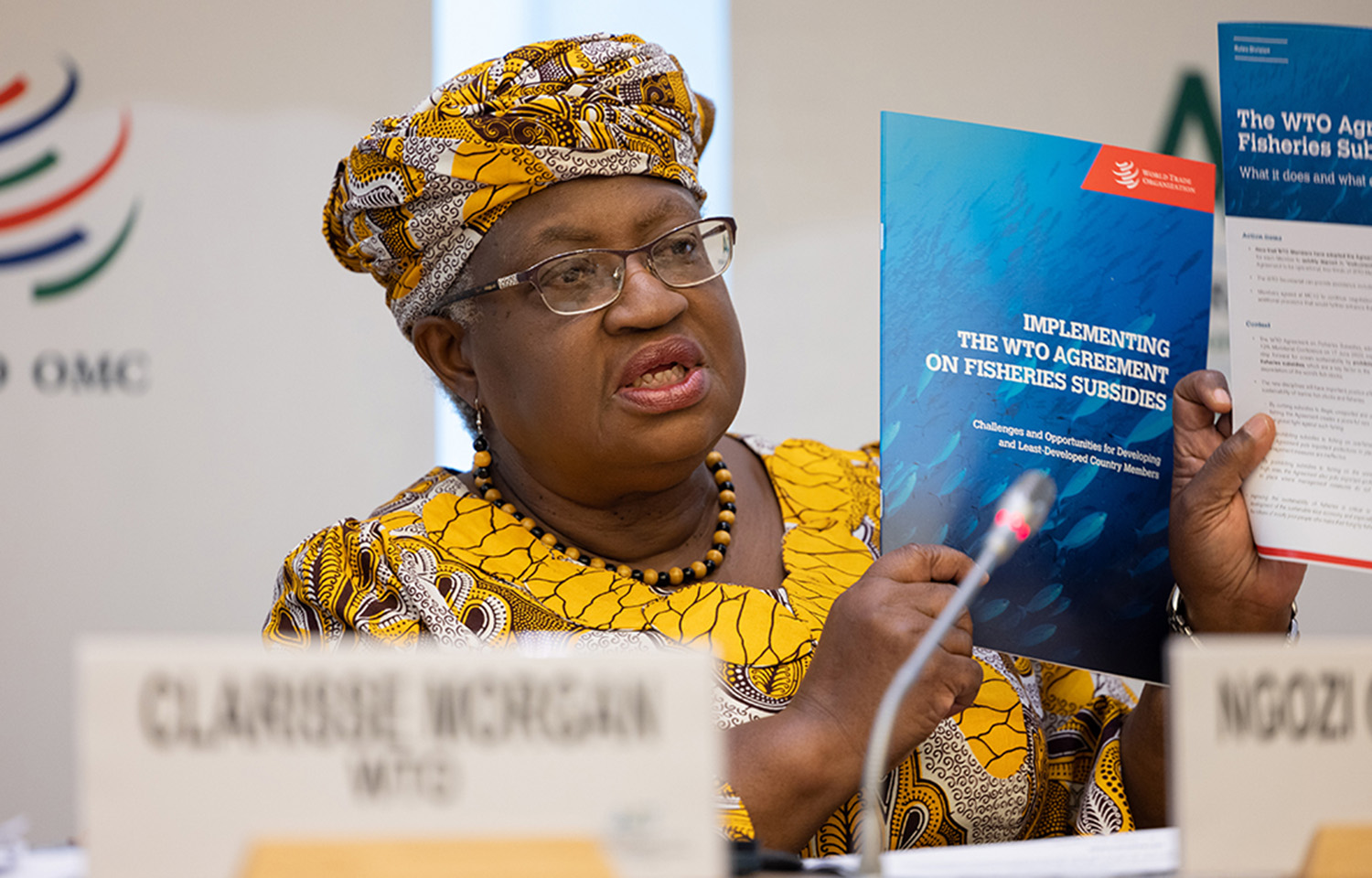
The World Trade Organization is once again pushing to get approval of a fishery subsidies draft agreement in advance of its December general council meeting, according to sources at the organization’s headquarters in Geneva, Switzerland.
The WTO has been trying to expand on its smaller 2022 deal by adding clauses that further limit subsidies leading to overcapacity and overfishing in global fishing fleets. A draft text circulated in July allowed for carve-outs and phase-in periods for poorer countries without distant-water fleets.
The success of the fresh round of negotiations likely depends on India, which effectively derailed negotiations on two previous drafts of the deal. Both the E.U. and U.S. publicly criticized India’s stance in blocking a proposal in February by reopening issues that had been seen as already decided.
India justified its actions as a defense of its predominantly small-scale fishery sector. Dyhia Belhabib, the program manager at Ecotrust Canada and an expert in illegal fishing and fisheries governance, said India’s position was legitimate.
“India is standing up for their small-scale fishermen, and rightfully so. There should be more weight placed on industrial countries [to take action], and there should be measures preventing unwanted and harmful repercussions on small-scale fishermen,” she told SeafoodSource. “India needs a better management strategy for their fisheries, but starving its small scale-sector will not achieve that. The reality is that if the E.U. and China had a level of control over their fleets, we may not be discussing harmful subsidies today.”
Belhabib said claims by the E.U. fishery industry the bloc’s fishery sector is better regulated than other territories don’t hold water, citing the reflagging of European-owned vessels to West African countries, where overfishing is rampant, as one example of unscrupulous behavior.
“It is shortsighted to claim that they solved the problem,” she said. “Comparing oneself to what is perceived the worse is not a win. We still have to receive responses for vessels owned by people from E.U. member states reflagged to third-party countries. There is a tendency to domesticate vessels, so the problem is simply exported while the money still flows the same way.”
Sebastian Matthews, executive director of the Chennai-based International Collective in Support of Fishworkers (ICSF) Trust, said it’s in India’s interest to sign onto a WTO deal.
“India's position on fisheries subsidies is perhaps due to its general reservation about bringing environment and labor issues to WTO,” he told SeafoodSource. “Considering that India is a major marine fishing nation, it needs to take a proactive position like China on WTO and fisheries subsidies.”
