





During the 2026 Seafood Expo North America (SENA), Aquamar put on a show to highlight how it’s willing to take competition between the seafood industry and terrestrial proteins seriously.
The Rancho Cucamonga, California, U.S.A-based company hosted a “Protein Smackdown” at SENA’s Wave Makers’ zone, where the “Featherweight” took on the “Aquatic Assassin” in a wrestling match the company called “the ultimate showdown for dinner table supremacy.”
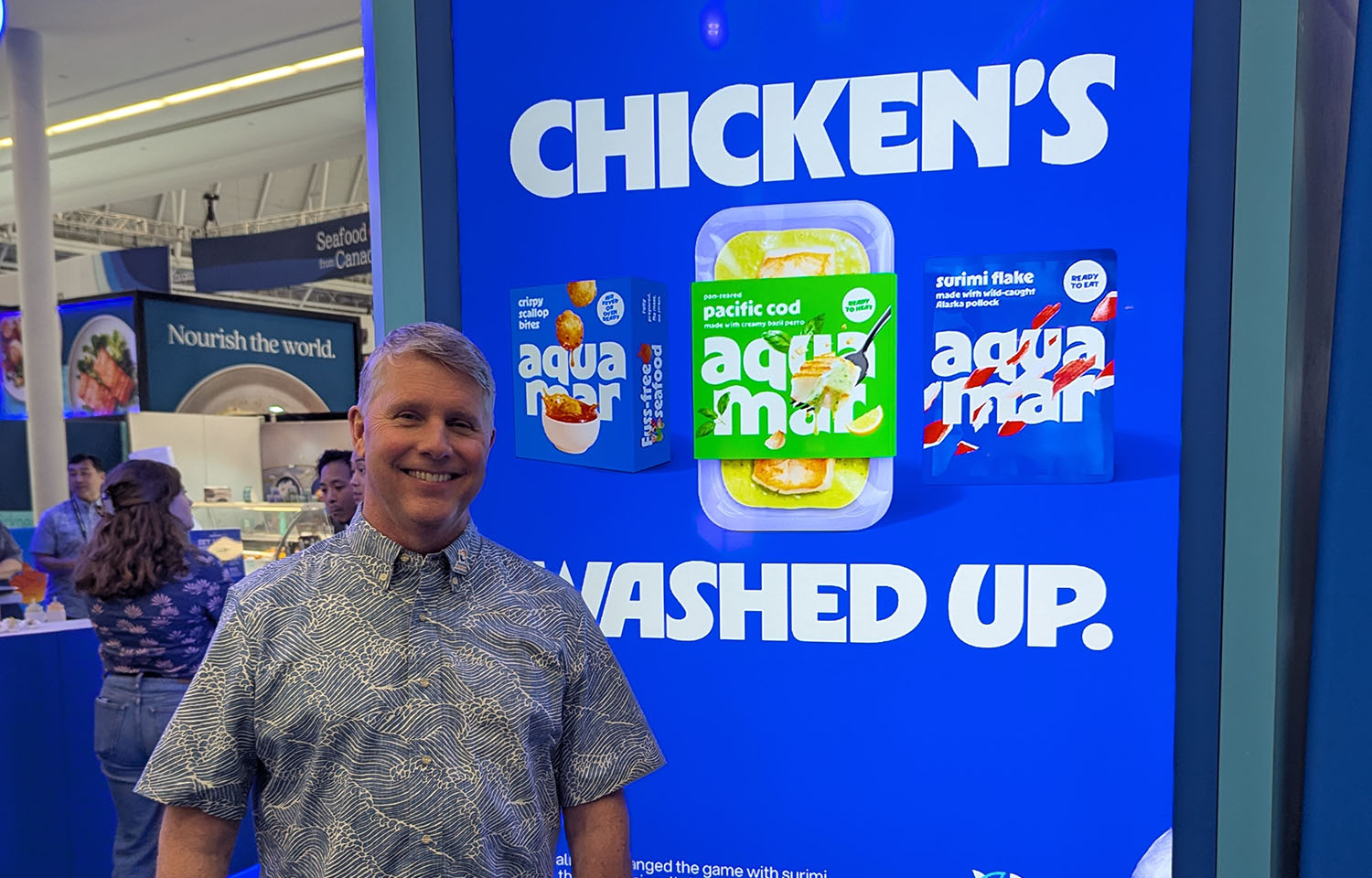
While the event was an entertaining bout between two people in costumes, the message behind it is something Aquamar CEO Daryl Gormley takes seriously: Seafood needs to bring more fight to the table against competing proteins and band together to do it.
“I think this is a really interesting place to have this conversation,” Gormley told SeafoodSource during SENA. “We’re standing among an incredibly fragmented floor of industry players. Seafood, uniquely, is fragmented differently from other industries.”
Another major difference between the seafood industry and competing protein industries is a comparable lack of consumption, despite consumers widely acknowledging it as a great source of protein.
“It’s the best protein – remarkably healthy, it’s plentiful, it’s sustainable, it’s affordable, it’s delicious. It’s in 80 percent of households every month, yet it’s only 8 percent of the proteins in terms of volume,” Gormley said.
Current food trends have consumer analysts predicting seafood is poised to capitalize, and the U.S. Department of Agriculture’s recent food guidance increased seafood consumption recommendations to three times a week.
“Only 10 percent of Americans are hitting that threshold today,” Gormley said. “So, when you look at everything we know about seafood and the extra push from the dietary guidelines, why would it be lagging the other proteins so much?”
Gormley pointed to the gap between consumption of seafood and chicken. Seafood was at 19.1 pounds of consumption per capita in 2023, while chicken consumption was roughly 98.9 pounds per capita in the same year per the U.S. Poultry and Egg Association, which projected the total to exceed 100 pounds in 2025.
“If you go back in time less than 100 years ago, chicken was at 19. The presidential campaign in the late [19]20s was run in part on a promise that the economy would improve so much they would get a chicken in every pot,” Gormley said. “Now, we’re at north of 100 pounds per capita.”
The big difference between seafood and the poultry industry over that time period, from Gormley's perspective, is the difference in scale of the companies behind them that banded together to promote consumption of the product.
“Even when [companies] were smaller, they weren’t as fragmented,” Gormley said. “You have these big companies that are lobbying to make sure that there’s a level playing field, that are promoting to drive consumption – and seafood hasn’t benefited from that.”
When separated out, a top 100 list of the largest protein companies, a seafood company would typically make it into the top 40 at best.
“If you put all seafood together, it’s number five,” Gormley said. “So, we have an opportunity to leverage our scale, but we can’t do it as individual companies.”
The “protein smackdown,” while all in good fun, was an example of the type of collaboration Gormley said the industry needs.
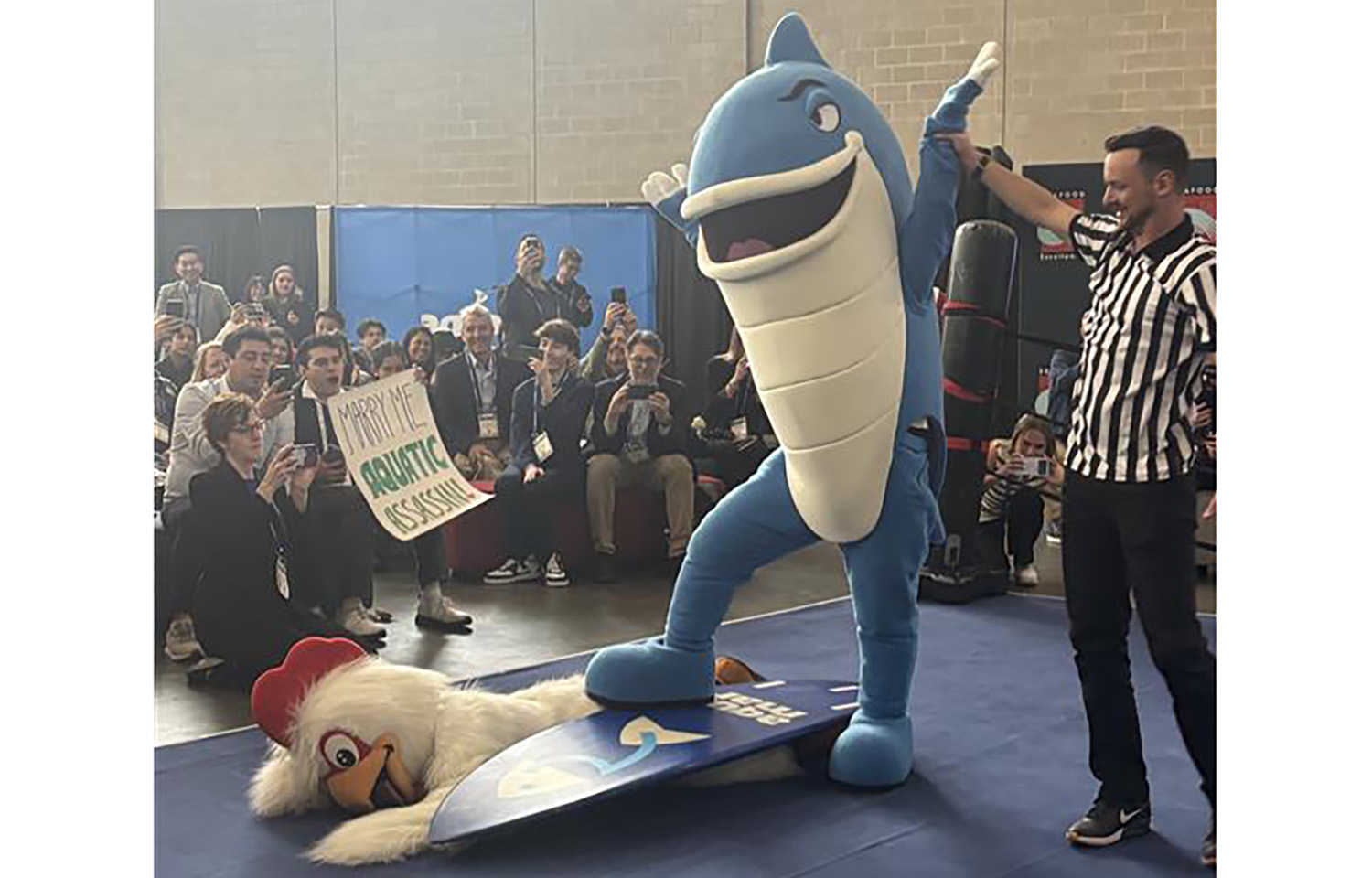
“It was silly, and goofy, and we had fun, but the message is super clear: Fish needs to work together to beat chicken,” he said. “How do we work together and take that 8 percent consumption and make it 10, 20, 30 percent?”
Gormley said that part of Aquamar’s mission is to create products that help remove barriers consumers might have to seafood consumption. The company’s recent fully cooked, refrigerated, value-added seafood line is part of that effort by making seafood an easy dinner item that avoids some of the issues consumers often mention as an obstacle to eating more seafood.
One of those issues is smell – which is often a bigger obstacle than the industry recognizes.
“It’s funny, because in an industry perspective, we get desensitized to it,” Gormley said. “But if you think about it, [when] cultures use fish as a way to describe things that smell bad, there’s something wrong. The Dutch have a saying, ‘Put the fish on the table,’ which is a little bit about the elephant in the room – let’s talk about the big nasty thing that is messy.”
Having the entire product category used as a descriptor for something that smells bad is something the industry should take seriously and is part of the reason why Aquamar has moved toward its fully cooked products.
“People don’t want the fish smell, so if you give them fully cooked fish – no smell,” Gormley said.
Not every seafood company or product can be fully cooked, but Gormley said even in those cases seafood can make gains with the right marketing push. He pointed to Seafood Nutrition Partnership’s (SNP) “Fall in Love with Seafood” campaign which has seen double-digit sales growth when run with retail partners and granted a return on investment that’s five or six times what was spent on the campaign.
“With that kind of track record, if I did that at Kraft or Sara Lee where I was working before, they would name a conference room after me,” Gormley said. “We’ve got evidence to suggest that will bring a good outcome, but it’s about making people recognize that.”
As the seafood industry continues to work on growing its share of the plate, Gormley said it should heed those lessons from SNP – and from the “protein smackdown” – and work together to expand consumption.
“We need to establish a board, and I think there’s a great opportunity to do something more broadly. We would support that as a company,” Gormley said. “We’re in because we know we’re going to get the benefit.”
