






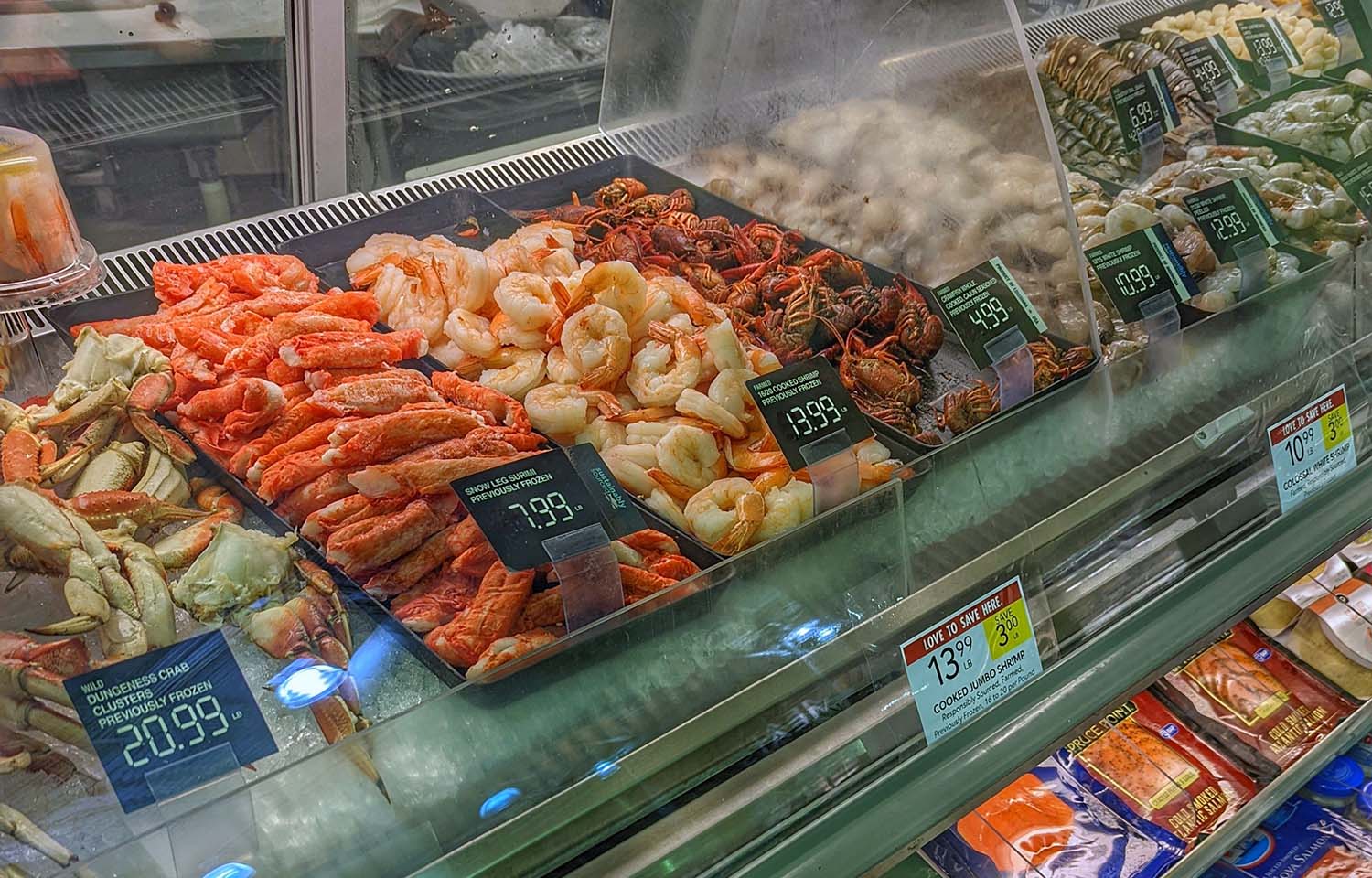
After several months of lagging sales values and volumes, the U.S. retail seafood market finally picked up in September with shelf-stable seafood and frozen shrimp seeing the biggest gains.
According to new data from research firm Circana, analyzed by Lakeland, Florida, U.S.A.-based 210 Analytics, the value of fresh seafood sales grew 0.2 percent to USD 611 million (EUR 562 million); sales by volume in the category rose 0.6 percent. Overall frozen seafood sales value declined 0.3 percent to USD 579 million (EUR 532 million), but volumes increased 2.1 percent.
Shelf-stable seafood saw the biggest increases in September, with sales values rising 1.8 percent to USD 256 million (EUR 235 million), while volumes increased by 8.6 percent. A 6.2 percent decline in average price to USD 4.90 (EUR 4.51) per pound on average contributed to the volume increase.
Frozen seafood prices also dropped 2.4 percent to USD 7.22 (EUR 6.64) per pound on average in the month, as deflation among top sellers like shrimp helped overall numbers. Frozen shrimp prices declined 4.7 percent, and frozen salmon prices dropped 4.8 percent.
Fresh seafood prices declined by 0.3 percent to USD 9.45 (EUR 8.69) per pound on average. As prices dropped slightly, overall sales values of some species increased. Fresh shrimp sales value increased 0.2 percent, while volumes increased 3 percent. Meanwhile, frozen shrimp sales values fell 3.8 percent in September, but volumes rose 0.9 percent.
“Finally, [there was] some positive news for seafood with the first signs of demand recovery for shrimp,” 210 Analytics Principal Anne-Marie Roerink said. "Given the enormous footprint of shrimp in [the] frozen [category], fingers crossed on the continuation of the recovery.”
Sales of frozen finfish species performed better than frozen shrimp during September.
Frozen salmon sales values increased 1.4 percent, and volumes increased 6.5 percent. Frozen pollock sales values increased 2.8 percent, while volumes declined slightly by 0.8 percent.
In the fresh category, salmon sales values in September 2024 declined 0.2 percent, and volumes fell 2.6 percent compared to the same month of 2023. Crab sales values were also down 1.8 percent, and tilapia fell 3 percent. However, trout realized gains in both sales value, which increased by 15.4 percent, and volume, which increased by 22.5 percent. Cod sales values also rose 6.4 percent, and volumes increased 10.7 percent.
Roerink said the positive retail news for seafood in September and early October may be attributable to Americans stocking up in advance of the Eastern seaboard port strikes, as well as hurricanes Helene and Milton. In the week leading up to hurricane Milton making landfall in Florida, total food and beverage sales at retail increased 16.8 percent in the Southeast and 7.9 percent overall.
On the other hand, overall U.S. retail sales and inflation did not fare as well in September. Grocery and beverage sales fell slightly – 0.1 percent – compared to August but rose 0.42 percent compared to last September, according to the CNBC/NRF Retail Monitor, powered by Affinity Solutions.
Total retail sales, excluding automobiles and gasoline, fell slightly by 0.32 percent when seasonally adjusted compared to August but rose 0.55 percent unadjusted year over year in September, according to the Retail Monitor.
“After seven consecutive months of gains, consumers pulled back a bit in September, which is historically a soft month for retail sales,” NRF President and CEO Matthew Shay said. “Due to geopolitical tensions, uncertainty regarding election outcomes, anticipation of the port strike, and lingering inflation in services, shoppers showed caution. However, year-over-year gains showed consumers were still spending on household priorities.”
Inflation continues to plague consumers as the Consumer Price Index for All Urban Consumers (CPI-U) rose 2.5 percent in September compared to last September and rose 0.2 percent compared to August, the U.S. Bureau of Labor Statistics reported.
The inflation index for food at home rose 1.3 percent in September compared to last September, while inflation on meats, poultry, fish, and eggs increased 3.9 percent. However, seafood deflation continued in September, with a 1.3 percent drop in prices compared to September 2023 and a 0.1 percent decline compared to August 2024.
Inflation at restaurants continued to be more significant than inflation for food at retail, with prices rising 3.9 percent in September compared to the previous September.
