






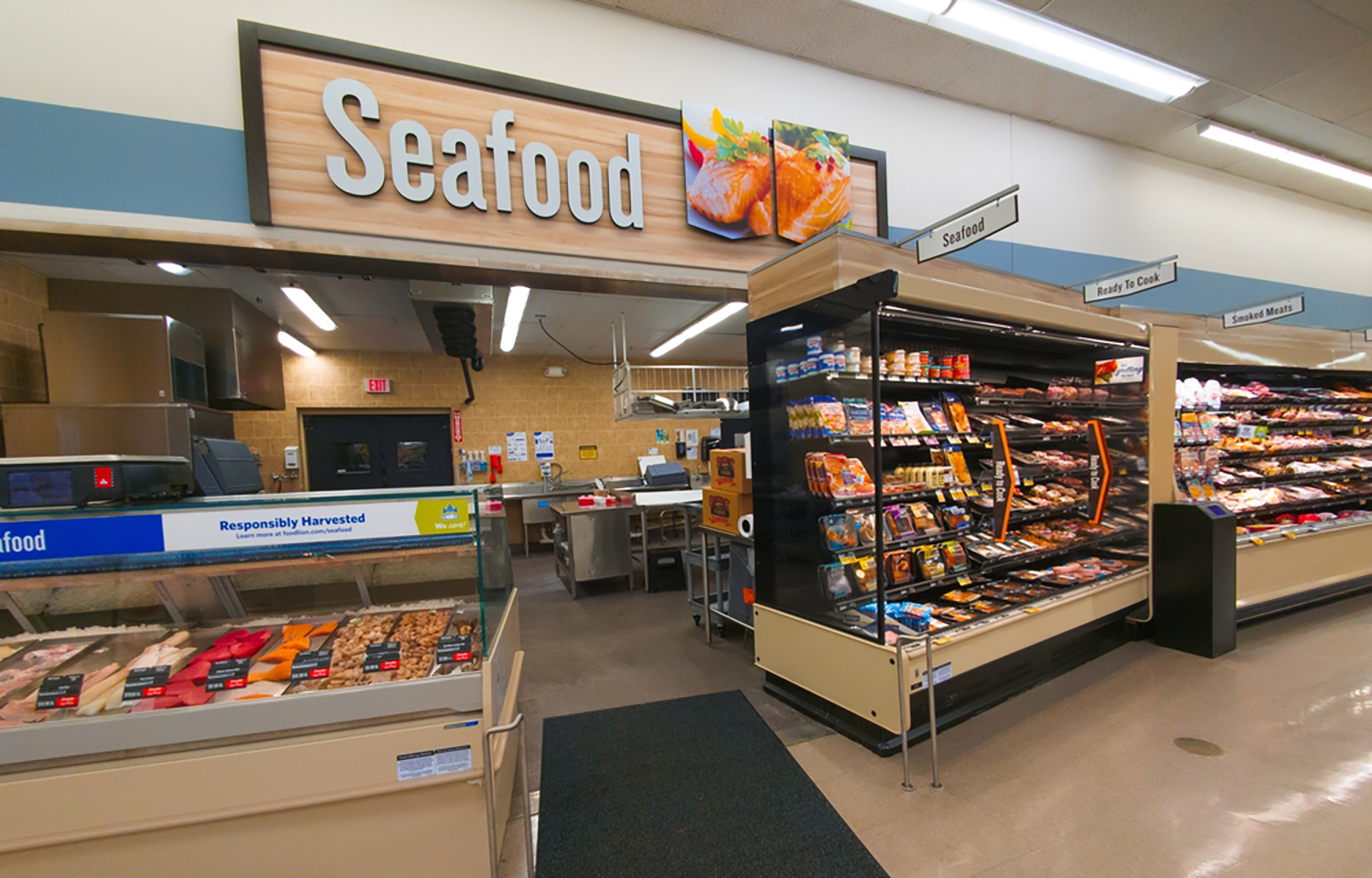
Seafood sales at U.S. retail dipped in April, largely due to rising inflation and the early timing of Easter compared to 2025, which helped boost last year’s April sales by comparison.
By category, fresh seafood sales rose just 0.6 percent by value to USD 678.8 million (EUR 579.3 million), while sales by volume dropped 3.9 percent year over year, according to new data from market research firm Circana analyzed by Lakeland, Florida, U.S.A.-based 210 Analytics.
This came as the average price per pound of fresh seafood rose 4.6 percent to USD 9.99 (EUR 8.53). By species, fresh cod rose in price by 12.9 percent year over year, while shrimp prices rose 11 percent, crab prices rose 7.2 percent, and salmon prices rose 3.6 percent.
Salmon continued to lead the category in sales, rising 6.9 percent by value to USD 344.1 million (EUR 293.7 million) and 3.2 percent by volume. Fresh shrimp sales struggled in April, dropping 10.3 percent by value and 19.2 percent by volume. Trout maintained its streak of positive performance, rising 7.4 percent by value and 4.6 percent by volume.
Frozen seafood sales, meanwhile, dropped 0.2 percent by value to USD 671.4 million (EUR 572 million), and sales by volume decreased 12.7 percent in the category.
The dip in sales came as the average price per pound of frozen seafood rose 14.4 percent to USD 8.14 (EUR 6.95). Frozen shrimp prices spiked 20.1 percent in the month, while frozen crab prices rose 11.2 percent, frozen pollock prices rose 11 percent, and frozen salmon prices rose 9.4 percent.
Similar to fresh trends in April, frozen salmon performed well, rising 14.1 percent in sales by value and 4.3 percent by volume. Though frozen shrimp dominated the category in total sales by value at USD 318.4 million (EUR 271.7 million), that total represented a 0.9 percent decrease year over year, and its sales by volume dropped 17.6 percent. Other species that struggled in the frozen category included frozen cod, the sales of which dropped 14.3 percent by value and 31.3 percent by volume. Frozen pollock sales dropped 6.8 percent by value and 16 percent by volume.
Shelf-stable seafood sales bucked trends seen in fresh and frozen, jumping 13.9 percent by value to USD 303.4 million (EUR 259 million); its sales by volume rose 2.7 percent. Sardine sales rose 63 percent by value to USD 41.1. million (EUR 35.1 million), while sales by volume rose 38.9 percent.
The positive performance came even as shelf-stable price inflation rose 13.4 percent, with the average price per pound in the category increasing to USD 5.74 (EUR 4.90).
Looking forward, inflation and spiking gas prices are expected to continue impacting grocery and restaurant spending.
These economic headwinds led the U.S. Bureau of Labor Statistics’ Consumer Price Index to rise 0.6 percent to 3.8 percent in April, marking the highest level in nearly three years. The bureau’s food-away-from-home index increased 3.6 percent in April compared to last year, while food-at-home prices rose 2.9 percent. The index for beef, poultry, fish, and eggs also rose 1.3 percent.
The CPI numbers show a “significant jump” in food-at-home inflation, FMI – The Food Industry Association Vice President of Tax, Trade, Sustainability, and Policy Development Andy Harig said in a release.
“This was expected given global events but, nonetheless, poses new challenges for shoppers,” he said, adding that those global events, such as recent instability and uncertainty in global energy markets, are contributing to rising production costs across the food supply chain. “Today’s numbers reflect the reality that these dynamics are putting substantial cost pressures on the supply chain and therefore grocery prices.”
Harig acknowledged that inflation is “understandably frustrating for American families and grocers alike.”
“The food industry is doing everything we can to keep prices in check and support shoppers amid continued market uncertainties as they seek to get the most value out of their grocery dollar. We remain committed to working across the supply chain to manage cost pressures and ensure consumers continue to have access to a safe, affordable, and abundant food supply,” he said.
Besides inflation, 73 percent of drivers said that higher gas prices have resulted in cutting spending from other categories, including dining out/takeout (43 percent), while 28 percent of drivers have cut spending on everyday items such as groceries, per research firm Numerator.
Higher gas prices are leading to a shift in where consumers spend their money, too. For instance, traffic to wholesale clubs jumped 3.8 percent for the week of 27 April, per customer traffic firm Placer.ai.
“This period saw a continued decline in discretionary retail traffic alongside sustained growth in deep-value channels, such as warehouse clubs,” Placer.ai Head of Analytical Research R.J. Hottovy said.
