





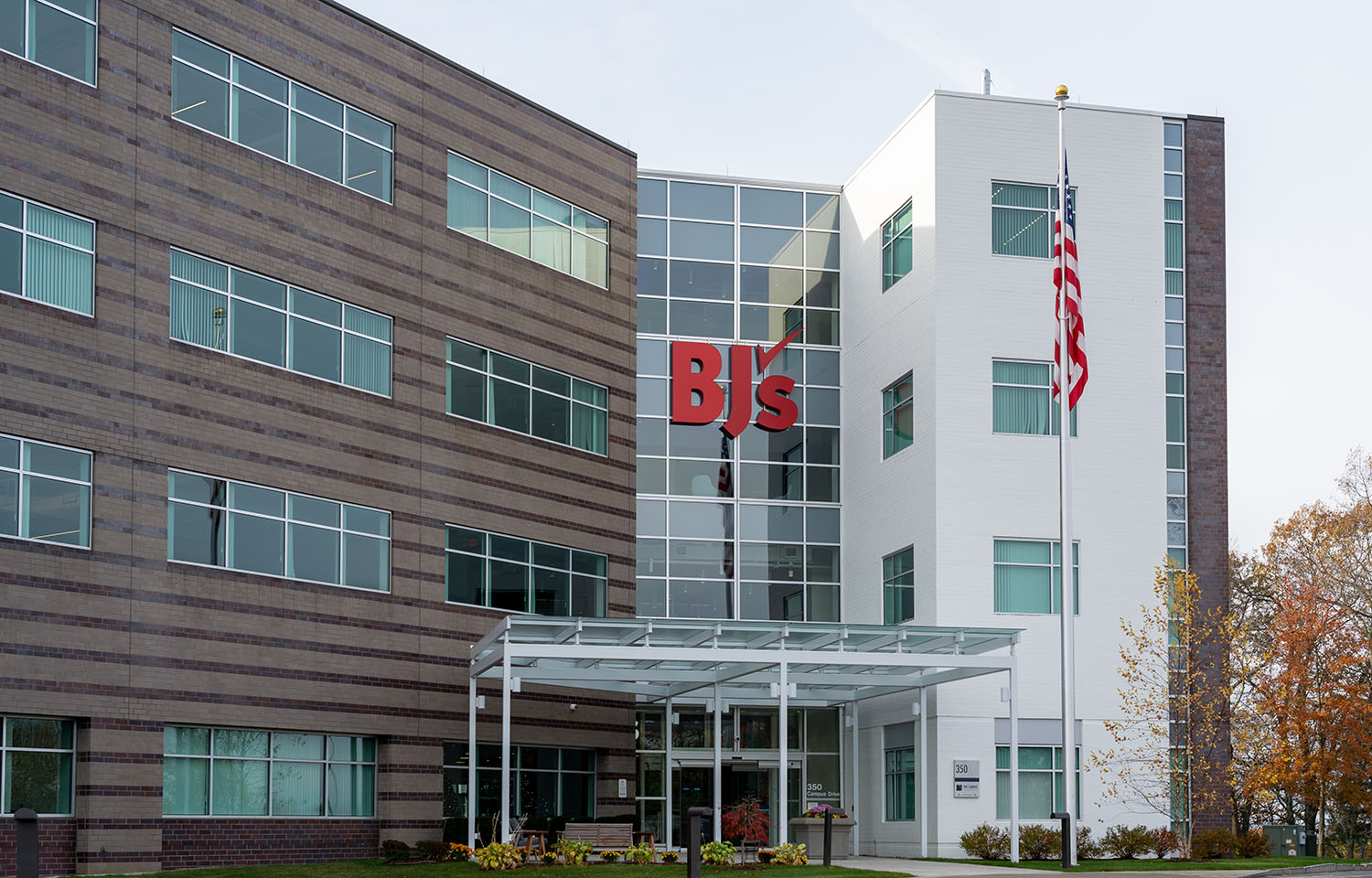
Sales of perishables have been “on fire” at BJ’s Wholesale Club, which operates 215 stores in 16 U.S. states, Chairman and CEO Bob Eddy said during a recent webinar.
Eddy detailed the results of the company’s “Fresh 2.0” transformation during the National Retail Federation’s State of Retail & the Consumer virtual event in early April.
Similar wholesale club giants Sam’s Club and Costco are also increasing sales and expanding stores, while Walmart continues to bulk up its grocery sales.
Eddy said perishables are the “heart and soul” of the Marlborough, Massachusetts, U.S.A.-based BJ’s, and the company has doubled down on offering “quality food at spectacular prices.”
The retailer surveyed its members and found that some were not confident that the perishables, particularly produce, would be fresh once they got the product home. To answer those concerns the company launched a multi-faceted “Fresh 2.0” strategy that involved owning its supply chain, "tilting it toward freshness” with more frequent deliveries, and increasing the company’s specification and quality requirements. BJ’s also trained its team members on keeping perishables fresh daily, and maintaining its cold chain.
Eddy said the company’s focus on perishables is paying off. Produce units hiked up 15 percent last year, and other perishable categories grew “a lot.” In the past, BJ’s sold virtually zero perishable products, and now fresh sales account for 35 percent of its business.
BJs offers a range of both fresh and frozen seafood, and the company emphasizes the quality and freshness of its fresh seafood options on its promotional material.
Since the implementation of Fresh 2.0, BJ’s is also seeing overall traffic growth in its stores. Data also indicates customers who buy perishable products from BJ’s shop the most around the club, purchasing other items such as paper towels and televisions, and renew their memberships the most, Eddy said.
BJ’s customers are also responding to the company’s renewed efforts to save them time and money, which include putting groceries in the customers’ cars when they have pickup orders and offering groceries for delivery. Online sales now account for around 15 percent of the company’s sales, Eddy said.
He added that shoppers appreciate that they can do their weekly grocery shop at BJ’s with smaller pack sizes and more variety than other club stores.
A similar wholesale club chain, Sam’s Club – operated by Bentonville, Arkansas, U.S.A.-based Walmart – unveiled aggressive expansion plans at Walmart’s recent 2025 Investment Community Meeting. The operator of 600 U.S. stores plans to double membership and more than double sales and profit over the next eight to 10 years.
The strategy involves strengthening membership, expanding its physical and digital capabilities, and “delivering a seamless, elevated experience for members,” the company said. Sam’s Club will open 30 new locations, announced previously, and then open 15 new clubs annually. The retailer also plans to remodel all of its stores.
“This is one of the fastest, most scalable transformations happening in retail today,” Sam’s Club President and CEO Chris Nicholas said. “We’re investing with intention – in our fleet, our associates and the member experience – to become the world’s best club retailer.”
Leveraging Walmart’s enterprise fulfillment network and technology platforms, Sam’s Club is scaling a national e-commerce presence that enables membership growth beyond its physical club footprint.
Additionally, the company is focused on offering more value to its shoppers, including its The Member’s Mark private brand, which represents 50 percent of merchandise sales growth over the past two years.
Issaquah, Washington, U.S.A.-based Costco Wholesale, which operates 903 stores in the U.S. and several other countries, reported an 8.3 percent in increase in net sales for the first 31 weeks to USD 158.9 billion (EUR 139 billion), compared to the same period last year.
While warehouse clubs may be gaining more share of shoppers’ wallets, Walmart is still the leading grocery retailer in the U.S. – and will likely continue to gain share as shoppers seek out value. The retailer’s U.S. net grocery sales rose 4 percent to USD 276 billion (EUR 242 bllion) in fiscal year 2025 compared to fiscal year 2024. And grocery accounted for nearly 60 percent of Walmart U.S.’s total net sales of USD 426 billion (EUR 374 billion), which was flat compared to last year.
“Our leadership in high-frequency food and staples is the starting point for shopping baskets and it keeps our customers coming back,” Walmart CFO John David Rainey said during the retailer’s investors meeting, per Grocery Dive.
Walmart was the top grocery retailer by dollar share for the year ending 31 March, according to new data from Numerator. Walmart’s share was 21.2 percent, slightly less than the 21.5 percent for the same period through March 2024.
Kroger was the second largest grocery retailer with an 8.9 percent dollar share, while Costco had an 8.5 percent share, Albertsons had 5 percent, and Publix had 4.1 percent.
Traffic to Walmart and other superstores hiked up 8.7 percent for the week of 14 April, while grocery store visits surged 10 percent, according to Placer.ai.
“Preparations for the Easter holiday drove strong year-over-year increases in visits to grocery stores, superstores, and apparel retailers,” Placer.ai Head of Analytical Research R.J. Hottovy said.
The location intelligence firm is continuing to see evidence of price-sensitive consumer behavior, Hottovy added, with many value-oriented retailers experiencing stronger year-over-year visitation trends compared to the broader retail industry.
