






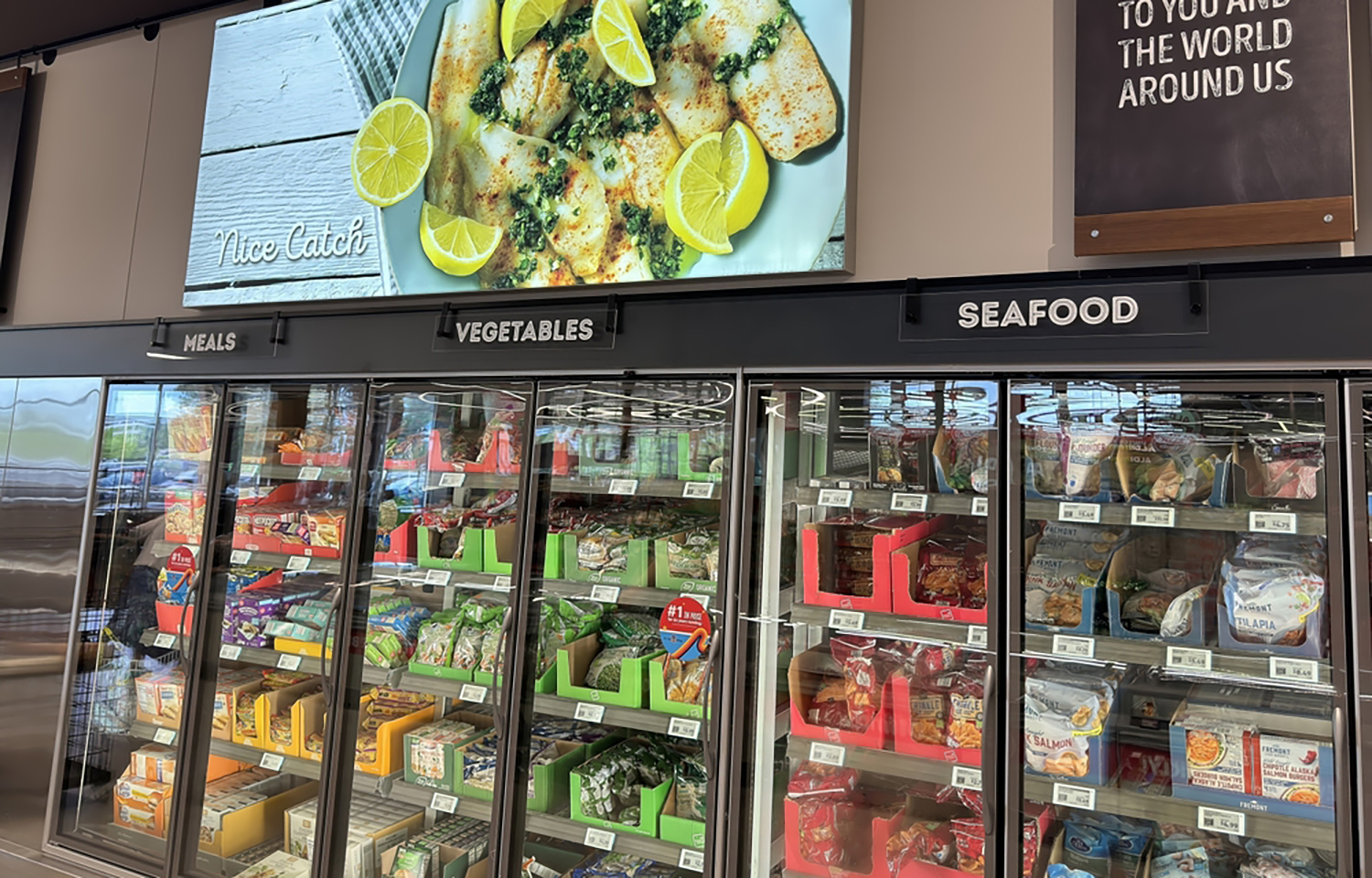
Sales by volume of both fresh and frozen seafood at U.S. retail stores fell in June, while shelf-stable seafood realized both value and volume sales growth.
Sales of fresh seafood by volume declined 1.5 percent in June compared to the same month a year prior, according to Circana data analyzed by Lakeland, Florida, U.S.A.-based 210 Analytics, while sales by value in the category grew slightly by 0.4 percent to USD 677 million (EUR 579 million). This came as fresh seafood prices inclined 2 percent, led by a 6.9 percent increase in fresh shellfish prices during the month.
Frozen seafood sales by volume declined by 2.5 percent, while sales by value inclined 0.7 percent to USD 631 million (EUR 540 million). Similarly to fresh seafood trends, the slightly negative volume of frozen sales came as price inflation in the category increased 3.3 percent.
Shelf-stable seafood sales had a solid month by both value – which increased 2.2 percent to USD 262 million (EUR 224 million) – and volume, which grew 3.1 percent year over year. Ambient seafood prices declined 0.8 percent in the month.
Consumer concern about tariffs likely continued to impact seafood sales in June, according to 210 Analytics Principal Anne-Marie Roerink, but anxieties over trade disruptions have leveled off a bit compared to earlier in the year.
“Concern built quickly driven by worry about the impact on prices, product availability, and the impact on employment,” Roerink said. “Much like consumer sentiment, the drop in feelings surrounding tariffs also plateaued and are starting to reverse a little.”
Nevertheless, Americans’ uncertainty over how tariffs will impact prices still “drives unpredictable patterns,” Roerink said.
“It tends to stall momentum by paralyzing consumer decision-making. That can be regarding big expenses like vacations or car purchases but also everyday decisions to go out to eat at a restaurant or even splurge on a more premium seafood versus a ground beef meal,” she said.
Backing up that claim, research from Stamford, Connecticut, U.S.A.-based data firm Gartner found that 70 percent of Americans are making significant changes to their everyday habits due to the current economic climate, per Marketing Dive. As a result, many U.S. consumers are adopting recession-era behaviors, such as paying down debt and holding off on big-ticket items like cars and travel, the research found.
The apprehensiveness with which consumers are approaching their budgets led to overall retail sales falling 0.33 percent from May to June, while grocery and beverage store sales declined 0.13 percent in the same period, according to new data from the CNBC/NRF Retail Monitor.
“June’s numbers indicate that prolonged uncertainty surrounding the economy, tariffs, and trade policy could be pushing consumers to adopt a ‘wait-and-see’ approach with their household budgets,” National Retail Federation (NRF) President and CEO Matthew Shay said. “This was the first monthly decline since February, and spending was down across almost all sectors.”
Economic fundamentals “appear solid at this juncture” when simply looking at macro data, but uncertainty is pervasive, NRF Chief Economist Jack Kleinhenz said in the organization’s Monthly Economic Review.
“There are many crosscurrents surrounding tariffs, immigration, and deregulation, and everyone is sorting through what the tariff rates are going to be, how they will impact inflation for retail products, and, importantly, how long they will be in place,” he said.
While tariffs have yet to be clearly seen in prices, according to the NRF, if larger increases in tariffs that U.S. President Donald Trump has threatened at various times this year take effect and are sustained, “they will infiltrate consumer prices, causing a downshift in spending that is likely to spill over into the labor market later in the year with higher unemployment,” Kleinhenz said.
Kleinhenz also said the One Big Beautiful Bill recently passed by U.S. Congress has ”many moving parts” that could greatly alter the nation’s economic outlook, but at the very least, the adoption of the bill “meaningfully reduces fiscal policy uncertainty,” Kleinhenz said.
The passage of the bill is “clearly supportive of economic growth,” according to Shay, but he acknowledged that unresolved and restrictive trade policies remain a significant headwind.
“Economic fundamentals haven’t been disrupted yet, and shoppers still have the ability to spend on priorities. But, the economy is gradually slowing, and there has been an impact on the psyche of consumers,” Shay said.
