


Norway's seafood export value shrank in January 2026 compared to the same period of 2025, as the U.S. market contracted heavily and lost its position as the country's largest market.
Norway exported NOK 14.8 billion (USD 1.53 billion, EUR 1.30 billion) worth of seafood in January 2026, down 3 percent, or NOK 416 million (USD 43 million, EUR 36 million), over the same period of 2025, according to statistics shared by the Norwegian Seafood Council (NSC).
"Lower salmon prices, a weaker U.S. dollar, reduced quotas for several wild fish species, and tougher competition in important markets meant that Norwegian seafood exports fell in January," NSC CEO Christian Chramer said in a release.
NSC said the country's exports to the U.S. plunged by 37 percent in January 2026 compared to the same period last year. That drop means Poland, the Netherlands, and China are now all larger markets for Norwegian seafood than the U.S.
"High and unpredictable tariffs and a weaker dollar have created great uncertainty and challenges in the U.S., which remains our largest fillet market for both salmon and trout," Chramer said. "The demanding trade situation is something we are seeing the consequences of now."
Chramer told SeafoodSource during the 2026 Global Seafood Market Conference that the U.S. will continue to be an important market for Norwegian seafood, but that trade disruptions – like U.S. President Donald Trump's sudden announcement of a potential 10 percent tariff on all goods from Norway – have made doing business in the market more complicated.
Trump ultimately walked back the latest European tariff threat, but uncertain trade contributed to Norway's exports of salmon and trout fillets to the U.S. falling 9 percent in January 2026 compared to the same period of 2025.
NSC Seafood Analyst Paul T. Aandahl said the U.S. is still the most important market for salmon fillets from Norway, but exports of fresh salmon fillets plunged 37 percent in the month, while frozen fillets dropped 22 percent. That dragged down total exports of processed salmon products.
"Reduced market access is a strong contributing factor to the fact that the proportion of salmon exported as processed goods has fallen from 26 percent in January last year to 20 percent this year," Aandahl said.
NSC Envoy to the U.S. Karine Rød Haraldsson said the drop was largely the result of the country's tariffs on U.S. goods. While Trump rescinded the threatened 10 percent tariff, Norway still faces a 15 percent "reciprocal" tariff on all goods.
"After a moderate decline of 1 percent in the fourth quarter of 2025, there was a volume drop of 29 percent in January," Haraldsson said. "This shows that market access has been significantly weakened and that Norwegian exporters are facing tougher competition from countries that do not have a 15 percent tariff."
Chramer said the reductions in U.S. demand and shifts in trade have had consequences across large swaths of the seafood industry.
"Uncertainty is widespread, and global seafood trade is so closely intertwined that this will have an impact across several species and markets," Chramer said.
As markets shifted, Poland quickly rose to the top spot for Norwegian seafood in the month. Norway exported NOK 1.9 billion (USD 196 million, EUR 166 million) worth of seafood to Poland in January, an increase of 55 percent compared to January 2025.
"Growth to Poland stood out in January. This is traditionally a processing market, but now, they are also eating more salmon themselves," Chramer said.
China continued to be a top market for Norway, buying NOK 1.2 billion (USD 124 million, EUR 105 million) worth of seafood, an increase of 8 percent.
"For the first time ever, the export value of salmon to China exceeded NOK 1 billion [USD 103 million, EUR 87 million] in a single month, so strong demand is cushioning some of the impact of the U.S. downturn," Chramer said.
By species, Norway's salmon exports grew in volume but dropped in value, NSC reported. The country shipped 112,091 metric tons (MT) of salmon overseas in January 2026, an increase of 20 percent. The value of that salmon reached NOK 10.4 billion (USD 1.07 billion, EUR 910 million), a drop of 1 percent.
Poland saw rapid growth as a market and purchased 17,071 MT of salmon – 71 percent higher than the amount of salmon it purchased in January 2025.
Aandahl said the export statistics showcased a big change in the flow of goods as export volumes increased, with more salmon flowing toward China than ever before. Norway exported 10,997 MT of salmon to China in January, an increase of 86 percent. By value, salmon exports to China reached NOK 1 billion (USD 103 million, EUR 87 million), an increase of 34 percent.
"The last two weeks have been particularly strong. Prices for Norwegian salmon have been significantly lower in January compared with the same month last year, so we can expect to have gained market share," NSC Envoy to China Sigmund Bjørgo said.
Norway's exports of trout also dropped in both volume and value during the month. The country exported 5,942 MT of trout worth NOK 560 million (USD 57 million, EUR 49 million), a drop of 16 percent and 18 percent, respectively.
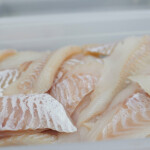
In contrast to salmon and trout, fresh cod exports increased in both volume and value in January 2026. The country exported 3,880 MT of fresh cod worth NOK 316 million (USD 32 million, EUR 27 million), an increase of 3 percent by volume and 20 percent by value.
That growth was in part boosted by increases in fresh farmed cod exports. Fresh farmed cod accounted for 1,436 MT of volume, up 8 percent compared to 2025, and its export value increased 18 percent to NOK 109 million (USD 11.2 million, EUR 9.5 million).
NSC Seafood Analyst Eivind Hestvik Brækkan said the lower quotas for cod are resulting in high prices for the species.
"With the lowest cod quotas since 1991, fresh wild cod has become an increasingly exclusive product, and the start of this year's cod season is characterized by record-high prices," Brækkan said. "It can be challenging to make up for this in a sensitive fresh market."
Norway reported herring exports also had a strong start to 2026, with the country exporting 27,255 MT worth NOK 574 million (USD 59.3 million, EUR 50.2 million) in January, up 31 percent and 32 percent over last year.
"With a 33 percent higher quota compared to last year and very good fishing, 121,000 MT were landed in January," NSC Head of Pelagic Species Jan Eirik Johnsen said. "We have to go back to 2012 to find higher landing figures. This is fueling exports."
Johnsen said the positive momentum of herring has been a boon as quotas for other key species are cut.
"Norwegian spring-spawning herring (NVG) is the bright spot, so it's good that the fishery is doing well," Johnsen said.
Mackerel is an example of those quota cuts impacting the industry. Norway exported 9,086 MT of mackerel in January 2026, a drop of 63 percent. That figure is historically low, and landings in January were only 7,500 MT – also a historic low.
Value also dropped to NOK 478 million (USD 49.4 million, EUR 41.8 million), down 37 percent, or NOK 280 million (USD 28.9 million, EUR 24.5 million) year over year.
"In addition, the U.K. has introduced a requirement for its own boats to land at least 70 percent of their mackerel catches in their own country," Johnsen said. "This will deprive the Norwegian industry of the opportunity to compete for the raw material and will further affect exports from Norway."
Norway's exports of king crab also dropped heavily compared to January 2026. Exports volumes fell 71 percent to 47 MT, and value dropped 77 percent to NOK 28 million (USD 2.8 million, EUR 2.4 million).
"The U.S., which dominated exports of frozen king crab in January last year, took almost no quantities this year," NSC Head of Shellfish Josefine Voraa said. "The reduced quota also means that available volumes are building up more slowly than normal and naturally contributes to lower exports in the first month of the year."
