


Norway’s total seafood export value fell for the second month in a row in February 2026 as a stronger Norwegian krone and a big drop in exports to the U.S. took their toll.
According to data collected by the Norwegian Seafood Council (NSC), Norway exported seafood worth NOK 13.8 billion (USD 1.43 billion EUR 1.23 billion) in February, marking a drop of NOK 262 million (USD 27.2 million EUR 23.4 million), or 2 percent, compared to February 2025. Combined with January, Norway has exported NOK 28.5 billion (USD 2.956 billion EUR 2.542 billion) worth of seafood so far in 2026 – a decrease of NOK 777 million (USD 80.6 million EUR 69.3 million) compared to the same period of the prior year.
“Lower supplies of shellfish and wild-caught fish due to quota reductions, combined with a still troubled world and trade barriers, are affecting the market, product flows, and prices even more strongly than we have experienced before,” NSC CEO Christian Chramer said in a release. “The start of this year has, therefore, been more demanding than last year.”
NSC pointed to a large fall in wild fish volumes as part of the equation on the export value decline as the country has had to grapple with decreased quotas for major species like cod and mackerel. The council said the decreased supplies caused price increases but those increases weren’t enough to offset the volume declines.
“The export volume of fresh wild cod was the lowest in February since 2009, while the volume of mackerel more than halved compared with the same month last year,” Chramer said.
As the NSC predicted in January, the decrease in raw material supply is also causing problems for the onshore industry, he said.
“This development is not only challenging for seafood exports but has dramatic consequences for the onshore industry, which is now experiencing very tough economic times," Chramer said.
Along with the stronger krone and lower supplies, a big decrease in exports to the U.S. compared to last year caused a shift in prices as well. Norway exported NOK 1 billion (USD 103.7 million EUR 89.2 million) worth of seafood to the U.S. in February 2026, a decrease of NOK 568 million (USD 58.9 million EUR 50.6 million), or 36 percent, compared to the same month of 2025. That decrease is comparable to the 37 percent drop the country experienced in January.
According to the NSC, 7.5 percent of Norway's seafood exports went to the U.S. in February 2026, down from 11.5 percent in the same month of 2025.
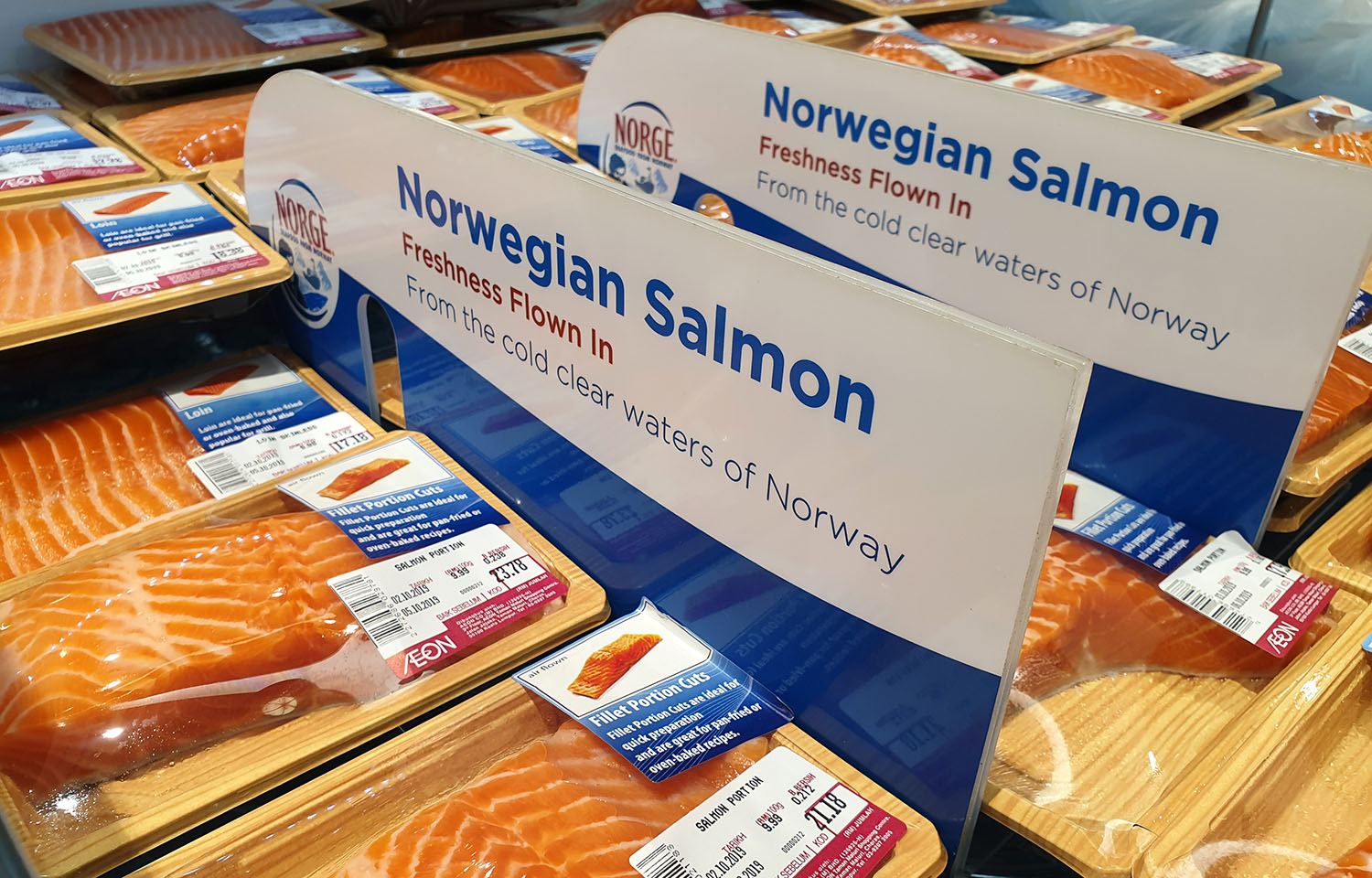
"Most of the decline is in fresh salmon fillets, but several other species and products also fell significantly," Chramer said. "King crab, snow crab, frozen salmon fillets, and fresh whole salmon have a sharp decline in exports to the U.S. compared to last year."
For the year, Norway's exports to the U.S. have declined by NOK 1.1 billion (USD 114.1 million, EUR 98.1 million) compared to the same span of 2025.
As Norway's exports to the U.S. dropped, its exports to China increased and now account for a higher share of volume and value than the U.S.
Norway's export value to China in February increased by NOK 430 million (USD 44.6 million, EUR 38.4 million), or 54 percent, compared to the same month of 2025, and the country accounted for 8.9 percent of Norway's seafood export value, NSC said.
Part of the increase was thanks to Chinese New Year, which saw solid growth for salmon exports to China, NSC said. Norway exported 11,512 metric tons (MT) of salmon to China in February 2026, an increase of 126 percent compared to the same month of 2025.
"The Chinese New Year celebrations follow the lunar calendar and, this year, fell in mid-February. Significant volumes of salmon were shipped to China ahead of the holiday," NSC Envoy to China Sigmund Bjørgo said.
Bjørgo said the availability of salmon in China has steadily increased with better distribution, helping boost sales.
"Norwegian salmon can now be purchased in more stores, on social media, and in neighborhood shops and can be delivered to customers' homes within half an hour," he said. "In addition, gift packs of salmon were a major driver of the huge growth in Chinese salmon consumption during this year's Chinese New Year celebrations."
Overall, Norway exported 97,463 MT of salmon worth NOK 9.4 billion (USD 974.9 million, EUR 838.4 million) in February, an increase of 10 percent and 5 percent, respectively. Poland, China, and France were the largest markets for the product in the month, while exports to the U.S. saw the biggest drop.
"Exports of fresh fillets to the U.S. saw the biggest decline. This must be seen in the light of customs duties, increased uncertainty about future trade conditions, increased competition from other producer nations, and a weakened U.S. dollar," NSC Seafood Analyst Paul T. Aandahl said.
While salmon saw increases compared to the prior year, many other species didn't. Norway's exports of trout dropped to 4,557 MT worth NOK 446 million (USD 46.3 million EUR 39.8 million), a decline of 23 percent and 21 percent, respectively.
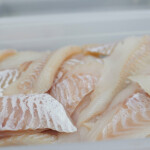
Fresh cod also saw volume declines, though value stayed basically flat at NOK 392 million (USD 40.7 million EUR 35.0 million). Norway exported 4,006 MT of fresh cod worth in February, a drop of 15 percent. Landings of fresh cod in February were the lowest recorded since statistics began in 2013, NSC said.
"This also means that we had the lowest export volume of fresh wild cod in February since 2009," NSC Seafood Analyst Eivind Hestvik Brækkan said.
Farmed cod accounted for 29 percent of the export value of fresh cod in the month as wild cod export volumes and values both dropped.
"The major driver behind the decline in exports of fresh cod is the low quotas," Brækkan said. "At the same time, the trend of fresh exports falling relatively more than landings continues. The land-based industry in Norway needs raw materials to keep activity going and takes a larger share of Norwegian landings when quotas fall."
Brækkan predicted "fierce competition" for raw materials in 2026 as companies work to maintain volumes.
Frozen cod also saw big export declines due to lower landings and trade complications. The country exported 1,690 MT of frozen cod worth NOK 176 million (USD 18.3 million EUR 15.7 million), a drop of 66 percent and 57 percent, respectively.
Part of that decline was a drop in exports to China, which continued a negative trend.
"High and fluctuating tariffs on imports from China to the U.S. through 2025 reduced China's competitiveness in exporting frozen cod fillets to the U.S. market," Brækkan said. "This resulted in lower Chinese demand for frozen whole cod. Although both Vietnam and China now face the same tariffs on frozen cod fillets to the U.S., the shift away from China as a processing market will continue into 2026."
Mackerel also saw declines in export volume and value. Norway exported 8,311 MT of mackerel worth NOK 423 million (USD 43.9 million EUR 37.7 million), a drop of 56 percent and 31 percent, respectively. The lower value was partially the result of prices finally dropping off of record highs.
"After setting price records every month from the start of the season in August, we see that the price of whole frozen mackerel fell from January to February," NSC Head of Pelagic Species Jan Eirik Johnsen said.
The one wild-caught species that had a positive month was herring. Norway exported 44,475 MT of herring worth NOK 703 million (USD 72.9 million EUR 62.7 million), an increase of 67 percent and 40 percent, respectively. Norway landed 170,000 MT of herring in the period of January and February 2026, marking an increase of 64 percent compared to the same period of 2025.
"We have to go back to 2012 to find similar figures, and this is also reflected in the export statistics," Johnsen said.
