



The Canadian government is initiating an engagement effort with the goal of gathering more information from key stakeholders about the possibility of moving all salmon farming in the province into land-based systems.
The initiative was born out of a provincial push beginning in 2018 to eliminate net-pen salmon farming. The goal eventually became part of the national policy platform for Canada’s Liberal Party, which was rolled out during Canadian Prime Minister Justin Trudeau’s reelection campaign in 2019.
On 12 November, the Canadian Department of Fisheries and Oceans announced that Fisheries, Oceans, and the Canadian Coast Guard Minister Bernadette Jordan will be meeting with Terry Beech, the parliamentary secretary to the minister and a member of parliament representing a riding in British Columbia, as well as representatives of B.C. First Nations, the aquaculture industry, and environmental groups over the coming weeks and months. The minister will then compile an interim report to be presented in the spring of 2021, according to the DFO.
“The government of Canada is committed to developing and delivering a real and concrete solution for transitioning open-net pens in coastal British Columbia waters. A change like this requires cooperation, consultation, and engagement, working closely with Indigenous communities, provincial counterparts, and other key stakeholders,” DFO said in a press release. “Close collaboration with the Province of British Columbia, Indigenous communities, industry, and other stakeholders will be critical in ensuring the transition is workable, economically feasible, and takes into account social impacts.
Changes are already underway for B.C.’s salmon aquaculture sector, as the DFO is considering an area-based management approach to aquaculture and finalizing work on the Framework for Aquaculture Risk Management (FARM), a new document that will guide the DFO’s management of aquaculture, along with its Wild Salmon Policy Implementation Plan. The FARM document is expected to be released by DFO in the near-future.
The upcoming discussions will include a study of the 2019 "State of Salmon Aquaculture Technologies Study,” which examined four alternatives to open-net pens for commercial production of salmon. They will also include input from the Indigenous and Multi-Stakeholder Advisory Body on Aquaculture, the Senate Committee on Fisheries and Oceans' report “An Ocean of Opportunities: Aquaculture in Canada,” and the 2018 Report from the Independent Expert Panel on Aquaculture Science.
"British Columbians and Canadians expect that as our government works to grow our ocean economy, we are doing it in a sustainable, environmentally-responsible way; meeting the demand for our farmed seafood products, while ensuring marine ecosystems are healthy and wild fish populations are protected,” Jordan said in a press release. “All voices will be heard during the development of this important initiative and I look forward to the outcomes of these engagements as we move forward on this transition together."
Aquaculture accounts for approximately CAD 31.7 billion (USD 24.1 billion, EUR 20.4 billion) toward Canada's gross domestic product and employs approximately 300,000 Canadians.
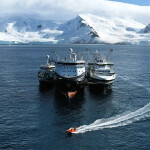
Photo courtesy of Alexander Gold/Shutterstock
