






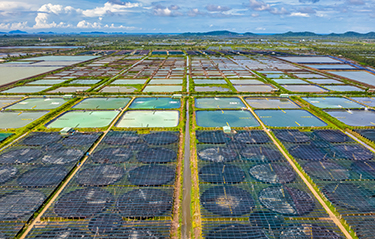
Heavy rain, along with the spread of shrimp diseases, have caused damage to more than 1,530 hectares of shrimp farming area in Vietnam’s Mekong Delta province of Tra Vinh in the first seven months of 2022.
This accounted for more than 6 percent of Tra Vinh’s total farming area, which raises both vannamei and black tiger shrimp. As a result of the rains and disease, 3,790 farmers in the province recorded a collective loss of around 853 million shrimp seeds, according to a 3 August report from Vietnam News Agency.
Tra Vinh Fisheries Department Director Nguyen Van Quoc said too much rain in the region this year has changed the local marine environment, creating conditions amenable to the spread of shrimp diseases such as white feces disease, white spot syndrome, red disease, and hepatopancreatic necrosis disease.
Surveys conducted recently by local aquaculture authorities have shown that out of more than 100 samples taken from the natural environment, 14 crustacean samples carried white spot syndrome; and among 100 samples taken from commercial shrimp farms, eight carried white spot syndrome, 11 carried hepatopancreatic necrosis disease, and 22 carried microspores.
Tra Vinh's fisheries department is recommending local farmers closely manage their water input and discharge and regularly monitor the health of their shrimp to avoid disease outbreaks.
During the rainy season in the Mekong Delta, which normally lasts from July through December, it is forecasted that disease outbreaks will remain a concern for shrimp farming, the officials said.
By the end of July, farmers in Tra Vinh had an estimated 24,000 hectares dedicated to vannamei and black tiger production, including nearly 700 hectares of super-intensive shrimp farming applying advanced technology. The province's farmers have already harvested 5,250 metric tons (MT) of black tiger shrimp and more than 23,500 MT of vannamei thus far in 2022. Super-intensive shrimp farms have averaged an output of between 50 and 55 MT per hectare, while the province's intensive shrimp farms have averaged about 6 MT of production per hectare.
In June 2022, local media also reported that more than 1,300 hectares of shrimp farms in Soc Trang, another major shrimp producing province in the Mekong Delta, were damaged by low salt levels in the water caused by heavy rain.
Fimex Chairman Ho Quoc Luc, whose company is based in Soc Trang, said in July the spread of shrimp diseases forced some farmers to harvest early and sell their shrimp at smaller-than-normal sizes. Typically, the country's second shrimp crop, harvested in Q3, provides sufficient material for local processors, but this year, many shrimp companies have only been able purchase enough shrimp to meet two-thirds of their needs to run at full capacity, and the shrimp they are processing are of smaller-than-typical size, Luc said.
Photo courtesy of Nguyen Quang Ngoc Tonkin/Shutterstock
