
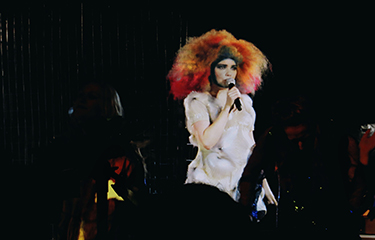
The rapid growth of salmon farming in Iceland is a mounting cause of consternation among environmental groups, and adding to the opposition, native Icelandic singer-songwriter Björk has produced a new song aimed directly at the industry and its potential effect on the country’s environment.
The currently untitled track is a collaboration between Björk and Spanish singer Rosalía, with all the profits earned going toward supporting activists who are challenging industrial salmon farming. Its likely release date is slated for late October, with a preview already available online.
“Iceland has the biggest untouched nature in Europe, and still today, it has its sheep roaming free in the mountains in the summers. Its fish has swum free in our lakes, rivers, and fjords. So, when Icelandic and Norwegian businessmen started buying fish farms in the majority of our fjords, it was a big shock and rose as the main topic this summer,” Björk wrote. “We don’t understand how they had been able to do this for a decade with almost no regulations stopping them. This has already had devastating effects on wildlife, and the farmed fish are suffering in horrid health conditions; since a lot of them have escaped, they have started changing the DNA in Icelandic salmon.”
In addition to getting companies to retract farms in certain fjords, Björk added that the ultimate goal is to set strict regulations that help safeguard the country’s nature.
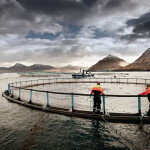
The song’s release follows a public protest that took place on 7 October, when approximately 3,000 Icelanders gathered at Austurvöllur Square in the country’s capital of Reykjavík to protest against Norwegian salmon-farming companies and to press the Icelandic government to take immediate action against aquaculture in open net pens.
To preserve the country’s fjords, groups including the Young Environmentalists, the Nature Conservation Association of Iceland, The National Association of Angling Associations, The North Atlantic Salmon Fund, The Icelandic Wildlife Fund, and VÁ-Association, among others, organized the event.
Iceland Minister of Environment, Energy, and Climate Guðlaugur Þór Þórðarson spoke at the protest, where he acknowledged the need for action and expressed appreciation for the public’s defense of Icelandic nature.
Growing at a compound annual growth rate (CAGR) of 35 percent since 2016, salmon farming has become the main driver of Iceland’s aquaculture growth in recent years. Total production reached 43,000 MT in 2022 and is expected to top 60,000 MT this year, making it one of the fastest-growing fish-farming sectors globally.
Recognizing this growth, Iceland’s Food, Fisheries, and Agriculture Minister Svandís Svavarsdóttir recently proposed a new legal framework that will look to guide the development of the industry in a way that aims to strike a balance between production and environmental protection.
er strategy points to it becoming “a new pillar in the Icelandic economy,” confirming that in 2022, the export value generated by Icelandic aquaculture reached almost ISK 49 billion (USD 354.7 million, EUR 333.1 million), with farmed salmon lauded as the primary product of the industry.
Additional analysis conducted by the Boston Consulting Group on behalf of the Ministry estimated the possible production value of Icelandic salmon farming in 2032 at between ISK 140 billion and 430 billion (USD 1 billion to 3.1 billion, EUR 951.7 million to 2.9 billion).
Within Svavarsdóttir’s strategy is the proposal for producers to pay for the utilization of natural resources and for there to be just one operator permitted in each fjord. It emphasizes the control, monitoring, and research of aquaculture production to ensure it meets the most stringent requirements and prevents the industry from hurting the environment.
To achieve these goals, the minister proposes that economic incentives be implemented to encourage operators to invest in the best available equipment, work methods, and skilled personnel. Funds will also go toward research, monitoring, and licensing activities.
With permits already issued for around 103,000 metric tons (MT) of production, the proposal advises that there will be no new licenses assigned in the Austfjord or the Westfjords until 2028. It also says that by 2028, the restructuring of farming licenses in both these areas will be complete.
Nevertheless, environmental incidents continue to occur in the industry.
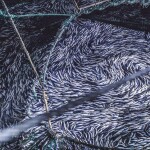
On 20 August, around 3,500 salmon escaped from an Arctic Fish farm. Majority-owned by Mowi, Arctic Fish confirmed in a 20 September filing on Euronext Growth (Oslo) that as a result, it is under a public investigation led by MAST, the Icelandic Food and Veterinary Authority. According to the filing, an internal review has already occurred, and the company has provided information to the proper authorities.
In a statement, Arctic Fish CEO Stein Ove Tveiten said the company was “deeply sorry” for the escape and that it would “learn from this incident and continue our work to prevent escapes by the means and resources we have at our disposal.”
MAST has recently expanded its regulatory capabilities with regard to aquaculture. The authority plans to acquire two new boats and additional equipment for visiting fish farms, and it also wants to employ more staff to monitor the industry.
Photo courtesy of Rlef89, CC BY-SA 2.0 via Wikimedia Commons
