





A new land-based salmon farm is in the works for a location in Galicia, in northern Spain.
The project, announced recently by Seafood Legacy, is valued at EUR 36 million to EUR 40 million (USD 42 million to EUR 47 million). Using the latest recirculating aquaculture system (RAS) technology, the farm will have a capacity of 3,000 metric tons (MT) of market-sized fish per year, according to Seafood Legacy Co-Founder Roger Marøy.
Marøy told SeafoodSource the company’s aim is to have the farm’s new hatchery unit up and running by mid-2021, using eggs imported from Norway or Iceland, before finishing the smolt and grow-out units.
The project is the first for Seafood Legacy AS, a new company founded by the Marøy family, which has been in the fish farming industry since 1960s through its firm, Skjærgårdsfisk. Roger Marøy said the family’s aquaculture legacy goes back even further, as his grandfather was one of the pioneers of fish farming in Norway. His uncle and father were also involved in the early stages of salmon farming in Canada. When the market price for salmon slumped 15 years ago to around EUR 1.00 (USD 1.17) per kilo, the family decided to sell off Skjærgårdsfisk to Lingalaks, as part of a major consolidation push in the Norwegian salmon-farming sector.
“My brother and I grew up with fish farming and we are still involved in various projects in the industry. Jonny is involved with the world’s largest land-based halibut farm, Sogn Aqua, and I work as a consultant and advisor on many fish-farming and marketing projects, and we are both focused on the need to pay particular attention to the biology, health, and well-being of the fish,” Marøy said.
Marøy said he got to know the Galician region well in the process of exporting salmon to Spain in his previous job, and chose the port of Burela for the salmon farm due to its advantageous location. Galicia is well-known for shellfish and turbot aquaculture, and its largest city, Vigo, is home to the biggest fishing port in the world, but salmon farming is new to the area.
“Norway exports around 70,000 MT of salmon to Spain, and 16,000 MT to Portugal, so we were confident that our own production would find a ready market,” he said. “We have already been contacted by companies that want to buy the whole production.”
The brothers are using their own knowledge and extensive network of industry specialists to design and develop the new farm. It will be built by a local engineering firm that has been involved in the construction of turbot farms.
“We have the main design and have worked out the budgets, and are currently waiting for our application to be approved. It has been a long journey, but there has been good dialogue with the local authorities, and we are confident of a good outcome,” Marøy said.
Investment to date has been through the family’s own funds and close network, but there is a growing list of people interested in investing once the project gets underway.
Marøy said the brothers’ decision to step back into the seafood arena was driven just as much by their ideology as their hopes for profits.
“A few years ago, we decided that it was time to start farming again, and the time seemed right to explore RAS technology in a new region, where we could create local value and jobs,” Marøy said. “The world needs more sustainable protein production, and I believe that in their different ways, traditional net pens in the ocean and land-based fish farms will both be an important part of the solution.”
The Seafood Legacy is the second RAS project announced recently in Spain, as a separate project is being developed in Cantabria, in northern Spain. Commissioned by Norcantabric, the salmon farm will have a similar initial production of 3,000 MT per year, with project costs estimated at EUR 31 million (USD 36.4 million).
In a public statement, Norcantabric said it has the full support of the region, and Sodercan (The Society for Regional Development of Cantabria) has invested EUR 1 million (USD 1.17 million) in the project.
Preparatory work on the site has already begun, but has been held up by the COVID-19 pandemic. However, the first part of the project, a hatchery, is expected to be completed by the end of this year.
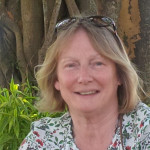
Photo courtesy of Seafood Legacy
