



Aarhus, Denmark-based aquafeed firm BioMar achieved earnings before interest, taxes, depreciation, and amortization above DKK 1 billion (USD 142.9 million, EUR 134.4 million) in 2022, surpassing its annual earning guidance, which it had previously increased in Q3 2022.
Its 2022 EBITDA came in 11 percent higher than its 2021 result of DKK 911 million (USD 133.6 million, EUR 122.4 million), which itself was down from DKK 972 million (USD 142.5 million, EUR 130.6 million) in 2020.
The company grew its revenue to DKK 17.9 billion (USD 2.6 billion, EUR 2.4 billion) up 34 percent from 2021, when its revenue totaled DKK 13.3 billion (USD 1.9 billion, EUR 1.8 billion) driven by strong performances from its in the salmon and Latin America divisions and despite a poorer performance from its Europe, Middle East and Africa division, according to BioMar CEO Carlos Diaz. It’s total volume of feed produced in 2022 was 1.456 million metric tons (MT), nearly flat from 1.446 million MT it produced in 2021.
In Q4 2022, BioMar produced 372,000 MT of feed, down from 405,000 MT in Q4 2021. It recorded EBTDA of DKK 294 million (USD 42 million, EUR 39.5 million) in Q4 2022, up from DKK 274 (USD 39.2 million, EUR 36.8 million) in Q4 2021. And its revenue in Q4 2022 was DKK 4.97 billion (USD 710.2 million, EUR 667 million), up from DKK 4.04 billion (USD 577.3 million, EUR 542.9 million) in Q4 2021.
“Financially, we had a slow start of the year due to several one-offs and the impact of the global inflation. However, our people around the world have made a tremendous effort building new and creative commercial solutions through an agile collaboration with customers,” Diaz said. “Hence, we have managed to conclude the year with a decent result, despite the global volatility. We are progressing as planned, executing on our 2028+ strategy … both in terms of growth, product offerings, and increased efficiency.”
Diaz said BioMar was also boosted by the performance of its non-consolidated JV feed companies in 2022, mainly driven by the BioMar-Sagun joint venture in Turkey. Its JVs posted yearly production volume 163,000 MT, up from 125,000 MT in 2021, and recorded revenue of DKK 1.67 billion (USD 238.6 million, EUR 224.4 million), up from DKK 972 million (USD 138.9 million, EUR 130.6 million) in 2021. Combined, the EBITDA of BioMar’s non-consolidated JVs was DKK 120 million (USD 17.2 million, EUR 16.1 million), up from DKK 60 million (USD 8.6 million, EUR 8.1 million) in 2021.
BioMar managed the performance despite withdrawing from the Russian market following its invasion of Ukraine. And in February 2022, the company announced a goal of becoming 50 percent circular and restorative by 2030, meaning it would source half of its raw materials from byproducts and waste streams, and would increase its use of microalgae in its feeds. BioMar further said it has begun using Corbion’s AlgaPrime DHA in its high-performance flagship diets and will prioritize the sales of its Blue Impact, Efico Enviro, and Orbit feeds, which it said have a higher sustainability profile.
“We are very satisfied with the performance of the group,” Diaz said. “We have been significant affected by our exit from Russia and the increased raw material and energy prices, but we have managed to sustain a healthy business, continuing our growth strategy while expanding into the technology space.”
On 1 March, 2023, BioMar introduced a bioremediation product line called SmartCare Balance that it said can improve environmental conditions for farmed shrimp from hatchery to grow-out.
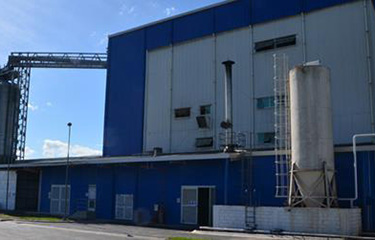
Photo courtesy of BioMar
