






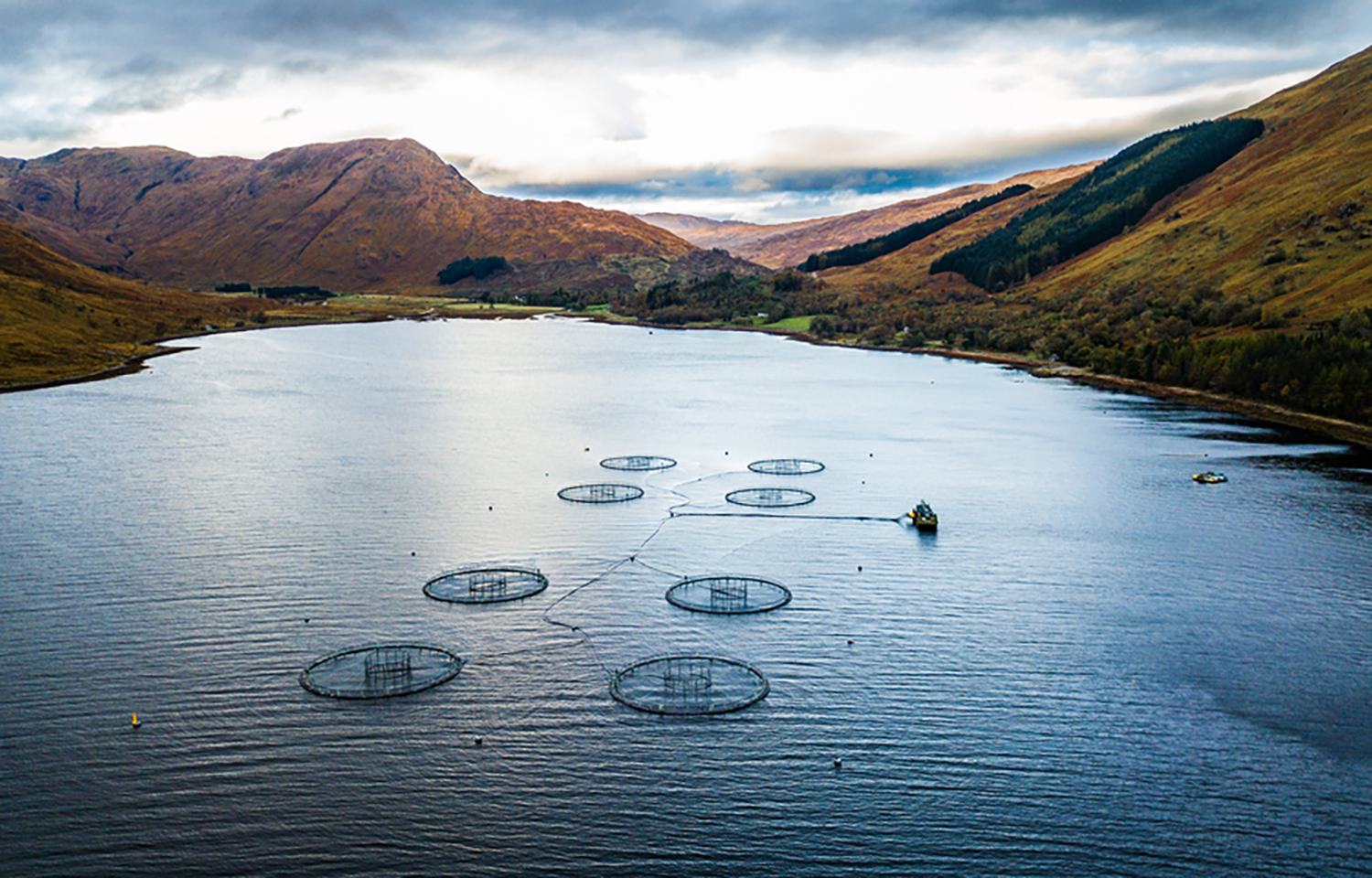
Salmon industry trade body Salmon Scotland has joined 15 other representative groups of the Scottish food and beverage sector in voicing alarm over a surtax on retailers currently being considered by the Scottish government.
Representing a wide array of the Scottish food and beverage industry, the organizations, including the Scottish Retail Consortium, Scottish Financial Enterprise, and the Scotch Whisky Association, have jointly written to Scotland’s Deputy First Minister and Finance Secretary Shona Robison ahead of the Stage 1 debate and vote on the upcoming Scottish budget. They expressed their concern over the implications the surtax could have on nationwide commerce.
The group pointed out that under the proposed plans, the business rate for medium-sized and larger commercial premises in Scotland – some 22,100 operations across all sectors – would soar to a 25-year high from April onward.
It’s too soon to fully grasp the proposal’s direct impact, Salmon Scotland Chief Executive Tavish Scott told SeafoodSource, but there’s a “growing concern that Scotland is closed for business.”
“Business has been promised a ‘reset’ by the government, and a new business rate surtax would fly in the face of that,” he said. “While a direct impact on the salmon sector is not yet clear, any moves to increase the general tax burden on businesses dampens economic growth, which in turn has a major impact on all companies operating in Scotland.”
The industry groups' letter calls for the government to stimulate greater levels of private-sector investment, calling it “crucial” to lifting Scotland’s economic growth and subsequently generating the jobs, wealth, and tax revenues needed to support public services.
“It is profoundly concerning that new taxes on business are being countenanced in such an arbitrary way and with apparently little regard to trading or economic conditions,” they wrote.
The organizations said the proposed surtax directly contradicted Scotland’s New Deal for Business – a measure the government introduced in 2023 calling for clarity and transparency in governmental communication to industry. They expressed concern the proposed tax would be used as a revenue generator and not to stimulate commercial investment and growth.
“Businesses make investment decisions based on the opportunities ahead, but also the costs of operating and predictability of tax and regulatory decisions,” the letter said. “A more ad hoc and less predictable approach to business taxes in Scotland sends out a poor message. We fear this move opens the door to other sectors being similarly targeted, particularly if the projected fiscal gap widens.”
Scottish salmon was the U.K.’s top food export in 2023, according to His Majesty’s Revenue and Customs (HMRC) annual figures.
Sales of the fish increased by 0.5 percent to GBP 581 million (USD 730 million, EUR 678.1 million) in the 2023 calendar year, with France again leading global demand for the product. U.S. and Asian markets also saw sharp growth.
Additionally, salmon is the most popular fish among U.K. shoppers, with annual sales totaling around GBP 1.25 billion (USD 1.6 billion, EUR 1.5 billion) in the country alone.
Despite the positive figures, Salmon Scotland said sector is facing several challenges, including the proposed surtax, and that while trade values rose in 2023, export volumes were down 11 percent compared to the previous year. The complicated bureaucratic procedures necessary to export seafood following Brexit continues to add costs and delays for Scottish salmon farmers, along with bivalve farmers throughout the kingdom, while an ongoing recession in the U.K. has created economic headwinds.
“It’s a testament to the hard work of salmon farmers in rural Scotland that our fish has been named the U.K.’s biggest export in 2023 in such challenging economic circumstances,” Scott said in a statement. “The Scottish salmon sector is a bright spot in the Scottish and U.K. economies and is ready to invest and create jobs. This is all the more important given the U.K. is now officially in recession and there is no growth in Scotland, so we need more government support to ensure that Scotland is open for business.”
Photo courtesy of Shoesmith Drones/Shutterstock
