


 Atlantic seabob
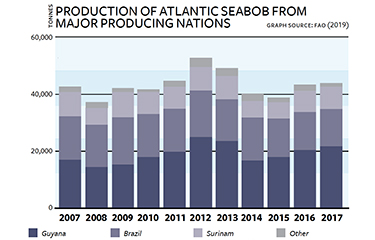
The Atlantic seabob catch, albeit significantly lower in terms of volume compared to the Northern prawn and Argentine red shrimp, makes up 7 percent of the total global catch of coldwater shrimp and prawn species. Of the 43,000 MT of Atlantic seabob produced in 2017, Guyana (50 percent), Brazil (30 percent), and Suriname (18 percent) dominate the supply of this species.
The seabob is the most-caught shrimp in Guyana. Overall, the supply of the volumes from Guyana have been constant, and, while there was a small drop in 2014, they had recovered again in 2017. All vessels require a license to fish for seabob, and there is a maximum limit of 87 vessels in the fishery. Since 2018, 87 vessels are licensed to fish for seabob, of which six are currently inactive.
A maximum total fishing effort for the fishery is set at 15,000 standardized days at sea, with a limit of 225 days of fishing per year per vessel. There is no total allowable catch (TAC) set for the fishery and there are no individual vessel catch quota. Approximately 98 percent of the landings of Atlantic seabob is caught by the industrial offshore trawl fleet. The Guyanese seabob industry has just obtained its Marine Stewardship Council certification in August 2019.
In Suriname, about one-tenth of the landings are generated by 500 artisanal fishermen who use nets to target the shrimp in river estuaries, 15 to 35 kilometers offshore, depending on the seabed profile. The remaining volume is caught by the Suriname offshore fleet, which consists of 22 licensed vessels, typically “Florida-type” outrigger trawlers with an overall length of 20 to 25 meters.
