






COVID-related supply chain disruptions and the United Kingdom’s departure from the European Union led member-states to become more dependent on products from third countries to meet the market’s demand for seafood in 2021, finds the new “Finfish Study 2022,” compiled by the E.U. Fish Processors and Traders Association (AIPCE-CEP).
The association’s analysis also determines that the trend has continued into 2022, amid the ongoing conflict in Ukraine.
According to AIPCE-CEP, E.U. consumers had access to 12.5 million metric tons (MT) of seafood last year, representing a year-on-year decrease of more than 500,000 MT. The 31st edition of the report also determines that the net E.U. domestic supply of seafood for human consumption fell to 3.5 million MT, down from 4.07 million MT in 2020, while imports from third countries amounted to 9 million MT.
At the same time, the E.U. exported less than 2.4 million MT of products, resulting a net consumption of just over 10.1 million MT, which represented a decrease of 400,000 MT compared with 2020. As a result, the E.U.’s per capita consumption in 2022 decreased by 900 grams to 22.6 kilograms.
In a press release, AIPCE-CEP said since the formation of EU25/27 in 2006, the region’s import dependency has been extremely high, and that due to reduced catches and the United Kingdom exiting the E.U., production has seen a sharp decrease.
The E.U.’s self-sufficiency values dropped to 35 percent in 2021 compared to the 10-year average of above 42 percent.
AIPCE-CEP said 2021 was “a difficult year for many companies” due to the continuation of COVID-related issues and many worldwide trade flows and consumption patterns having changed due the residual impact of the pandemic.
“Although the worst direct effects of the COVID-19 virus appear to have eased (at least in Europe), many related supply chain issues hinder a return to pre-pandemic trading conditions,” the group said. “Cargo prices for example are still at high levels.”
While economic activities have been returning to more normal levels this year, the supply is lagging demand in many sectors, resulting in significant inflationary pressures, the group said. Those are now accompanied by unprecedented energy price increases as a result of Russian actions in Ukraine, which are also impacting other raw material and input costs in global food markets, it said.
“The E.U. sanctions against Russia make it more complex to source seafood material from Russia,” it said. “Businesses are likely to face a period of significant uncertainty, further complicating planning and investment decisions.”
AIPCE-CEP’s preliminary estimates for 2022 have the E.U.’s total supply falling to 11.6 million MT, its domestic supply for human consumption dropping to less than 3.1 million MT, imports slipping to under 8.6 million MT, and net consumption sliding to 9.4 million MT. Per capita consumption in 2022 is expected to drop by 1.5 kilograms to 21.1 kilograms.
The sectors that AIPCE-CEP represent account for more than 3,300 enterprises and 116,000 jobs, with the value of the output of the industry amounting to around EUR 31 billion (USD 30.3 billion), which is about four times the turnover of the E.U. catching sector.
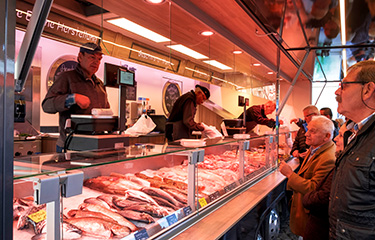
Photo courtesy of Cecilia Melzess/Shutterstock
