




The topsy-turvy nature of the past three years have made it tough to predict what’s going to happen in the whitefish market, Endeavor Seafood Vice President and Partner Todd Clark told SeafoodSource.
Speaking after a panel on the state of the whitefish industry at the National Fisheries Institute;s Global Seafood Market Conference – which ran from 15 to 19 January in La Quinta, California, U.S.A. – Clark said the normal predictable patterns of the industry are out the window.
“Like I said earlier in the fourth quarter, I was hoping things are coming back to sort of the normal cycles that we’ve built. And for the past few years, that juts hasn’t been the case,” Clark said. “Usually in a crisis you have a beginning, a middle, and an end. And like I said in the panel, it has been beginning, middle, middle, middle.”
The whitefish market’s fluctuations during Lent, he said, are a great indicator of the unpredictable nature of the current state of the fish market.
“At the end of Lent in the whitefish market, you have a time where things are a little bit tight, but everybody has product on the water, so you know what that horizon looks like. You’re making a decision in August to order product for Lent with that understanding,” Clark said.
Now, however, Covid has continued to make it impossible to predict what sort of supply chain troubles will hit the whitefish market. China’s recent reopening of its entire economy – after years of a zero-Covid policy that locked down entire cities – will continue to have completely unpredictable impacts on the supply chain and processing operations.
“Are the works going to be comfortable coming back into the plant? Are the workers going to be infected with Covid?” Clark said. “I’ve had plant problems where just the quality control group got Covid, but production still stops.”
A Covid-related shutdown that lasts five days, he said, is a big deal in a processing plant that could be putting out a container of processed fish each day.
“Five days of production in a plant that produces a container a day – that’s five containers,” Clark said. “So to predict what’s going on, I just can’t do it.”
Clark said his experience at Endeavor with his coworkers highlights how difficult it is to nail down what the market is going to do.
“I have a discussion with my partners in the office and I give my prediction, and they give the exact opposite prediction – which I say is legitimate,” Clark said. “It seems to me now you’re more trying to make up alternatives that you think could happen. Whoever thought we’d run into capacity issues in the freezers? Whoever thought we’d run into chassis [shortages] at the ports. Containers, too – no containers, [and] maybe no vessels.”
Clark said at one point he ran into a problem where he was shipping product to Chicago by rail, and the shipment was canceled and rail service was suddenly stopped.
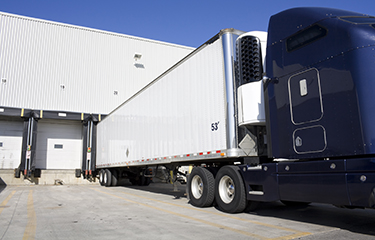
“We ended up scrambling. We’re on the West Coast and we couldn’t move a container anywhere,” Clark said. “Now trying to get a freezer to break down a container to put on trucks, and it’s just complicated.”
The end result, he said, is that using any sort of historical model to predict things going forward won’t work – everyone’s crystal ball is still broken.
“The crystal ball is smashed,” Clark said. “And the thing is, I don’t even want to buy a new one at this point.”
Photo courtesy of Steve Design/Shutterstock
