






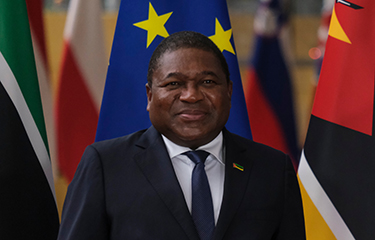
A court in Britian has ruled Mozambique President Filipe Nyusi cannot be sued over allegations he accepted unlawful payments as part of the country’s USD 2 billion (EUR 1.8 billion) “tuna bond” scandal.
London’s High Court ruled that while Nyusi is the head of state of the republic he is immune from any jurisdiction of the court, Reuters reported.
The ruling is the latest chapter in a multi-year scandal involving Credit Suisse and a conspiracy to commit fraud in a Mozambique tuna-fishing project that has already resulted in millions in fines. In 2021, the U.S. Department of Justice levied a USD 475 million (EUR 443 million) fine against Credit Suisse for its role in the tuna bond case, which anti-corruption experts called “the most egregious corruption offense of the decade.”
The dispute is focused on deals between state-owned companies in Mozambique and shipbuilder Privinvest to develop the country’s seafood industry. Mozambique, through a state-owned entity called Empresa Moçambicana de Atum (EMATUM), was part of a scheme where Credit Suisse used U.S. wires and the U.S. financial system to defraud investors in securities related to EMATUM.
The scandal itself involved more than USD 2.7 billion (EUR 2.5 billion) in secret government debt that Mozambique’s government borrowed to set up a modern tuna fishery via EMATUM. However, Mozambique officials siphoned unlawful payments from loans sourced from Credit Suisse, amounting to bribes worth roughly USD 137 million (EUR 127.8 million).
When millions went missing and state loan guarantees from Mozambique became public, the International Monetary Fund and other major funders of the Mozambican government halted support and the country’s currency collapsed, triggering a debt crisis.
Mozambique officials – at least 19 people, including Nyusi’s son – have been arraigned for their involvement in the scandal, while Credit Suisse was fined repeatedly for its involvement and lack of scrutiny of the transactions. The bank has already agreed to pay millions in restation to defrauded investors, and in addition to the U.S. penalty ,was forced to pay fines in the U.K. totaling GBP 146 million (USD 183 million, EUR 171 million) for its role in the scandal.
Privinvest and its owner Iskandar Safa have since tried to bring Nyusi into a court case, starting 3 October, in which Mozambique will seek to revoke a sovereign guarantee on a loan that it claims was corruptly procured. Credit Suisse has already written off USD 200 million (USD 186 million) in debt owed by Mozambique in light of the penalties levied against it from U.K., Swiss, and U.S. regulators.
Mozambique also wants to secure compensation for alleged wrongdoing, and Privinvest and Safa have alleged that Nyusi should also contribute to damages, claiming the company made more than USD 11 million (EUR 10.3 million) in donations to the Mozambican president’s successful election campaign in 2014. The company, and Safa, argue if the payments were illegal, Nyusi should be liable for them.
However, U.K. High Court Judge Robin Knowles ruled Nyusi continues to benefit from immunity in the British legal system as the current president of Mozambique and cannot be held liable for any of his actions contributing to the scandal while he remains head of state.
In July 2023, Mozambique's former financial minister, Manuel Chang, was extradited from South Africa to the U.S. to face trial over the scandal, the Associated Press reported. Chang was finance minister of the country from 2005 to 2015 and was allegedly played a major role in the corruption scandal. His extradition ends a five-year legal battle during which Chang attempted to instead be extradited to Mozambique.
Photo courtesy of Alexandros Michailidis/Shutterstock
